



As the world steps into a new year, it does so under the thunder of military drills, airstrikes, and missiles rather than the promise of peace, justice, and human dignity.
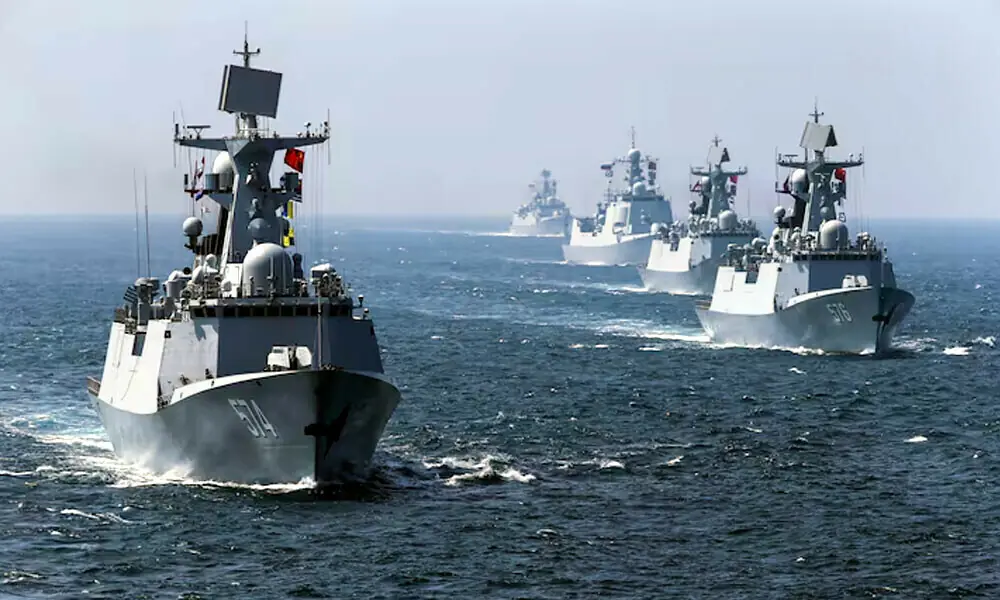
China’s massive military exercises around Taiwan—deploying its army, navy, air force, and rocket force—appear to be a direct response to Washington’s recent $11 billion weapons deal with Taipei. Instead of dialogue, deterrence is once again the chosen language; instead of diplomacy, force is placed on display.
This martial mood is not confined to East Asia. Only days earlier, on Christmas Day, the United States launched deadly airstrikes in northwestern Nigeria, ostensibly targeting ISIS. These strikes followed a familiar pattern: the rapid resort to military power without exhausting diplomacy or addressing the deeper political and socio-economic roots of conflict.
The same pattern has unfolded repeatedly—from violations of Syrian sovereignty under the banner of counterterrorism to reckless attacks on Iran’s peaceful nuclear facilities without credible diplomatic closure.
A similar and deeply troubling manifestation of this unchecked militarism is unfolding closer to Latin America.
The United States is reportedly carrying out a naval blockade of Venezuela, with American warships deployed within striking distance of the South American country. This is power projection in its starkest and most intimidating form—designed not for dialogue, but for coercion. Such actions flagrantly demonstrate arrogance and domination while the world watches in an awful, complicit silence.
Powerful countries attack or threaten neighbouring states, hijack ships, fuel wars across regions, and profit handsomely from the global arms trade, even as millions are killed, displaced, or condemned to lifelong misery. Yet global institutions, meant to safeguard peace and justice, largely remain mute spectators—paralysed by fear, alliances, or double standards.
The Middle East stands as the most painful testament to this global disorder. Israel’s assassination of Ismail Haniyeh in Tehran, its strikes that endangered mediators in Qatar—a close US ally hosting a major American airbase—and its relentless violations of Syrian and Lebanese sovereignty demonstrate a staggering level of impunity.
No power dares to restrain it; no institution meaningfully disciplines it. Meanwhile, Gaza bleeds.
Children, women, journalists, aid workers, and unarmed civilians have been slaughtered in what many now describe as a calculated genocide, livestreamed before a numbed world. Humanity solemnly remembers Auschwitz and Bergen-Belsen—as it should—but the apocalyptic devastation of Gaza, unfolding in real time, is denied the same moral outrage, accountability, and justice.
Nuremberg-style trials remain unthinkable, not because the crimes are unclear, but because the perpetrators are shielded by power.
Elsewhere, Russia’s brutal war in Ukraine grinds on relentlessly. A nuclear-armed giant marches forward while global institutions look on, paralysed. The lesson is unmistakable: military power washes away crimes, and international law bends before economic clout and strategic alliances.
Yet amid this bleak landscape, a fundamental truth must be reaffirmed: the world does not belong to power elites or military establishments—it belongs to the people.
People are the ultimate sovereigns, the rightful masters of land and resources, and the true stakeholders in peace and stability. Across continents and cultures, ordinary men and women are demanding justice, equality, dignity, peace, and harmony.
The new world order being imagined and longed for must reflect the aspirations, conscience, and collective wisdom of humanity—not the narrow interests of a few powerful states.
The world is weary and exhausted. Wars and conflicts have not resolved our problems; they have multiplied them. They have brought death, destruction, displacement, hunger, and misery—while enriching the merchants of arms and the gamblers of strife and chaos who thrive on uncertainty and fear. History offers grim testimony. The two World Wars killed millions, destroyed entire continents, and wiped out precious human potential that could have been devoted to education, health, science, and human development. Humanity was expected to have learnt unforgettable lessons from those horrors.
Wars should never have returned. And yet, scarcely had the ruins been cleared when those lessons were forgotten. Since then, the world has witnessed countless wars, genocides, occupations, and proxy conflicts—accompanied by a maddening arms race for ever more lethal weapons of mass destruction, as if the past had taught us nothing.
Today, nuclear-armed states possess hypersonic missiles, intercontinental ballistic weapons, and technologies capable of annihilating the planet within minutes. Trillions of dollars are poured into instruments of death while billions of people struggle for clean water, food, shelter, healthcare, and education. This is not security; it is a collective march toward self-destruction.
The irony is both tragic and grotesque. Humanity has conquered skies and seas, built bullet trains and towering skyscrapers, decoded the genome, and explored distant planets—yet weapons continue to control us, dragging civilisation into an abyss. Instead of technology serving life, life has been subordinated to the logic of war and weapons.
Should humanity carry all this moral baggage into the new year? Surely, not. We deserve better than this endless cycle of mayhem, disgrace, and destruction. We deserve a future shaped by reason, justice, restraint, and responsibility.
Yet diplomacy and peace, in today’s world, appear to be obligations imposed only on the weak. The powerful treat them as decorative slogans that are discarded the moment they clash with strategic ambition. Force is glorified, restraint ridiculed, and arrogance mistaken for leadership. This is no accident; it is the inevitable outcome of a global order constructed in the aftermath of World War II—an order designed by victors, for victors only.
Why should a handful of states, empowered by historical circumstance rather than moral authority, wield arbitrary veto power in the United Nations Security Council? Why is the UN General Assembly—the most representative forum of humanity—reduced to passionate speeches without enforceable authority? This imbalance has hollowed out international law, paralysed global governance, and rendered the world system increasingly obsolete and unjust.
The international order, as it stands, is tilted toward strength, privilege, and coercion. It is ill-suited to a world that demands justice, equality, accountability, and fairness on equal footing for all nations—big or small, strong or weak.
What humanity needs today is not cosmetic reform, but a new, dignified, people-centred, justice-based world order—one that places human life above military doctrine, ethics above expediency, and cooperation above confrontation. Might must no longer dictate what is right; might must be placed firmly in the service of right.
As the New Year dawns, the world stands at a profound moral crossroads. Either it continues down the dark and discredited path of jungle law—where power defines truth and impunity reigns supreme—or it dares to imagine and build a future anchored in peace, equality, dignity, and shared humanity.
Let us welcome the 2026 with moral courage and collective resolve. Let us carry into it a vision of a war-free world—dignified, just, and harmonious—faithful to time-tested human values and worthy of future generations.
The world waits—restlessly and urgently—for this new horizon to rise. May this New Year not be remembered for louder bombs and deadlier arsenals, but for the awakening of global conscience and the courage to finally place humanity above power.
Copyright Business Recorder, 2026
The writer is a Shikarpur-based retired civil servant. The views expressed in this article are not necessarily those of the newspaper




















Comments
Comments are closed for this article.