


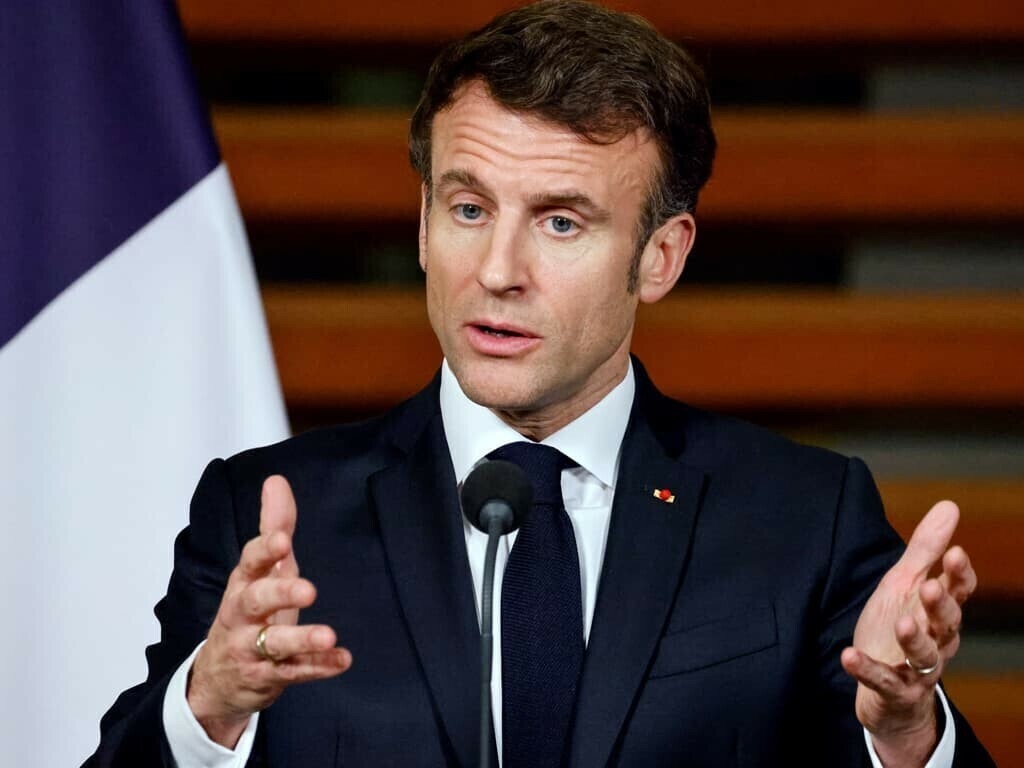
President Emmanuel Macron’s visit to China from December 3 to December 5, 2025 was not merely a diplomatic formality; it was a geopolitical confession wrapped in ceremony.
For decades, European leaders dealt with Beijing from a position of moral superiority, economic egoism, and political arrogance. They lectured China on values while depending on its factories, restrained engagement while depending on its imports, and pretended equality while dismissing China’s vision.
Yet, Macron stood in Beijing in what resembles a symbolic pilgrimage—an acknowledgment that the global center of gravity has shifted, and that Europe can no longer pretend otherwise. His presence in China marked a moment when Europe openly recognizes China as a world power shaping the contours of the twenty-first century.
Western leaders once assumed that China’s rise was temporary, fragile, or dependent on Western technology. Those illusions have crumbled.
The China of today owns the world’s largest manufacturing base, the second-largest economy, the deepest industrial ecosystem, the strongest foreign exchange reserves, and a leadership that thinks in decades, not election cycles.
But what has truly transformed China from a rising giant into the world’s strategic fulcrum is the Belt and Road Initiative—a project so expansive, so integrated, and so unprecedented that no empire in history has achieved anything comparable.
Through roads, railways, ports, fiber-optic networks, energy corridors, industrial parks, and digital highways connecting 152 countries across every inhabited continent, China has woven together the most extensive development network the world has ever seen. Rome captured territories. Britain controlled the seas.
The United States built alliances. But China has done something none of them imagined: it has physically and economically connected more than half of humanity into a shared infrastructure and trading system, peacefully and voluntarily.
Copyright Business Recorder, 2025
The writer is a former Press Secretary to the President, An ex-Press Minister at Embassy of Pakistan to France, a former MD, SRBC Macomb, Detroit, Michigan











Comments
Comments are closed for this article.