


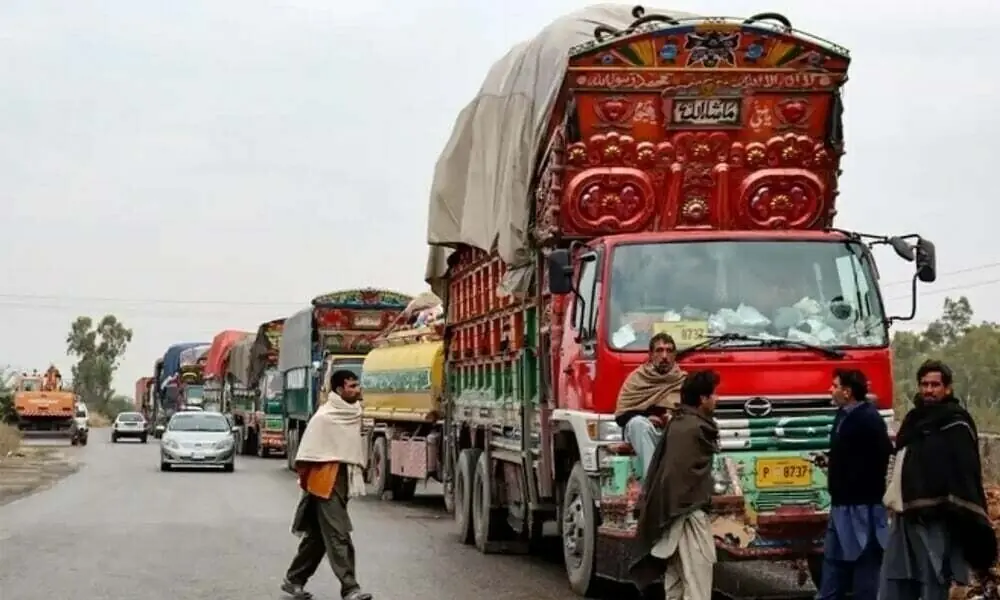
EDITORIAL: First things first, it is indeed heartening to note that the standoff between Punjab’s transporters and the provincial government came to an end yesterday after successful negotiations. According to media reports, Senior Provincial Minister Marriyum Aurangzeb held detailed talks with representatives of the transport sector, during which all key issues were discussed and a roadmap for resolution was agreed upon. Following the meeting, transporters formally called off their strike and signed a reconciliation document.
The confrontation between cargo transporters and the governments of Punjab and Sindh was quickly escalating into a nationwide logistics crisis. Ever since transporters called an indefinite strike on December 8 over bans by the two provincial governments on older trucks and trailers, steep traffic fines, vehicle impoundments and alleged harassment, thousands of inbound and outbound shipments of goods had been stuck across the country, choking trade and supply networks. Transport federation leaders had warned that on December 19, the halt would extend beyond freight to all inter-city and local transport across all provinces that would in turn disrupt markets, commercial activity, industrial operations, fuel stations, government offices, wholesale hubs and the country’s supply networks.
In under a week, the strike had already inflicted substantial damage on manufacturing and exports. With logistics in disarray, production lines had stalled, shipments had been delayed and export-oriented industries had seen their supply chains buckle. Consequently, demurrage costs had mounted and vessels sailings had been missed, heightening the risk of cancelled international orders. Pakistan Textile Exporters Association Patron-in-Chief Khurram Mukhtar estimated the textile sector alone may have lost around US$250 million. Given the disruption to raw material flows, industrial activity and port operations, the broader economic toll was undoubtedly far greater, cutting across multiple sectors. While curbing unsafe transporter practices is essential, the authorities should have anticipated a backlash as this pattern has played out before. Heavy-handed enforcement alone was never going to secure lasting compliance. A balanced approach, pairing safety standards with realistic timelines, stakeholder consultation and credible incentives to encourage compliance was needed. What we had instead were numerous reports of drivers of older vehicles being arrested, even as others allegedly evade penalties through bribes, and unfit vehicles continue to receive clearance from authorities. Needless to say, such combination of high-handed enforcement and corruption within government departments undermines credibility, fuels resentment and hampers effective regulation.
It’s also worth noting that a well-maintained older vehicle can often be safer and more reliable than a poorly maintained newer one, a nuance that seemingly has been overlooked. In countries with stronger regulatory frameworks, transporters are typically given a transition period, often a year, to phase out ageing vehicles, sometimes coupled with financial incentives such as tax breaks or subsidies for cleaner, fuel-efficient replacements. In Sindh, a six-month window was granted to implement certain reforms, including more efficient vehicle inspections to avoid delays in issuing fitness certificates, but the short timeframe and the tough economic climate would likely have hindered full compliance. Also, heavy penalties and vehicle impoundments should ideally be enforced only after the provision of adequate support mechanisms have failed to secure compliance.
The authorities must realise the need for constructive engagement with transporters to establish a fair, workable middle ground that encourages compliance through cooperation while tackling corruption within government ranks. At the same time, it is important to acknowledge that past attempts to enforce vehicle fitness and traffic regulations have often faced excessive, unjustified pushback, so any undue pressure from striking transporters must be resisted. The challenge, therefore, lies in accommodating reasonable demands without compromising on principles, ensuring that road safety – long neglected to the detriment of public well-being – remains paramount.
Copyright Business Recorder, 2025




















Comments
Comments are closed for this article.