


OPINION: Aga Khan IV: Remembering an iconic leader in the service of humanity
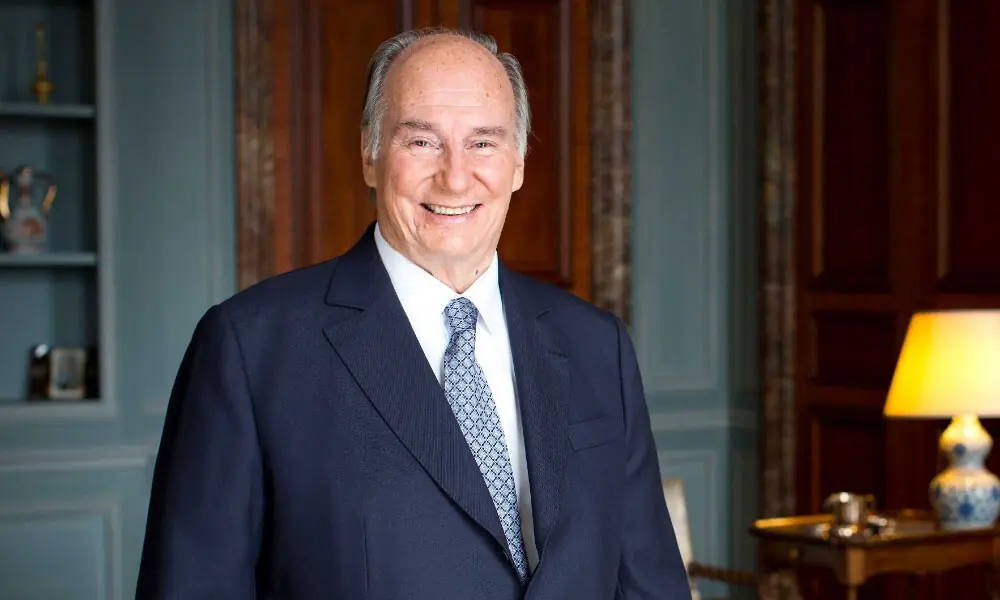

December 13 marks the birth anniversary of His Highness Prince Karim Aga Khan IV, one of the most respected global figures of the past century. An iconic leader, a humanitarian and a relentless advocate for peace and development, he was the 49th hereditary Imam of the Shia Ismaili Muslims. As a man of moral clarity and vision, he dedicated nearly seven decades to advancing human dignity, pluralism, and sustainable development.
Born on December 13, 1936, in Geneva, Aga Khan IV spent his early childhood in Nairobi. Later, he studied at the renowned Institut Le Rosey in Switzerland and graduated from Harvard University in Islamic History in 1959. He was just 20 when he succeeded his grandfather, His Royal Highness Sir Sultan Mahomed Shah Aga Khan III, who appointed a young successor prepared to meet the contemporary challenges of the modern era. History has shown that Aga Khan IV not only fulfilled this vision, but he also elevated it to new heights.
The Aga Khan IV’s tenure witnessed a fast-changing geopolitical landscape accompanied by scientific innovations and technological advancements. Amid this complexity, he articulated a development philosophy rooted in Islamic ethics and centred on human potential. As early as 1982, he stated clearly: “Islam is a total religion guiding all aspects of a Muslim’s life… What is done must be done honestly, sincerely, and well.”
There were many striking aspects of Aga Khan IV’s development philosophy. His concern was never confined to the economic upliftment, but at his core, he was motivated by the fundamental message of Islam, as he said: “Making them self-sufficient and helping weaker sections of a country or a community. That is fundamental, right from the revelation of Islam — the way Prophet Muhammad (P.B.U.H.) lived himself — it is a fundamental Islamic concept”.
This worldview laid the foundation for what would become one of the world’s largest and most influential private development networks: the Aga Khan Development Network (AKDN). Under his leadership, AKDN grew into a global group of agencies working across 30 countries in health, education, culture, economic development, climate resilience, disaster response, and humanitarian relief. Its institutions provide healthcare to over 14 million people annually, education to more than 2 million learners, and financial services to 50 million individuals, mainly across South and Central Asia as well as Sub-Saharan Africa.
Aga Khan IV viewed meaningful development as the creation of “coherent societies that are well governed, economically self-sustaining, equitable in treating their peoples, peaceful amongst themselves, and sensitive to their impact on planetary sustainability.” This holistic vision shaped every AKDN institution, each designed to strengthen communities and endure far beyond the lifetime of any single leader.
His contributions to Pakistan are particularly profound. The Ismaili Imamat’s ties with the region date back more than a century, beginning with the first Aga Khan School in Gwadar in 1905. Today, the Aga Khan Education Service operates a network of 154 schools across the country. The Aga Khan University (AKU), one of Pakistan’s most respected higher education institutions, continues to train world-class professionals in medicine, nursing, and education. It has been at the forefront of research and knowledge creation in health and social sciences and has evolved from a research-intensive university to a research-focused university in the past decades. The Aga Khan Health Service and the Aga Khan Agency for Habitat have expanded this impact by means of integrating health systems, climate adaptation efforts, safe water and sanitation infrastructure, and disaster-resilient community planning.
Another striking aspect of Aga Khan IV was his unwavering support for peace and harmony in the world. He saw pluralism as a cornerstone to this end, and therefore, what we see in his public engagements is his relentless emphasis on the restoration of human dignity without regard to background. He was also particularly interested in cultural preservation which is reflected in the restoration of multiple heritage sites in Pakistan by the Aga Khan Trust for Culture.
His life’s work acclaimed him worldwide recognition including, Pakistan’s highest honours, Nishan-i-Imtiaz and Nishan-e-Pakistan as well as numerous other international awards, honorary degrees, and civic distinctions.
Prince Karim Aga Khan IV breathed his last on February 4, 2025, at the age of 88, and was succeeded by his eldest son, His Highness Prince Rahim Aga Khan V. His passing marked a remarkable era to an end, but his legacy continues under the guidance of the present Aga Khan. The institutions and ideals he built are sustained and carried forward with renewed purpose and dedication to human progress worldwide.
As we pay tribute on his birth anniversary today, we remember a deeply intellectual man who lived an exemplary life of compassion and an ennobling character that has touched lives of millions.
Copyright Business Recorder, 2025

























Comments
Comments are closed for this article.