


Waiver of non-observance requested: BISP misses end-Jun ’25 QPC on spending: IMF
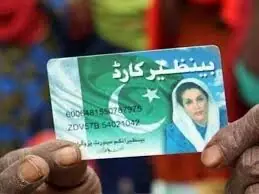

ISLAMABAD: Benazir Income Support Programme (BISP) missed the end-June 2025 Quantitative Performance Criteria (QPC) floor on total BISP spending by Rs463 million, which constitute 0.0004 percent of Gross Domestic Product (GDP), due to savings on administrative costs, while spending on core support programmes was higher than expected, reveals the latest staff report of the International Monetary Fund (IMF) on Pakistan.
Keeping this situation in view, Pakistan has requested the IMF for a waiver of non-observance on the QPC on the basis of the non-observance being “minor and temporary,” the report reveals.
“We missed the QPC on BISP spending by a very small margin due to savings on administrative costs. We also met three end-June 2025 Indicative Targets (IT) but shortfalls in the other ITs highlighted areas for improvements in tax administration and provincial spending on health and education. To address these issues, we are improving the implementation capacity of the FBR (Federal Board of Revenue) and the provinces,” reads the letter of intent submitted by the economic team leaders – Finance Minister and Governor State Bank of Pakistan, a prerequisite for Board consideration.
In the current year, the BISP budget includes a 20 percent increase in spending on unconditional cast transfer (UCT) and conditional cash transfer (CCT) programmes, which will allow the quarterly UCT Kafaalat benefit to be increased from Rs13,500 to Rs14,500 (end-January 2026) to adjust for inflation.
It is expected that, within this envelope, Kafaalat coverage can be increased by at least 200,000 families to 10.2 million by end-FY26, says the IMF document.
“Upon the availability of a new household survey (HIES), expected in 2026, Kafaalat generosity, which remains low by international standards, should be further gradually increased toward 15 percent of the bottom income quintile’s consumption basket (while continuing to adjust for inflation),” states the IMF report.
The IMF emphasised that it is important that BISP and provincial authorities continue to coordinate on their respective CCT programmes to avoid overlap in service, maintain a common user base based on the National Socioeconomic Registry (NSER), and maintain common eligibility standards.
Apart from that, power subsidies have been curtailed, enabling increased support for social protection programmes like BISP, noted the report.
Progress has been made, with World Bank support, in matching electricity consumers with BISP databases to properly target consumers that will receive cash transfers, the report adds.
The document quotes the Pakistani authorities as having informed the IMF that they are proceeding with their planned electricity subsidy reform (end-January 2027). This will replace the budgeted tariff differential subsidy and cross-subsidy system with a targeted budgeted subsidy framework for low-income consumers via BISP, the report stated.
“We are working with the World Bank to enable the linking of electricity consumers with the NSER database, which we will have completed by end-December 2025. We will then carry out analysis to define eligibility criteria by end-July 2026. In parallel, following completion of identification work at end-December 2025, we will launch a national communications campaign to build awareness of the subsidy reform among consumers. We are also pursuing the same in the gas sector, and have initiated work to link gas consumer data with the NSER database. We are also moving ahead on implementing minimum energy performance standards across a variety of consumer appliances (end-June 2027),” the report quoted the Pakistani side as having assured the IMF.
Copyright Business Recorder, 2025

























Comments
Comments are closed for this article.