


Exclusive Interview with Zeeshan Haseeb Baig — Country General Manager, Syngenta Pakistan
- Says company is digitizing farmer base to eventually support partnerships with financial institutions
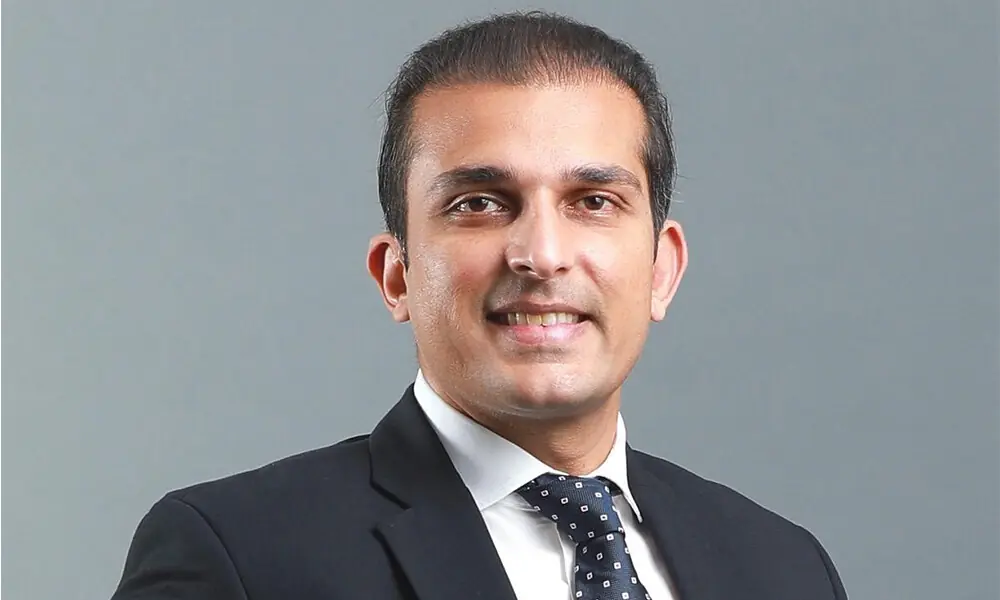

‘We are the number one player in crop protection both globally and locally’
Zeeshan Haseeb Baig is a seasoned business executive with leadership experience across Europe, the Middle East, Africa, and South Asia. As Country General Manager of Syngenta Pakistan, he oversees nationwide operations, commercial strategy, and organizational transformation in one of Pakistan’s most critical agricultural markets.
Before joining Syngenta, Zeeshan served as the Country General Manager for Careem (Uber) Pakistan, where he helped scale the company into a multi-million-dollar mobility, delivery, and payments business. Under his leadership, Careem created over 800,000 income opportunities and navigated the heavy disruptions of the COVID-19 period—efforts that earned him recognition among Pakistan’s top-performing CEOs by the CEO100 Forum.
Zeeshan began his career in telecom and later worked as a Senior Strategy & Operations Consultant at Deloitte Middle East, delivering projects across the US, Europe, and MENA. A LUMS MBA and FAST-NU engineer, he also contributes to Pakistan’s business and tech ecosystem as an angel investor and through roles in the Swiss Business Council, CropLife Pakistan, and public-sector committees.
Following are the edited excerpts of a recent conversation BR Research had with him:
BR Research: For readers who may not know Syngenta, could you briefly introduce the company and its footprint in Pakistan and how it links to the agriculture sector?
Zeeshan Hasib Baig: Syngenta is Pakistan’s largest agri-input company and has been here for more than 68 years, originally as Ciba-Geigy before becoming Syngenta about 25 years ago. Our core business is crop-protection. We are the number one player in crop protection both globally and locally.We also supply corn, field crops, fruits, and vegetables—roughly every third watermelon in Pakistan comes from our seed.
What truly differentiates us is our exclusive franchise network, Naya Savera, which Philip Kotler has cited as a benchmark. These outlets sell only Syngenta products, allowing us to ensure consistent quality and prevent the price distortions farmers usually face in open markets. On the technology side, our CropWise app—now with over 1.5 million downloads—is Pakistan’s largest agritech platform, offering advisory, weather updates, sowing guidance, and AI-based disease diagnosis. We also emphasize diversity and inclusion and have received national recognition for our work with female farmers and colleagues.
BRR: Stepping back to the bigger picture, how do you see the current state of Pakistan’s agriculture sector, especially after recent floods and climate shocks? And specifically, what challenges do you see in crop protection?
ZHB: Agriculture contributes roughly a quarter to Pakistan’s GDP and employs around 40 percent of the workforce, so its importance is undeniable. But the sector is under strain—climate variability, water scarcity, rising input costs and land fragmentation are all eroding productivity and farmer profitability. Mechanization and precision farming remain limited, even as global agriculture shifts rapidly toward data-driven, highly efficient systems.
Wheat alone illustrates the challenge: national demand is around 31 million metric tons while production is roughly 28 million, leaving us in a structural deficit. The sector is full of potential, but it faces deep climate, cost and productivity pressures that require serious intervention.
BRR:On this year’s floods, early fears were of large-scale destruction, but later assessments suggested the impact was lower than expected. What is your own reading of the situation?
ZHB: The early numbers being discussed were extremely high, but the damage was clearly lower than the 2022 floods. Sindh did not face the same prolonged inundation; the main impact this year was in Punjab’s rice-growing areas and the cotton belt in South Punjab, where some villages lost their cotton entirely.
Rice performed more resiliently than expected—stored crop suffered, but standing rice in flooded fields held up reasonably well. For crop-protection industry, we estimate a business impact of around 100 million dollars. More concerning is that the floods hit farmers already reeling from last year’s liquidity crisis, triggered by wheat imports that crashed domestic prices. As a result, we’re seeing under-investment in cotton and wheat despite ongoing sowing.
BRR: Given Pakistan’s reliance on imports in many sectors, how import-dependent is crop- protection?
ZHB: Crop protection is similar to pharmaceuticals. The active ingredients are manufactured in a handful of countries abroad, so those are imported. We formulate about 80 percent of our products locally and then package and distribute them. A few finished products come fully formulated, but most value addition happens inside Pakistan.
BRR: What does the financing landscape look like for farmers? Are formal institutions meaningfully lending to them?
ZHB: The rural economy is overwhelmingly informal. Most smallholders borrow from arthis or middlemen, using the same credit line for farm inputs, household expenses, weddings—everything. Banks and microfinance institutions do market farmer-focused schemes, but in practice these products are often expensive, complex, or collateral-heavy, which excludes most small farmers.
The biggest gap is the absence of data. We don’t have a digitized picture of how many farmers we have, their purchasing behaviour or repayment patterns, so lenders find it difficult to assess risk. At Syngenta, we are digitizing our own farmer base to eventually support partnerships with financial institutions. For now, we mainly finance our Naya Savera franchisees through banks, and they extend credit selectively to farmers. Overall, agri-lending remains a small fraction of the banking system.
BRR:From the farmer’s point of view, what is the single biggest issue today?
ZHB: Economics—farmer profitability. Everything hinges on return on investment. If margins are healthy, farmers naturally invest in better seeds, fertilizers, and crop protection. When profits shrink, all investment collapses.
The second issue is knowledge. Many farmers follow what the biggest farmer in the area is doing rather than relying on practical, science-based advisory. And third, access to innovation is limited, especially in seeds. Our yields in wheat and cotton are stagnant or even declining because the latest genetics used globally are not available or approved here. Basic practices like water management and pesticide application are also often suboptimal.
BRR: Given these challenges, how is Syngenta empowering farmers on the ground?
ZHB: We focus on four pillars. First, ensuring access to globally competitive seed and crop-protection products so farmers are not working with outdated technologies. Second, climate-smart solutions—weather-tolerant seeds and biological products that help crops withstand heat, water stress, and sudden climate shocks.
Third, digital transformation through our CropWise app, which offers advisory weather alerts, AI-based disease diagnosis, and e-commerce. And fourth, sustainability and soil health. Pakistan’s organic matter is often below one percent, so we are working on regenerative practices and products that rebuild soil structure and improve input efficiency. The goal across all pillars is improving farmer economics and resilience.
BRR: Why has Pakistan’s soil quality deteriorated so sharply?
ZHB: One major reason is our repetitive cropping pattern—cotton and wheat rotations with little diversification. Soil never gets rest; a crop ends and the next begins immediately, and conservation practices like mulching are rare.
The other issue is negligible soil testing. Most farmers don’t know if their fields are deficient in zinc, potash, or anything else, and even within a single farm, different acres can have diverse needs. Applying the same treatment everywhere steadily depletes the soil.
BRR:Where do you see the most promising opportunities in the agriculture sector?
ZHB: Seed is a huge opportunity—higher-yielding, climate-resilient varieties can transform farmer incomes. Crop protection is also evolving globally, with novel solutions to help crops cope with heat, water stress, and pests.
Precision agriculture—machinery, drones, targeted application—can dramatically increase efficiency. And cooperatives or crop-specific zones can unlock scale in a highly fragmented landholding structure. Pakistan’s agriculture is roughly a 70-billion-dollar sector; even a 10 percent yield improvement adds about seven billion dollars to GDP. A 35 percent improvement, which is realistic with the right interventions, would be transformative.
BRR:Food security remains a major concern. Which policy shifts are most urgent to secure Pakistan’s food system?
ZHB: Three areas stand out. First, technology-friendly regulation—clear frameworks for drones, biological products and modern seed technologies including GM, instead of restrictive rules that slow adoption. Second, ease of doing business. Launching a new product can take three to five years, and multinationals that follow every rule often operate at a disadvantage. A predictable regulatory environment is essential for serious private investment.
Third, public–private–academia partnerships and farmer cooperatives. Universities produce research, but little becomes commercial products farmers actually use. Joint work on seed development, climate solutions and export-oriented crops is critical. And digitizing production, storage and stock data is essential to avoid mismanagement that leads to unnecessary imports or shortages.
BRR:What climate-smart solutions is Syngenta offering to help growers adapt?
ZHB: We’ve introduced seed care and crop-protection technologies that reduce damage from extreme heat, heavy rain, and other shocks. They don’t eliminate losses but can significantly cut them.
We also piloted a weather-index insurance product with Salaam Takaful. The first version was complex, but it generated valuable learning and we’re exploring simpler models. Through CropWise, we provide weather-based advisory—alerts on sowing windows, spray timing, and incoming risks.
BRR:What technological shifts could deliver the biggest boost to farm productivity?
ZHB: Drone technology is at the top. It offers fast, precise spraying and reduces dependence on manual labour. The second is seed technology—better genetics that handles climate and yield challenges.
For larger farms, remote digital farm-management tools are becoming powerful globally, integrating weather, soil, and crop data into real-time decision-making.
BRR:Which countries offer the best lessons for Pakistan, and what global partnerships is Syngenta pursuing?
ZHB: China is the standout example. Through new seed technologies, drones, regenerative practices, and water efficiency, it has raised rice yields by 30–35 percent in some programs and created high-productivity cotton zones like Xinjiang.
We also learn from the Netherlands in greenhouse crops, Brazil in sugarcane, and India in cereals. Syngenta Pakistan works closely with China through our parent group Sinochem. We recently took the Punjab agriculture minister to China and are collaborating on cotton seed, corn, and rice yield-improvement programs.
BRR:You also mentioned a younger, more tech-savvy farmer generation. How are you engaging them, and how does Naya Savera fit in?
ZHB: We see a clear generational transition—more educated, tech-savvy young farmers entering agriculture. CropWise is built for them and includes a community feature where they engage with each other.
We’ve also refreshed our sales force with younger talent and, for the first time in Pakistan’s agri-input sector, hired female sales leads and reps. We are shifting 50–60 percent of our marketing spend to digital platforms where young farmers are active.
Naya Savera is a network of around 1,000 franchise entrepreneurs across Pakistan. We are now expanding with Nazdeek Centers—a hub-and-spoke model where each franchise supports two to three village-level outlets run by women or youth. Combined with a sales force that meets over a million farmers annually, this gives us a strong education and outreach footprint.
BRR:Finally, Pakistan often swings between export surpluses and import dependence in staples like wheat and sugar. How much of this is crop performance and how much is mismanagement?
ZHB: It is both, but largely a management and data issue. When we import wheat and then discover a bumper crop, that is a planning gap. We lack accurate, digitized information on stocks—how much is stored, where it is and who holds it. Different agencies give different numbers, and physical audits often contradict reported figures.
With proper digital systems, these swings could be reduced dramatically. There will always be years when imports are genuinely needed, but better data would keep decisions rational.
BRR: What is your long-term vision for Syngenta Pakistan and the broader transformation of agriculture?
ZHB: I’m fundamentally optimistic. The potential in Pakistan’s agriculture is immense. Our vision is centered on farmer prosperity—improving returns through better yields, resilience, and technology.
We will continue bringing global innovations into Pakistan, deepening partnerships with government and academia, expanding digital tools and strengthening sustainability and inclusion. This is a 70-billion-dollar sector; even a modest uplift changes Pakistan’s economic trajectory. With the right policies and collaboration, a 35 percent yield improvement across major crops is an achievable target—not an aspirational one.


























Comments
Comments are closed for this article.