


FinMin Aurangzeb says debt servicing costs dropping amid policy rate cut
- Says govt facilitated international corruption report assessment to strengthen institutional reforms
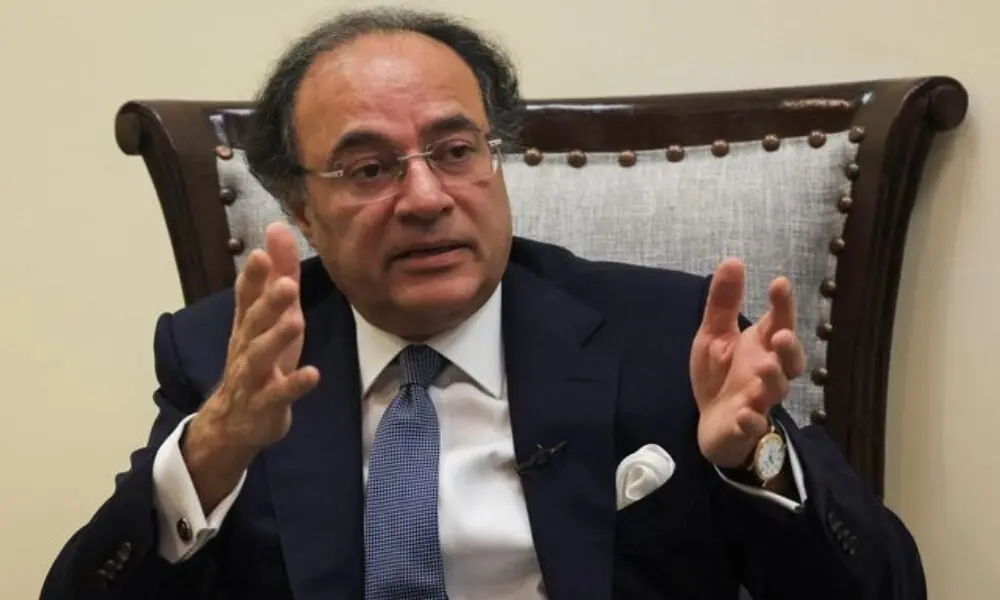

Finance Minister Muhammad Aurangzeb on Sunday said Pakistan’s domestic debt stock has stabilised for the first time in nine years, and debt servicing costs have begun to decline with the reduction in the policy rate.
The minister said this highlighting the public finance, while addressing a press conference in Islamabad.
Pakistan’s central bank kept its key interest rate unchanged at 11% on October 27, it said on its website, a fourth straight hold, as recent floods had a milder-than-expected impact on crops and inflation while growth and reserves continued to improve.
The State Bank of Pakistan said the policy decision aimed to maintain price stability as earlier rate cuts continue to work through the economy.
Meanwhile, Aurangzeb underscored government’s decisive shift toward an inclusive, private-sector-driven and export-led growth model.
He highlighted the recent abolition of the Export Development Surcharge as a key demonstration of this commitment.
“The abolition of surcharge reflects government’s resolve to empower exporters, improve competitiveness, and channel resources and decision-making authority toward the private sector to realise Pakistan’s export potential,” he said.
SBP governor calls for adopting durable growth model
Aurangzeb reiterated that the government’s medium-term economic vision rests on moving from stabilisation to durable, broad-based and inclusive growth led by exports, remittances, productivity and private investment.
He said from July to October, cement production rose by 16 percent, fertiliser by nine percent, petroleum by four percent, automobiles by 31 percent, and mobile phone manufacturing by 26 percent. He said the large-scale manufacturing grew by 4.1 percent year-on-year in the first quarter, reflecting a positive shift compared to the contraction recorded last year.
He emphasised that the challenge ahead is to sustain this trajectory while ensuring that Pakistan does not return to the boom-and-bust cycles driven by external sector pressures.
The minister highlighted that export performance has strengthened, with overall exports rising 5 percent and IT services exports growing by over 20 percent year-on-year. He stressed that the IT sector has recorded back-to-back monthly highs in September and October, establishing itself as a critical pillar of the “new economy,” alongside emerging sectors such as minerals and mining.
He noted that the 3.5 billion dollars Reko Diq-related syndication, led by IFC and now financially closed following the resolution of procedural delays, represents a transformational investment that will generate an estimated 2.9 billion dollars in annual exports once production commences.
The minister noted that the country received remittances worth 38 billion dollars last year, and this figure is expected to cross 41 billion dollars this year, providing a sizeable buffer to the current account.
The finance minister underscored that structural reforms remain central to the Government’s agenda. He said work on pension, debt, SOE reform, the digital economy, taxation, energy, and rightsising is proceeding as committed earlier.
He confirmed that Pakistan’s inaugural Panda Bond would be issued soon.
The minister announced that the 11th NFC Award process would begin next week, with chief ministers and provincial finance teams joining deliberations.
SBP foreign exchange reserves rise by $22mn to $14.52bn
Speaking on the Governance and Corruption Diagnostic Report, Muhammad Aurangzeb clarified that the government itself had requested and facilitated the assessment to strengthen institutional reforms. He noted that the report acknowledged significant progress in sectors including taxation and governance, and that many of its priority recommendations were already work in progress.
He affirmed the government’s commitment to implementing the remaining recommendations as part of broader institutional reforms essential to sustaining Pakistan’s economic turnaround.
The minister also addressed questions on taxation, energy costs, and competitiveness, acknowledging the concerns of the formal sector regarding high taxation and tariffs. He reiterated to expanding the tax base, enhancing enforcement, reducing leakages, and ensuring fairness between formal and informal sectors. He pointed out that tax refunds have risen from 200 billion rupees to 250 billion rupees over the five-month comparison period, reflecting responsiveness to industry needs.
Aurangzeb also highlighted the strong interest of international firms in Pakistan across sectors, including energy, mining, IT, telecom, construction, logistics and EV manufacturing. He cited recent commitments from global companies such as Aramco, Wafi, Gunvor, Turkish Petroleum, Barrick Gold, Citizen Metals, Nova Minerals, BYD, Chery, NWTN Motors, Abu Dhabi Ports, and Google whose senior leadership recently announced the opening of a Pakistan office to serve as a future technical and export hub.
The minister reiterated that Pakistan had turned a corner from the crisis of two years ago and was now pursuing a stable, export-driven, investment-focused growth model grounded in structural and institutional reforms. He stressed that agriculture, large-scale manufacturing, the new economy, remittances and private investment would collectively contribute to a more resilient and inclusive economic future for Pakistan.

























Comments
Comments are closed for this article.