


EDITORIAL: Speaking at a Constitution Day event in Poonch on Wednesday, Omar Abdullah, Chief Minister of Illegally Indian-Occupied Jammu and Kashmir (IIOJ&K), sharply criticised the use of religious identity as a criterion for student admissions at a time of mounting domestic and international concern over the erosion of democratic values in the disputed region. Invoking the Constitution’s Preamble and its guarantees of equality, secularism and democratic rights, he expressed indignation over the controversy at the Shri Mata Vaishno Devi Institute of Excellence, where 42 of the institution’s 50 sanctioned seats were awarded to Muslim students strictly on merit.
In normal circumstances, such an outcome would be hailed as a success story for meritocracy. Instead, the backlash from right-wing Hindu groups and voices within the ruling Bharatiya Janata Party (BJP), who argued that Hindu students should be prioritised because the institute is funded through shrine donations, showed once again how deeply communal narratives have penetrated educational spaces meant to uphold neutrality and fairness. \
Abdullah stressed that admissions based on religious identity would violate the Constitution. To illustrate the implications of allowing religious preferences to shape public policy, he posed pointed rhetorical questions: Should welfare schemes, ration shops or policing also operate on religious lines? Such controversies reflect a broader strategy of marginalising Muslims — intensified in occupied Jammu and Kashmir through military repression and elsewhere in India through a combination of laws and political narratives, including the Citizenship Amendment Act, National Register of Citizens, anti-conversion legislation and cow-related regulations. The protests over merit-based admissions perfectly fit into this wider pattern, reducing academic achievement to communal arithmetic and sending an exclusionary message to young Muslims striving for educational advancement.
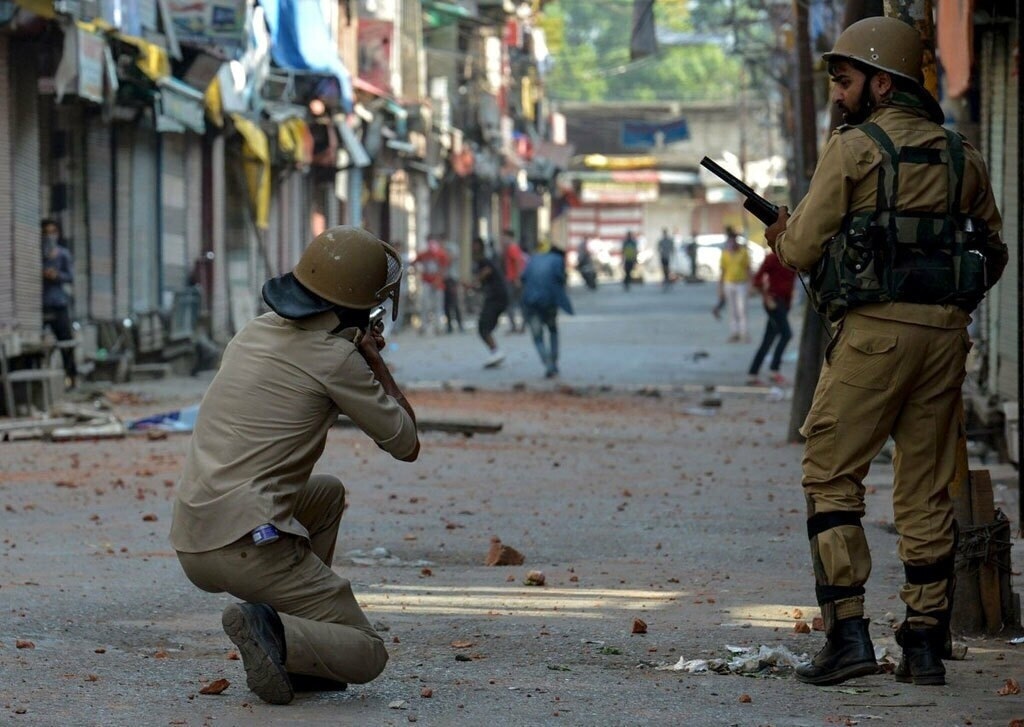
Meanwhile, a new UN report has drawn fresh attention to systemic human rights violations in IIOJ&K. UN experts have warned of “serious human rights violations” in the region, citing the “extensive arbitrary arrest and detention of nearly 2,800 individuals, including journalists, students, and human rights advocates.” Pakistan’s Foreign Office voiced “grave concern,” stating that the report “once again underscores the severe and systematic human rights violations endured by the Kashmiri people under Indian occupation.” New Delhi, of course, routinely rejects such assessments as biased, but the concerns raised by independent UN experts add to a growing international alarm over the prevailing situation.
India’s political trajectory under Prime Minister Narendra Modi — whose government makes no secret of its narrow Hindu nationalist agenda — raises further questions about the future of democratic rights and protections. The developments in IIOJ&K are symptomatic of a wider policy in which religious majoritarianism threatens to override justice, equality and the fundamental rights of all citizens.
Copyright Business Recorder, 2025



















Comments
Comments are closed for this article.