


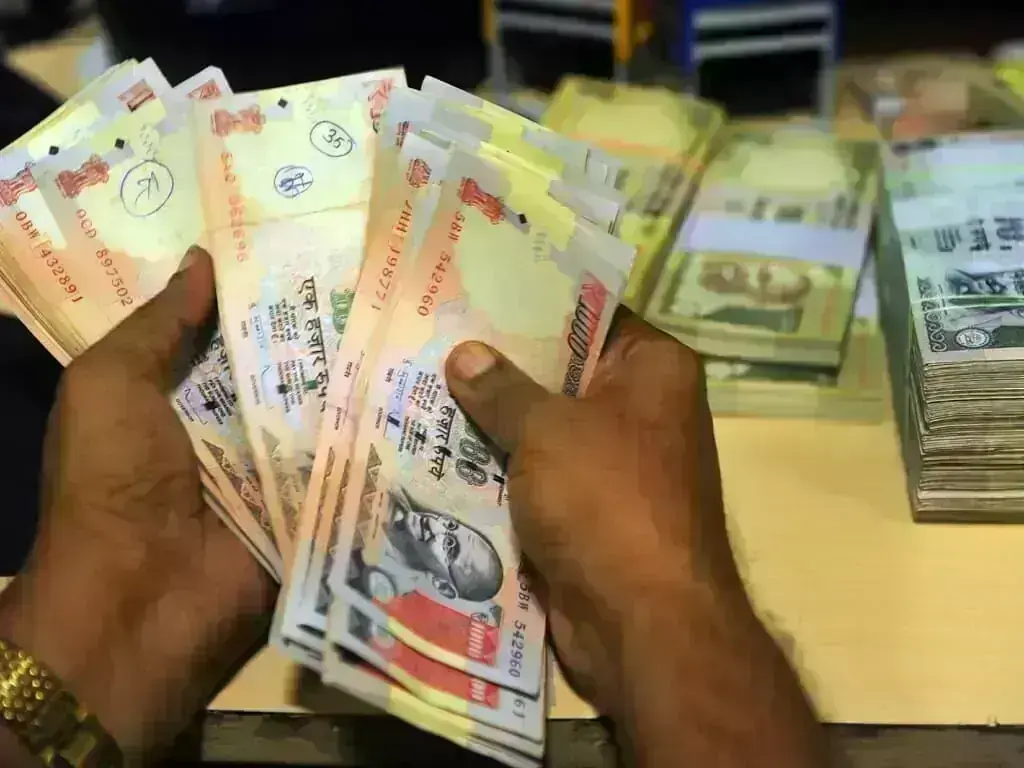

MUMBAI: The Indian rupee hit a lifetime low on Friday, as a bout of portfolio outflows, uncertainty over a U.S.-India trade deal and a pullback in the central bank’s defense of a key level sparked a slide in the local currency.
The rupee fell to 89.49 against the U.S. dollar, sliding past its previous all-time low of 88.80 hit in late September and earlier this month. It was down 0.9% on the day, its biggest single-day decline since May.
The South Asian currency has struggled for three months since steep U.S. tariffs on Indian exports took effect in late August, even as India’s economic fundamentals remain resilient while equity markets are hovering near record highs.
The tariffs though have impacted trade and portfolio flows, and pushed India’s merchandise trade deficit to a record high last month, with exports to the United States down 9% year-on-year.
Foreign investors, meanwhile, have withdrawn $16.5 billion from Indian equities so far this year, making India one of the worst-hit countries in terms of foreign portfolio outflows.
Traders said the Reserve Bank of India, which had actively defended the 88.80 level in recent sessions, appeared to have scaled back its defense and instead likely stepped in near 89.50 on Friday.
“There were large custodial outflows and stop-losses got breached. With the central bank not intervening (near 88.80) the depreciation became all the more pronounced,” a trader at a large foreign bank said.
The rupee is among the weakest performers in major Asian currencies this year, down 4.5% year-to-date.
“An early trade deal is important for a recovery in export order momentum, which remains below Jan-Jul levels as per PMI data,” economists at Citi said in a note.
Citi expects India to post a balance of payments (BoP) deficit of $5 billion for fiscal 2026. “If correct, this would be the first time since at least 1991 that India has seen two consecutive years of BoP deficit,” the note added.
Over recent weeks, the rupee also had to contend with a rise in hedging interest from importers and muted activity from exporters.
On USD/INR, 89.50 is the new resistance for now, said Dhiraj Nim, an FX and rates strategist at ANZ, adding that “the RBI seems to be relenting to a market that has been short INR for quite some time.”
“A lot now depends on the trade deal. A favourable one can bring USD/INR down materially,” Nim said.
The local currency also hit an all-time low of 12.60 against the offshore Chinese yuan on Friday, down 8% on the year.




















Comments
Comments are closed for this article.