


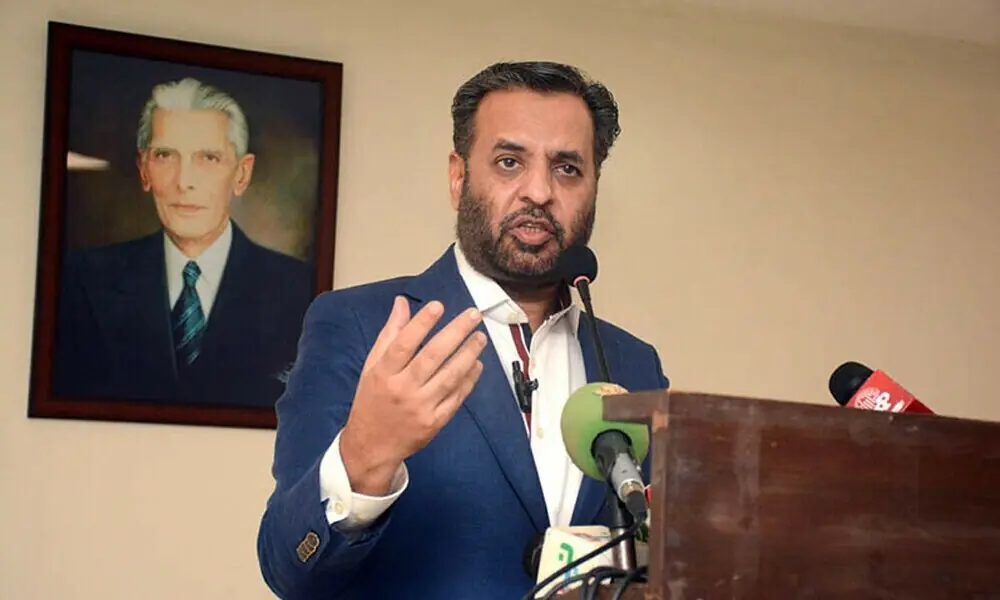

ISLAMABAD: Federal Minister for Health Services and Regulations, Mustafa Kamal, on Tuesday, said Pakistan must focus on preventing rather than treating illness, and called for overhauling the national healthcare system.
Addressing the 15th International Public Health Conference held here by the Health Services Academy (HAS), Kamal said that such conferenceshelp provide platforms to discuss critical subjects to reshape and transform the national health system to effectively tackle health sector challenges.
The conference titled “The Next Generation’s Shield One Health, Vaccination, Adolescent Health, Climate Change” aimed at the future of public health, pandemic preparedness, youth health, vaccination, climate change, and environmental security.
Kamal emphasized that with 6.5 million births annually, the system faces immense pressure. The minister linked healthcare challenges directly to population growth. He said hospitals were not built for current patient numbers. Pakistan’s population is growing at 3.6 percent, the highest in the world.
The Minister highlights Pakistan’s rapidly growing population, which increases by about 6.5 million people, equivalent to the population of New Zealand, each year. He argues that this growth places immense strain on the healthcare system and warns that without a greater emphasis on preventive health, no amount of hospitals will be able to manage the resulting disease burden. He said that protecting children’s health is a sincere act of service and is a shared responsibility, not solely the government’s duty.
The minister further said that even if hospitals are built on every street corner, treatment needs will not be met. Pakistan’s focus must be on protecting every child before they fall sick, he added, and said routine immunisation must become a national top priority because children who complete their vaccination schedule are protected against 13 dangerous diseases. The minister drew attention to the fact that nearly 70 percent of diseases in Pakistan arise from contaminated water, emphasizing that clean drinking water, public awareness, and collective efforts are key to prevention.
He lauded the Health Services Academy’s role in improving public healthcare and imparting skill training. The new generation in the medical field would extend its benefits to the national level by improving the facilities and skill training. He said that from the peaks of Gilgit to the shores of Karachi, untreated sewage is contaminating our water supplies. Unfortunately, the concept of treating sewage before disposal does not exist. He highlighted the current focus on treatment rather than prevention.
He highlighted the progress in medical device registration, saying that the Drug Regulatory Authority of Pakistan (DRAP) has digitized the process, registering 1,500 devices in just 20 days compared to years in the past. The minister said that the importance of necessary legislation, policy measures, and steps to provide an enabling environment for health institutions and promote innovation, investment, and research.
Speaking on the occasion, the Minister of State for Federal Education and Professional Training, Wajiha Qamar, said that along with education, we need to focus on the health sector. She said that positive changes in lifestyle not only improve an individual’s life but also have a deep impact on the health of the entire society.
Wajiha called for a renewed focus on public health, stating that it demands attention equal to education. She asserted that shifts in daily habits directly influence both personal and community well-being. Improving population health, in this view, contributes to a more productive and resilient society, she added.
Speaking on the occasion, Vice Chancellor of Health Services Academy Professor, Dr. Shahzad Ali Khan, said that the event marks a historic step toward a unified national health strategy under the One Health Model.
He stressed that protecting the younger generation is key to Pakistan’s future and that the conference will strengthen the country’s public health leadership globally. The institution had provided an effective platform to the people associated with the health sector. He said that the conference was a constant feature to build the capacity of doctors and the supporting staff, he added. Notable personalities included policy makers, Vice-Chancellors, members, professors, doctors, and students were present on the occasion.
Copyright Business Recorder, 2025























Comments
Comments are closed for this article.