


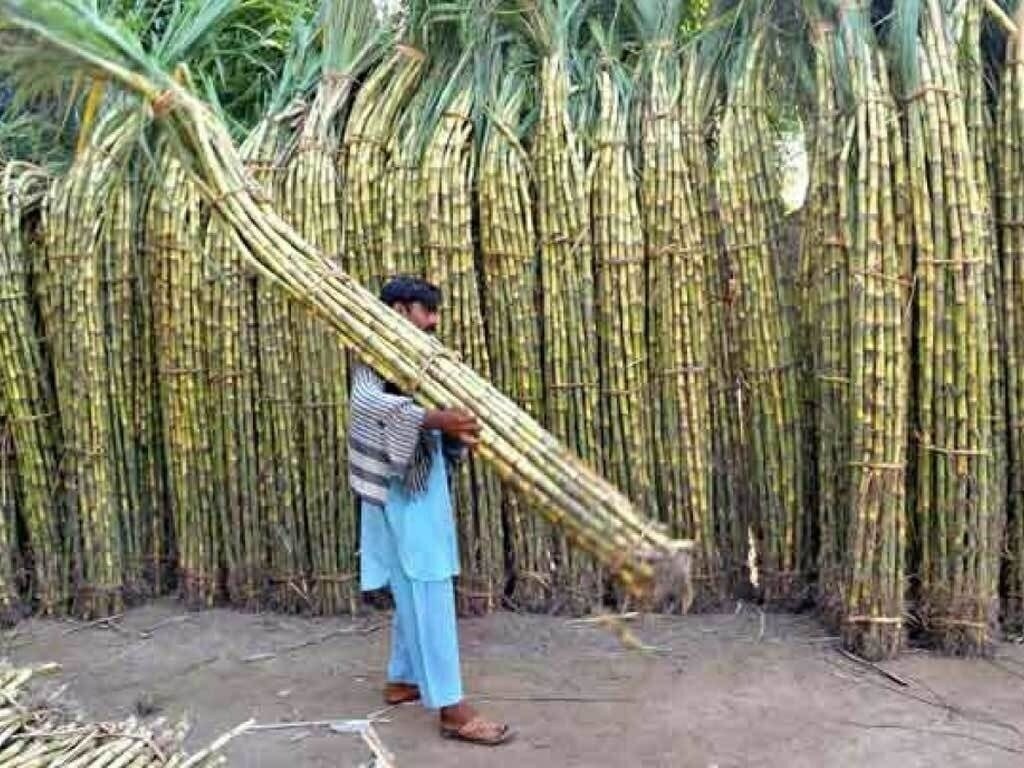
EDITORIAL: The past three decades have seen Pakistan’s farming system profoundly reordered, with strategically important crops like cotton increasingly sidelined in favour of choices that have undermined employment, industry, exports, environmental sustainability and food security.
A recent media report has now highlighted how breaches of crop-zoning rules favouring sugarcane cultivation and the rapid proliferation of new sugar mills are transforming the agricultural landscape, particularly in Rahim Yar Khan, once the country’s premier cotton-producing district.
Cotton has been systematically edged out here as powerful sugar interests have shaped policies that make sugarcane cultivation far more profitable, even at the expense of Pakistan’s textile sector and export earnings.
Rahim Yar Khan and its surrounding areas, with six sugar mills and a crushing capacity of 135,000 tonnes per day, now account for nearly 40 percent of Pakistan’s sugar-milling capacity.
In addition, one of these mills is set to expand its daily crushing capacity by a significant 10,000 tonnes this season, while two powerful industrial groups have established additional units across the Punjab-Sindh border, with capacities of 16,000 and 19,000 tonnes per day, respectively. This concentration of sugar mills in the region poses a serious threat to the country’s agricultural productivity, further marginalising cotton and other staple crops, increasing pressure on water resources caused by sugarcane’s water-guzzling nature and degrading soil health.
The fact of the matter is that the dominance of powerful, politically connected sugar mill owners lies at the heart of this crisis. Their influence in the corridors of power regularly pushes aside concerns about the broader consequences of unchecked sugarcane expansion: the systematic displacement of cotton and wheat cultivation, the depletion of millions of acre feet of irrigation water and a rising water table threatening to turn vast tracts of fertile land into wastelands.
In fact, it appears that nearly every rational agricultural, economic and ecological consideration is consistently subordinated to the interests of sugar mill barons.
Recent APTMA (All Pakistan Textile Mills Association) figures underscore the severity of the predicament, with 150 textile mills closing nationwide over the past two years. The cotton crop, the primary input for the domestic yarn and textile sector and responsible for over half of Pakistan’s exports, has plunged 34 percent this year, with the expansion of sugarcane cultivation a significant factor in this decline.
In addition, sugarcane’s multi-year cultivation cycle worsens the situation: once planted, land is locked for nearly three years because the initial crop is followed by one or two cycles of regrowth from the leftover stalks after harvest. This allows the crop to sprout again without replanting but keeps the land occupied for another couple of seasons. This long occupation of prime irrigated land reduces the acreage available for wheat, cotton, pulses and oilseeds, creating a structural imbalance, where a water-hungry cash crop displaces staples, leading to shortages and inflating the import bill. The economics of sugarcane further distorts farming decisions, with guaranteed mill demand encouraging multi-year commitments that undermine agricultural resilience.
There have also been cases of phasing out of zoning rules, which previously required mills to buy cane from specific areas. This has given farmers and mills greater freedom in supply and pricing, encouraging cultivation in new regions.
Combined with strong commercial demand, with over 80 percent of sugar being consumed by influential industries like beverages and confectionery, the expansion of sugarcane farming shows no sign of abating.
It goes without saying that Pakistan urgently needs to realign its agricultural priorities and dismantle a system dominated by special interest groups that have elevated sugarcane at the expense of other strategic interests. Maintaining the status quo is recklessly destructive and criminally irresponsible, risking further depletion of water and soil resources, weakening the industrial base, and deepening dependence on an unsustainable cash crop.
Copyright Business Recorder, 2025




















Comments
Comments are closed for this article.