


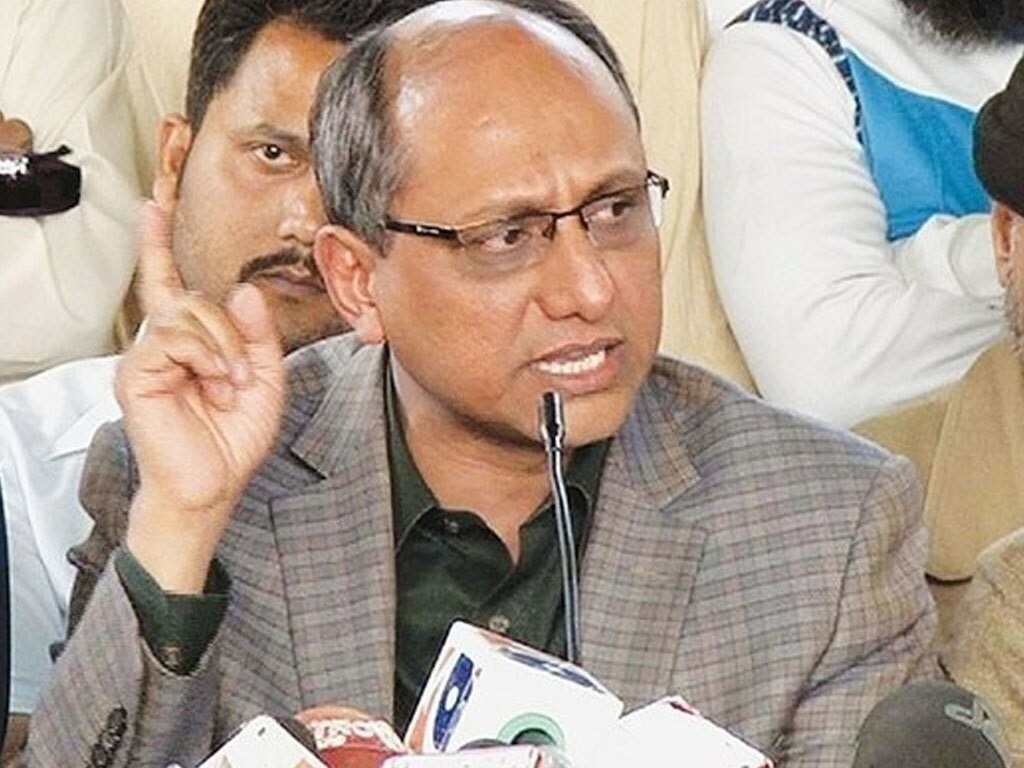
KARACHI: Sindh Minister for Labour, Human Resources and Social Protection, Saeed Ghani on Friday emphasised that real issues facing the working class and the poor is non-availability of quality health and education, not big benefits. If these two essential services are provided according to declared standards, labourers and their families can live prosperous life.
Speaking at a meeting organised by the Labour Law Committee of the Federation of Pakistan Chambers of Commerce and Industry (FPCCI) on Friday, Ghani clarified that schemes like distribution of e-bikes, solar panels, and stoves are not part of the Labour Department’s mandate, nor were they covered under any existing law.
He expressed hope that in the coming years, electricity prices would fall, providing greater relief to industrialists and traders, and enabling industries to grow—an essential precondition for improving workers’ welfare. “Until our industries prosper, we cannot improve the lives of our workers. To uplift labourers, we must support and facilitate our business community,” Ghani asserted.
The minister informed participants that tripartite committees, comprising employers, workers, and government officials, had been established at various levels to resolve labour issues promptly through mutual consultation. He said institutions like the Workers Welfare Board and SESSI were not funded by the government but operated through employers’ contributions and taxes. Their governing bodies of these agencies, he added, included representatives from all three stakeholders to ensure transparent welfare measures for workers.
Highlighting past initiatives, Ghani revealed that a new formula had been proposed to eliminate corruption and ensure the registration of all factory workers. Under the proposed system, contributions would be based on a company’s annual turnover rather than the number of employees, ensuring automatic registration of every worker and curbing the tendency of some employers to conceal actual workforce figures.
Saeed Ghani stressed that providing quality healthcare and education should take precedence over luxury items, adding that the government was pursuing public–private partnerships (PPPs) to establish schools and hospitals for workers and their families.
He disclosed that discussions were already underway with renowned hospitals and educational institutions willing to collaborate on such models.
Responding to a question about the poor condition of Sukkur Labour Colony, the minister admitted that over the past 55 years, only 10,000 flats had been built for workers, despite billions spent on land, construction, and maintenance.
He said that the government recently had to spend over Rs two billion to rehabilitate the flood-hit Gulshan-e-Maymar Labour Colony in Karachi, including payment of millions in utility bills. “Instead of continuing with this unsustainable model, we should divert funds towards healthcare and education,” he remarked, adding that he had proposed to the Sindh Chief Minister to allot free land for workers’ housing so they could build and own their homes themselves.
He also highlighted the issuance of the Benazir Mazdoor Card, developed in collaboration with NADRA, to ensure transparency and authenticity in worker data.
Through this card, the complete family information of registered workers would be accessible at hospitals and welfare institutions, helping eliminate fake entries and corruption.
He said that the scheme would also extend to non-industrial workers, including private-sector labourers, allowing them to voluntarily contribute monthly and avail free healthcare, education, and other benefits. Currently, 600,000 workers are registered with SESSI, but Ghani projected that the figure could raise to 5 million once all labourers were enrolled, creating the need for more hospitals and schools under PPP arrangements.
Addressing concerns raised by industrialists regarding the implementation of the minimum wage, the minister reaffirmed that payment of minimum wages was a legal obligation and must be ensured with employers’ cooperation, as it directly enhanced worker productivity.
He also directed the Director General Labour to digitise and publish online all pending compensation case lists from labour courts to ensure transparency and prevent injustices.
Responding to complaints about the shortage of medicines and doctors in SESSI hospitals, Ghani pledged immediate remedial measures. He also instructed that all industrial zones’ tripartite committees be reactivated swiftly to facilitate direct dialogue among employers, workers, and officials.
At the conclusion of the meeting, the FPCCI presented an honorary shield to Minister Saeed Ghani in recognition of his participation and contributions to labour welfare initiatives.
Copyright Business Recorder, 2025












Comments
Comments are closed for this article.