



The streak of negative quarterly tariff adjustments (QTAs) that had been cushioning end-user electricity tariffs for the past three quarters has finally come to an end. Nepra has notified the hearing for the 1QFY26 QTA, with a positive adjustment of Rs8 billion being sought—marking a decisive return to normalcy after an unprecedented run of relief.
This development was anticipated. These pages, when the 4QFY25 QTA was announced, noted that the Rs53 billion negative adjustment—the sharpest single-quarter reduction on record—would likely be the last of its kind. That round of relief stemmed almost entirely from a reduction in capacity charges, driven by the termination of five power plants and renegotiated IPP terms.
Together with the shutdown of the Neelum Jhelum hydropower plant, which temporarily reduced capacity payments, the effect produced an artificial compression of the capacity purchase price (CPP).
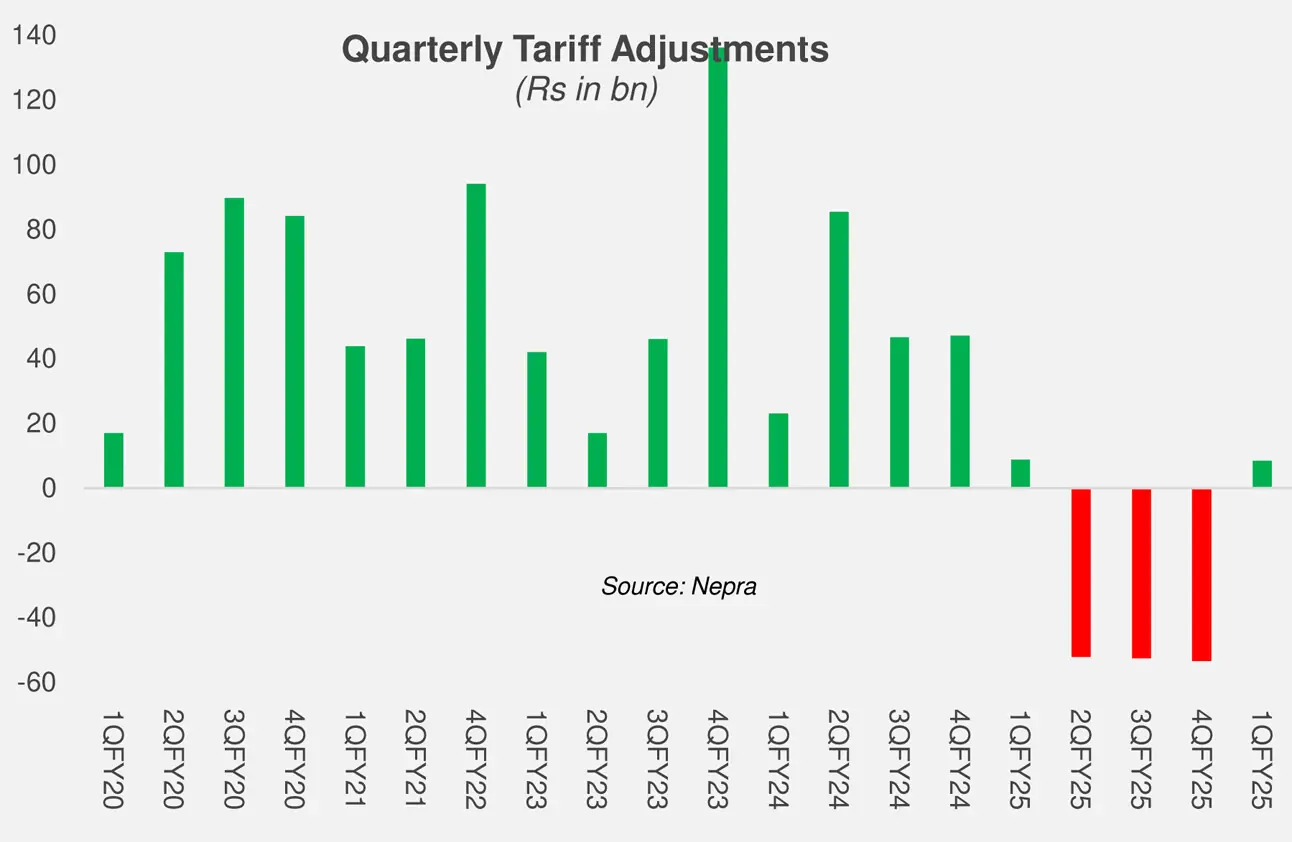
The era of hefty negative QTAs powered by outdated or inflated capacity charge assumptions was never going to last beyond the base tariff revisions. The numbers for 1QFY26 now confirm it.
The Rs8 billion proposed adjustment for the first quarter of FY26 is modest but symbolically important. It signals that the cost recalibration within the power purchase price framework has now settled into a more realistic baseline.
The mid-year IPP renegotiations—previously outside the scope of FY25’s original CPP estimates—are now baked into the FY26 tariff structure. This has eliminated the space for large downward corrections that had previously driven QTAs into the negative.
That said, the underlying cost pressures remain significant. Capacity charges under-recovery for the quarter still stood at Rs22 billion—a reminder that the problem of underutilized generation persists. Were it not for the offsetting impact of O&M costs, use-of-system charges, and the quarterly fuel charge adjustment (FCA), the QTA could have been considerably higher.
Based on actual sales of around 33 billion units, the QTA translates to roughly Rs0.25 per unit if applied uniformly across the quarter.
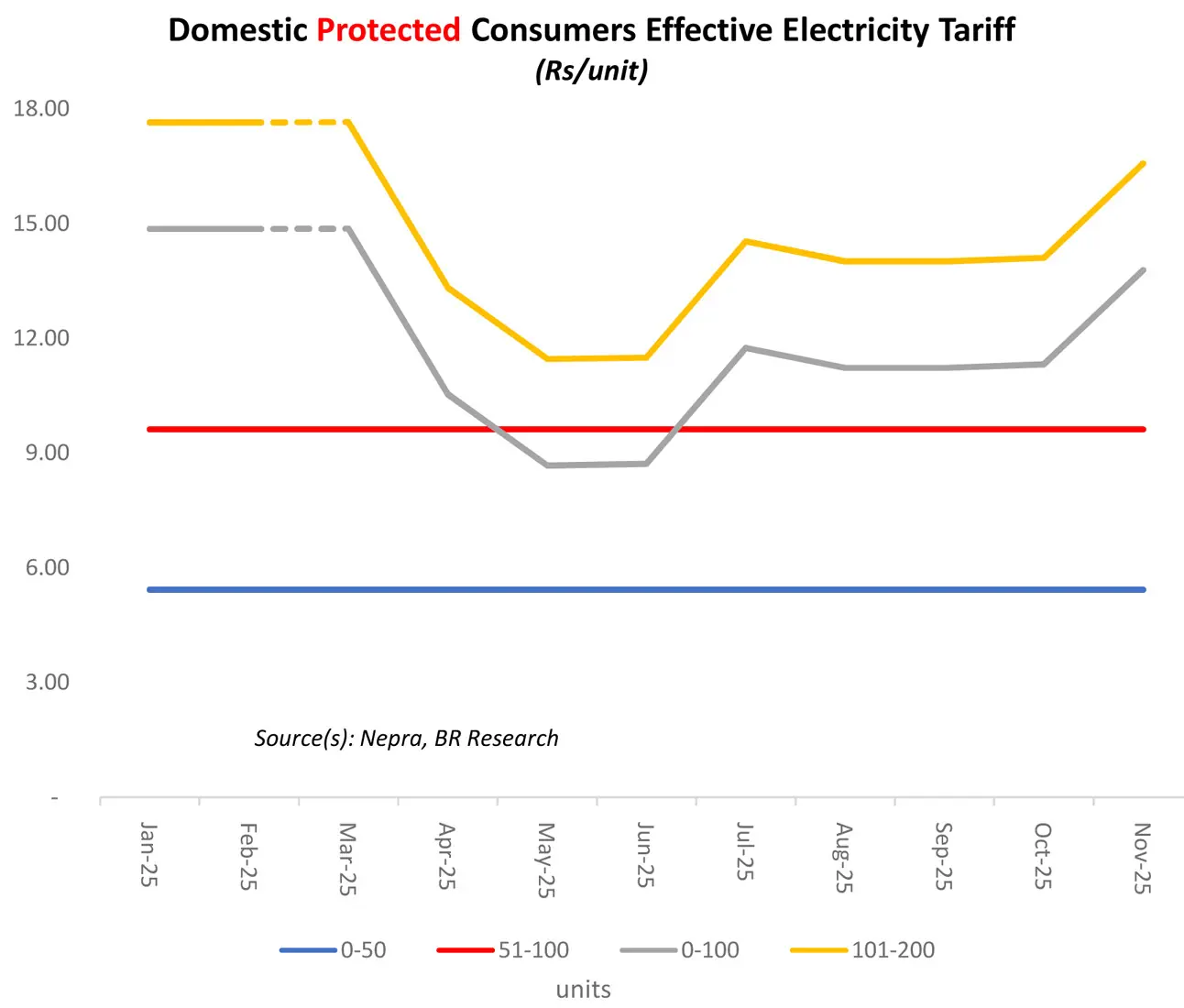
The government, mindful of the political and social sensitivity around tariffs, may once again choose to phase the adjustment or apply in one go—a tactic used in the past to smooth the impact on consumers. Nonetheless, with the previous negative QTA of Rs1.89 per unit having lapsed in October, the delta created in the tariff structure could exceed Rs2 per unit, even before accounting for other regular adjustments.
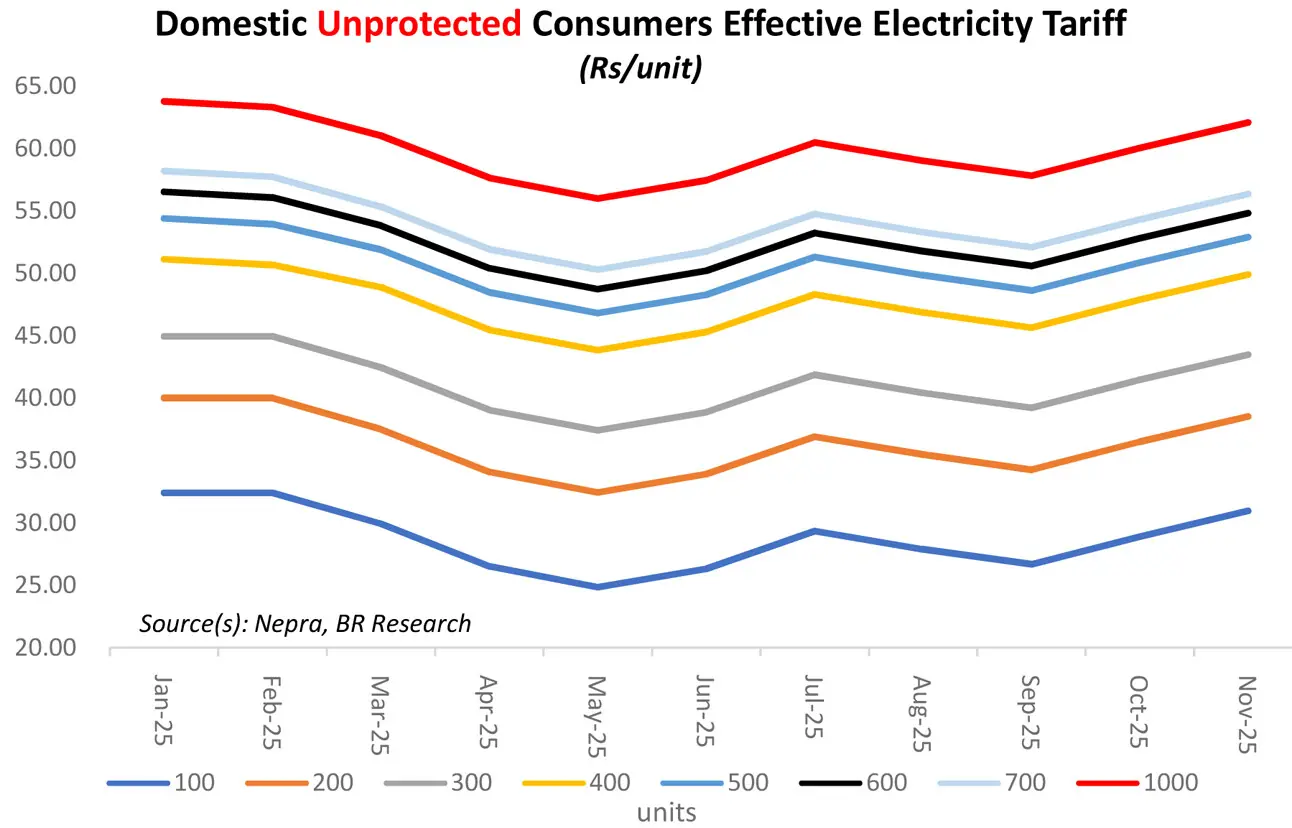
In practical terms, this means that the consumer-end effective tariff is now headed to its highest level in six months. Another month-on-month increase in the notified tariff is already locked in, and the relief that dominated much of FY25’s narrative has now run its course.
Going forward, QTAs are expected to remain largely positive, albeit minimal, as Nepra’s revised assumptions better reflect the system’s operational realities. However, the bigger challenge remains structural: the inability of actual generation to match the reference generation assumed in tariff calculations. This persistent gap keeps capacity payments elevated, undermining gains from renegotiations and lower base tariffs.
In that context, the much-discussed Roshan Maeeshat program—designed to spur incremental demand through industrial activation and consumption-led growth—takes on renewed importance. Without a sustained pickup in demand to absorb available capacity, the sector risks sliding back into its familiar cycle of under-recovery, mounting circular debt, and recurring tariff revisions.
The QTA tide has turned as predicted. But unless incremental consumption and system efficiency catch up, this “return to normalcy” could soon morph into yet another phase of upward price pressure—testing the limits of both consumers’ endurance and policymakers’ resolve.




















Comments
Comments are closed for this article.