


A new blueprint: building an age-fluid, evidence-based learning ecosystem
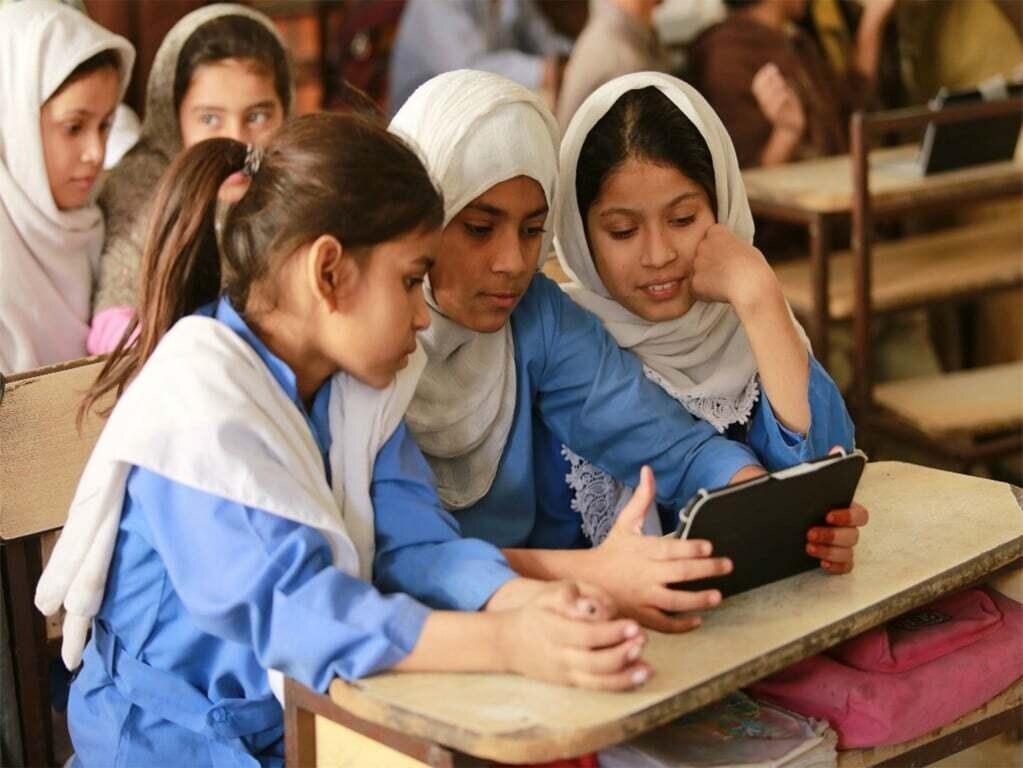

If the evidence is overwhelming—that children can engage in meaningful, high-level learning and creation far earlier than traditional systems allow—then the next question is practical and urgent: How do we build an education system that makes this possible for every child, everywhere?
The answer lies not only in discarding the old structure but also in reimagining and operationalizing a new one—a framework that reflects the realities of our time rather than the inertia of the past. We propose a developmentally responsive, age-fluid model of learning that abandons rigid chronological gates and replaces them with scaffolded autonomy, guided by each learner’s curiosity, readiness, and demonstrable mastery.
This marks the beginning of a profound new phase in human learning—one shaped by a techno-communication landscape that has fundamentally transformed how people access, process, and apply knowledge. In this new reality, the boundaries between learning, creating, and contributing are dissolving. The convergence of generative AI, immersive technologies, global connectivity, and participative digital platforms has created conditions where a child can explore, experiment, and innovate with the same depth once reserved for advanced researchers.
Education is no longer a linear march through standardized curricula; it is a dynamic ecosystem of continuous discovery—a system that adapts to the learner instead of forcing the learner to conform. This new paradigm values competence over compliance, curiosity over conformity, and creativity over credentialism. It recognises that meaningful learning is not confined to classrooms, time tables, or degrees, but emerges through active interactions—with intelligent tools, mentors, communities, and global networks—that nurture both skill and imagination.
To thrive in the post-internet, AI-empowered era, education must evolve from a bureaucratic process of transmission into a living process of transformation, where every learner becomes both the explorer and the architect of their intellectual journey.
The blueprint: a developmentally responsive, technology-driven ecosystem
Our blueprint unfolds in four overlapping phases—each grounded in neuroscience, real-world examples, and scalable digital infrastructure. It recognizes that brain plasticity, curiosity, and guided experience, not chronological age, determine readiness to learn and innovate.
Ages 6–10: Curiosity Foundations — Play, Procedural Thinking, and Digital Literacy
At this stage, the goal is not content mastery, but the awakening of agency, pattern recognition, and creative confidence. Learning must be playful, interactive, and experiential—supported by AI tutors, immersive videos, and simulation-based environments that turn exploration into understanding.
Tools like Scratch Jr., micro:bit, and MIT’s App Inventor for Kids empower learners to create animated stories, simple games, or smart sensors—introducing computational logic through storytelling. In Guangdong, AI-powered story apps allow children to co-author tales with virtual characters that adjust vocabulary and narrative depth in real time. Each interaction sparks reasoning: “Why did the fox help the rabbit?” or “What would you do differently?”
Assessment, too, becomes experiential: interactive exhibitions, digital badges, and peer showcases. A 2025 MIT Media Lab study found that such AI-augmented storytelling improved sequencing by 28 percent and empathy by 22 percent among early learners—demonstrating that dialogic AI can foster both cognition and character.
Digital citizenship begins here. In South Korea, Grade 1 students earn “AI Safety Badges” after completing interactive modules on privacy, empathy, and digital ethics. The goal is not to restrict curiosity—but to shape it with awareness and responsibility.
Ages 10–14: Applied inquiry – connecting learning to community and context
Here, curiosity finds purpose. Students begin addressing real-world challenges in their local environments, guided by AI as a research collaborator, data analyst, and design assistant.
Tools expand to NotebookLM (for research synthesis), Raspberry Pi (for data collection), Tinkercad (for 3D modeling), and podcasting platforms (for digital storytelling). In Colombia’s Cauca region, 11-year-olds designed soil-nutrient sensors for coffee farmers. In Kenya, students use low-cost sensors to monitor air quality near industrial zones, with AI dashboards translating data into actionable insights.
In Vietnam, 12-year-old Linh Nguyen built a voice-controlled irrigation system for her family’s rice field using a localized language model trained on agricultural records. The system reduced water waste by 32% and inspired regional replication.
This phase prioritizes interdisciplinary and participatory learning. A project on urban flooding blends hydrology, mathematics, and civic empathy. AI supports each stage—summarizing research, modeling floods, and debugging prototypes.
Assessment is replaced by living portfolios—collections of prototypes, interviews, logs, and reflections. Lucas Education Research (2024) confirmed that project-based learners demonstrate stronger critical thinking, self-efficacy, and persistence than peers in traditional schooling—especially among previously “at-risk” groups.
Ages 14–18: Independent research and social innovation
By adolescence, learners are ready to contribute original insights—not as passive students, but as active innovators. They work on high-impact projects in their communities with AI as a co-researcher.
Tools include agentic AI frameworks (AutoGen, LangChain) that allow students to build multi-agent systems capable of research, code review, and critique; collaborative platforms like GitHub for versioning; and public data repositories for validation.
In Brazil, teens developed a dengue-outbreak prediction model using sanitation data; in Rwanda, young innovators created a maternal health chatbot in Kinyarwanda that now supports rural clinics. These are not school projects—they are proofs of purpose.
Validation shifts from institutional exams to peer and community review. Mastery is measured through reproducibility, ethical clarity, and social value. Jack Andraka’s 15-year-old cancer-detection sensor exemplifies this spirit—he succeeded not through permission, but through persistence, access, and mentorship.
Ages 18+: High-complexity innovation and ethical leadership
By adulthood, learners have already mastered fundamentals and project rigor. This stage focuses on deep, high-risk innovation—quantum computing, synthetic biology, AI ethics, or climate modeling. Students no longer enter as empty vessels; they arrive as seasoned problem-solvers capable of frontier work.
Formal institutions, if they survive, should exist only as collaborative hubs—spaces for experimentation, global dialogue, and the ethical stewardship of emerging technologies—not as gatekeepers of knowledge.
Overcoming objections through design, not delay
Skeptics cite brain maturity, ethics, and superficiality. Yet each concern is resolved by design, not deferral:
Neurodevelopment: Scaffolded AI-guided reflection accelerates metacognition; the 2025 Stanford study proved that structured prompts (“Why did your model fail?”) enhance reasoning even in 10-year-olds.
Ethics: Programmes like South Korea’s embed ethics into every project—students audit their own algorithms for bias and design consent forms for data use.
*Superficiality: Evidence-based validation ensures depth. Tools like CodeInspect and AI-powered peer review bots detect plagiarism or hallucinated data, ensuring reproducibility over repetition.
The enabling ecosystem: tools, platforms, and credentials
The infrastructure for this revolution already exists:
LLMs as mentors: ChatGPT, Khanmigo, and open-source models provide personalized, contextual tutoring.
AI notebooks: Observable, Deepnote, and Colab merge computation with creative documentation.
Makerspaces: Affordable kits like Raspberry Pi and Arduino translate ideas into prototypes.
Collaboration hubs: GitHub, Replit, and community labs enable global teamwork.
Digital credentials: Open Badges and Credly verify micro-skills—coding, ethics, or design thinking—creating portable credibility beyond degrees.
A 2025 Emerald Publishing study confirmed that AI-driven early learning systems that adapt to children’s language, pace, and emotional states dramatically enhance engagement and mastery.
Equity at the core
This model fails if it serves only the connected elite. Its power lies in inclusion:
Mobile-first access: 85% of learners connect via smartphones; offline AI tools (like those in Colombia) ensure continuity without stable internet.
Community hubs: Libraries, mosques, and youth centers host AI labs and mentors.
Localized relevance: AI that speaks Quechua, Sindhi, or Swahili and solves local problems is what sustains engagement.
In Rwanda, solar-powered AI Learning Pods operate in 150 rural schools, enabling children to build crop disease and maternal health apps offline. UNESCO’s 2025 AI Education Report calls AI literacy a basic human right; the OECD warns that without equity, digital divides deepen. The answer is clear: universal access paired with local purpose.
The road ahead
This revolution is not about replacing teachers or rushing childhood—it is about honoring curiosity during its prime, supported by scaffolds, safeguards, and validation mechanisms that ensure depth over illusion. The tools exist. The children are ready. What remains is the courage to let learning evolve—to trust creativity over control and design a system where every child can build, question, and transform their world.
This article is the third article of a four-part series of articles.
Next Week: Policy, validation, and scaling—how to make this revolution real, safe, and inclusive for every child, from Ghana to Guangdong.
Copyright Business Recorder, 2025
The writer is advocate High Court, a Techno-economist and an educationist

























Comments
Comments are closed for this article.