


‘Developments across South Asia expose region’s fragile security’
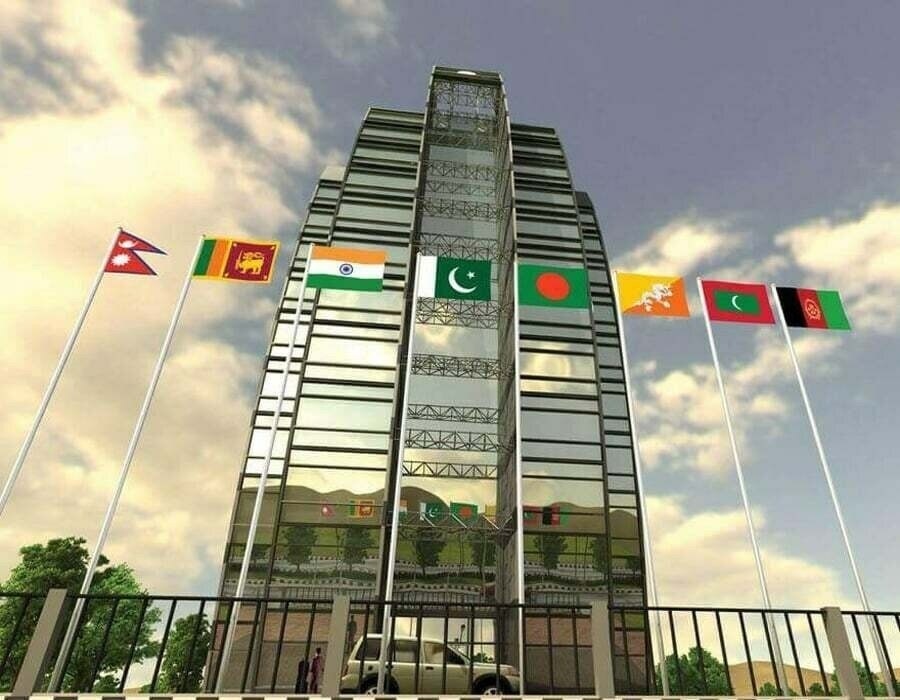

LAHORE: Recent developments across South Asia have exposed the region’s fragile security and governance structures, with renewed tensions between Pakistan and India, political turmoil in Bangladesh, and shifting regional alignments posing fresh challenges to cooperation, according to foreign affairs expert Muhammad Mehdi.
The events of last May, which sharply escalated Pakistan-India tensions, have shattered the long-held belief that the two nuclear powers would avoid direct confrontation. Mehdi explains that the ambiguity over conventional military supremacy has vanished, yet India’s internal politics under the BJP leave little room for dialogue with Pakistan.
This deadlock has further dimmed hopes for reviving regional forums such as SAARC, he stated at the IAS-SANPA international conference 2025 on South Asian Countries and Evolving Geo-political Landscape.
Mehdi further observed that analysts in Islamabad believe the crisis has influenced public opinion in India and could affect its upcoming elections. They argue that restoring people-to-people contact, trade, and travel initiatives such as the Samjhauta Express and Dosti bus service is essential before any meaningful regional dialogue can resume.
Meanwhile, Bangladesh’s violent student movement has underscored the growing frustration among educated youth facing rising unemployment, Mehdi noted. Despite claims of economic progress, Prime Minister Sheikh Hasina’s government stands accused of suppressing political dissent, leaving little democratic space for peaceful protest.
While other South Asian countries face similar job crises, democratic mechanisms elsewhere may help prevent unrest of this scale.
Mehdi says smaller South Asian nations are also feeling the uneven effects of regional shifts. While Bangladesh’s tilt toward Pakistan appears to be growing, tensions between Islamabad and New Delhi continue to ripple across Afghanistan, Sri Lanka, and the Indo-Pacific. He warns that without efforts toward collective cooperation, military posturing will only deepen instability.
At the same time, growing foreign influence on South Asian bureaucracies has limited their ability to implement meaningful reform. Despite vast resources, the region remains mired in economic chaos, spending billions on imported weaponry while failing to address poverty and governance issues.
In West Asia, Iran’s recent confrontation with Israel has subtly realigned regional relations. Tehran’s disappointment with New Delhi’s cautious stance and its warming tone toward Islamabad have been notable, though energy projects like the Iran-Pakistan and TAPI pipelines remain stalled by sanctions and Afghanistan’s instability, Mehdi opined.
With SAARC inactive since 2014, bilateral ties among member states continue to evolve, but mutual mistrust rooted largely in the unresolved Kashmir dispute prevents genuine regional cooperation.
Mehdi concludes that whether in Dhaka or Delhi, the underlying issue remains the same: economic injustice and poor governance. Until South Asian governments address unemployment, corruption, and inequality through transparent and merit-based systems, unrest will continue to simmer beneath the surface.
Professor Dr. Rabia Akhtar, Dean of the Faculty of Social Sciences, stated that the May 2025 crisis was not just another flashpoint but a demonstration of how much Pakistan’s crisis-governance capacity has evolved since Pulwama-Balakot in 2019. In 2019, Pakistan was reactive, but in 2025, it was prepared. What unfolded was not accidental restraint but institutionalized readiness.
Pakistan’s response this time reflected maturity in three domains: information management, operational control, and inter-institutional coherence. The state managed to keep its messaging unified in real time, with military briefings that were transparent, consistent, and professional, directly countering disinformation before it spiralled.
This represented a significant break from the 2019 experience, where information vacuums allowed the other side to shape the narrative internationally.
From a governance standpoint, the episode also revealed how the state has absorbed the logic of hybrid warfare into administrative planning. Managing information ecosystems, anticipating digital manipulation, and engaging with social media influencers as part of strategic communication are now embedded in crisis playbooks. This represents a remarkable evolution in bureaucratic adaptability.
Yet the lesson is not only about capacity but also about opportunity. The crisis reaffirmed that dialogue in South Asia will not begin through idealism but through risk management. The more both sides professionalize their crisis management, the closer they get to building mechanisms for risk reduction.
That could mean joint notification protocols, parallel briefings to prevent misinterpretation, or even cooperative fact-checking arrangements in future crises.
Copyright Business Recorder, 2025

























Comments
Comments are closed for this article.