


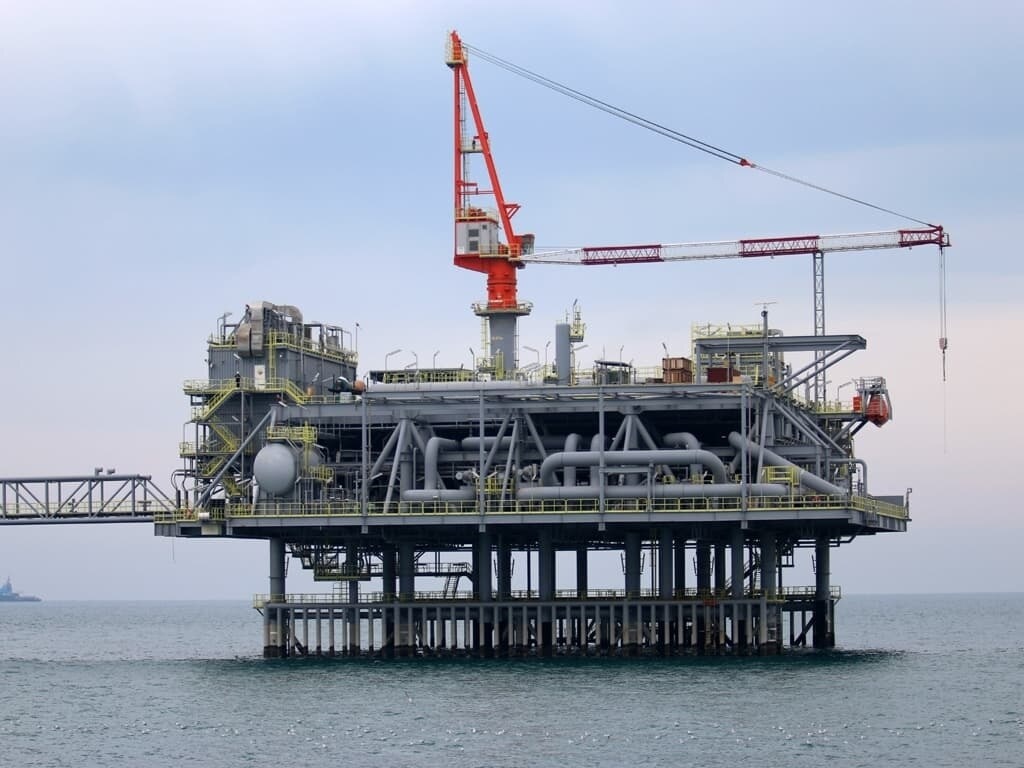

ISLAMABAD: The Petroleum Division on Friday received bids for 23 of the 40 offshore blocks, which were launched in January 2025.
According to the PD, “Ministry of Energy announces the results of the competitive offshore bid round 2025, launched in January this year after a gap of 18 years for the grant of petroleum exploration licenses in 40 offshore blocks.”
On Friday, the bids were publicly opened transparently by the bid opening committee, chaired by the Director General Petroleum Concessions (DGPC), in the presence of representatives from the provincial governments of Sindh and Balochistan, the two coastal provinces hosting the offshore areas.
Seven new exploration blocks: OGDCL secures provisional award
The response to the bid round has been encouraging, reflecting a strong investor confidence in Pakistan’s upstream sector. Bids were received for 23 offshore blocks, covering a total area of approximately 53,510 square kilometers.
Among the successful bidders are Pakistan’s leading national companies, the OGDCL, the PPL, Mari Energies and Prime Energy. In addition, other important international and private-sector partners, like Turkish Petroleum, United Energy, Orient Petroleum, and Fatima Petroleum, have joined as joint venture partners, underscoring growing international interest in Pakistan’s offshore potential.
As many as 4,427 work units have been committed during Phase I of the initial three-year license period, representing an investment of approximately USD 80 million. The companies have submitted work programs designed to progressively mitigate the geological risks, and in the event of exploration drilling, investments could reach up to USD 750 million to USD 1 billion.
During Phase I, the companies will undertake comprehensive geophysical and geological (G&G) studies, including seismic data acquisition, processing, and interpretation, to better define the hydrocarbon potential of Pakistan’s offshore basins. Upon completion of these studies, the Phase-II work program will be finalized, which will include drilling of exploratory wells in the prospective areas.
Pakistan’s strategy to initiate exploration in both the Indus and Makran basins simultaneously has proven to be successful, as reflected in the participation and outcome of the bid round. After the completion of G&G work and drilling planning, the Ministry will invite global oil majors to join the next phase of offshore exploration, several of whom are already in contact with the government and local companies and are currently evaluating the available data.
Recently, as a major intervention, TPAO, the National Company of Turkiye has taken over a 25 percent stake in offshore Block-C along with operatorship.
Before initiating the process, the ministry developed a Model Production Sharing Agreement (MPSA), a key document integrated into the bid package, to ensure transparency, competitiveness, and investor confidence. In parallel, the Offshore Petroleum Rules were promulgated to provide a comprehensive regulatory framework, paving the way for renewed offshore exploration in Pakistan’s waters.
A recent basin study conducted by the U.S. firm DeGolyer and MacNaughton (D&M) has indicated a significant yet-to-be-found potential of hydrocarbons in Pakistan’s offshore basins.
Building on this encouraging assessment, the Offshore Bid Round 2025 was launched with a view to offering blocks that allow companies to undertake systematic exploration efforts to test various geological plays across both the Indus and Makran basins.
Reuters adds: Pakistan said it has awarded 23 offshore exploration blocks to four consortiums led by local energy companies, some partnered with foreign firms including Turkey’s national oil company TPAO.
In Pakistan’s first such bidding round in nearly two decades, its energy ministry said on Friday that bids were awarded for 23 of 40 offshore blocks offered, covering around 53,500 square kilometres.
The energy ministry listed state-run Oil and Gas Development Co. Ltd (OGDCL), Pakistan Petroleum Ltd (PPL) and MariEnergies, along with privately-owned Prime Energy, which is backed by Pakistan’s Hub Power Company (Hubco), among the successful bidders.
TPAO secured a 25 percent stake in one of the awarded blocks and the right to operate it after signing a joint bidding agreement with Pakistan Petroleum Ltd (PPL) earlier this year to explore the country’s offshore prospects.
Other partners include Hong Kong-based United Energy Group, Orient Petroleum, a major local independent producer, and Fatima Petroleum, part of Pakistan’s Fatima Group conglomerate.
The four winning consortiums, led by OGDCL, PPL, Mari Petroleum and Prime Energy, collectively pledged about USD80 million in exploration work over the initial three-year period, the energy ministry said.
Total investment could rise to between $750 million and $1 billion if drilling proceeds, it added.
Pakistan’s 300,000 square kilometre offshore zone, bordering energy-rich Oman, the United Arab Emirates and Iran, has seen just 18 wells drilled since the country’s independence in 1947, too few to fully assess its hydrocarbon potential.
Pakistan, which imports about half its oil, is seeking to revive foreign interest after the failure of the 2019 Kekra-1 well led to the exit of US major Exxon Mobil.
Copyright Business Recorder, 2025

























Comments
Comments are closed for this article.