


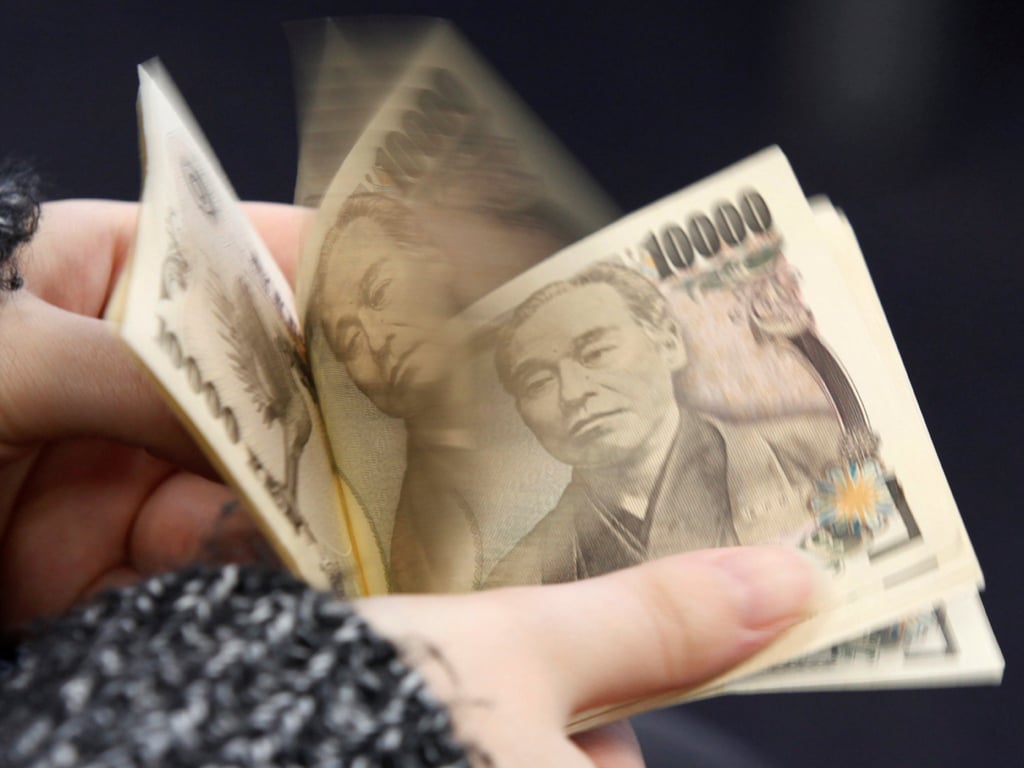

NEW YORK: The Japanese yen tumbled against the US dollar on Thursday after the Bank of Japan adopted a less hawkish tone than traders expected, while the greenback was boosted after Federal Reserve Chair Jerome Powell on Wednesday said a rate cut in December was not guaranteed.
The Bank of Japan kept interest rates steady and BOJ Governor Kazuo Ueda sent the strongest signal yet that a rate hike was possible as soon as December, depending on the outlook for wages next year.
However, “policymakers at Japan’s central bank disappointed yen bulls by staying on hold and exhibiting the same degree of dissent as in September,” said Karl Schamotta, chief market strategist at Corpay in Toronto.
At a post-meeting press conference, Ueda also offered little detail on when the central bank could next raise rates, heaping pressure on the yen.
“Ueda took people by the back foot a little bit - that he was so willing to wait it out,” said Lou Brien, strategist at DRW Trading in Chicago.
The contrast with Fed communication added to the move in dollar/yen.
Powell said on Wednesday that a policy divide within the US central bank and a lack of federal government data may put another interest rate cut out of reach this year, as he acknowledged the threats that officials see to the job market but also the risky nature of making further rate moves without a fuller picture of the economy.
The Fed cut rates, as expected, with two dissents. Governor Stephen Miran again called for a deeper reduction in borrowing costs, while Kansas City Fed President Jeffrey Schmid favored no cut at all given ongoing inflation.
“Powell communicated clumsily,” said Brien. “It was maybe indicative that he lost a little control of the committee, or the committee was just so disparate and he didn’t feel that he should force his will on it.”
That said, “in my mind, they’re still going to cut in December and that’s based on my idea that the labor market is weaker than it appears,” Brien added.
Fed funds futures traders are now pricing in 71 percent odds of a cut in December, down from around 85 percent before Powell’s comments.
The dollar index was last up 0.35 percent on the day at 99.49 and reached 99.72, the highest since August 1.
Against the Japanese yen, the dollar strengthened 0.98 percent to 154.21, the highest since February 13.
The euro remained lower on the day after the European Central Bank kept interest rates unchanged at 2 percent for the third meeting in a row on Thursday and offered no hints about future moves. It was last down 0.2 percent at USD1.1576 and reached USD1.1546, the lowest since October 14.
“The European Central Bank’s steady-as-she-goes policy approach looks as if it will remain intact for many months yet,” said Schamotta.
“Rates are already plumbing the lower end of the theoretical “neutral” range, inflation pressures are muted, and Governing Council members think Germany’s fiscal stimulus efforts will offset a trade-related drag in the new year,” he said.




















Comments
Comments are closed for this article.