


Regional Transport Ministers’ Conference: PM talks of economic integration
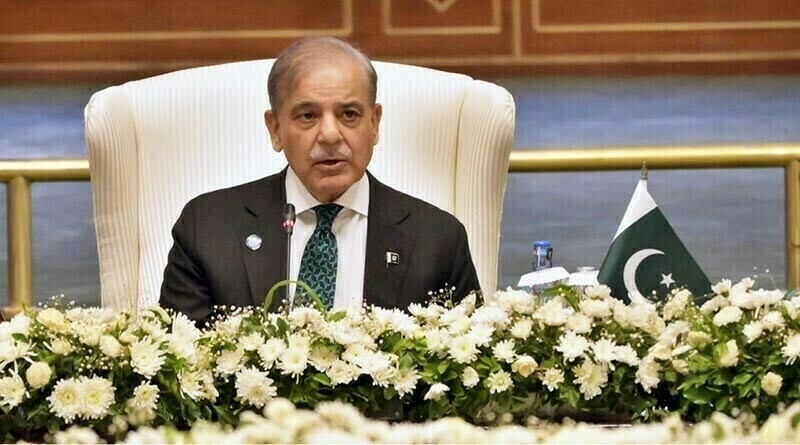

ISLAMABAD: Prime Minister Shehbaz Sharif on Friday underscored the strategic significance of the China-Pakistan Economic Corridor (CPEC) and broader regional connectivity projects, highlighting their potential to boost trade, economic collaboration, and energy cooperation across the region and beyond.
In his speech at the closing session of the two-day Regional Transport Ministers Conference, the prime minister emphasized that the development of transnational rail and road networks would be a catalyst for regional economic integration.
These initiatives, he added, represent “win-win propositions” that promise mutual benefits for all involved.
Pakistan’s motorways, highways backbone of regional connectivity: Ishaq Dar
“This will strengthen our shared commitment to peace and foster development throughout the region,” Sharif stated. “Together, we must plant the seeds of cooperation so that we can reap the rewards of progress and prosperity for our peoples and the broader region.”
Looking ahead, Sharif announced that Pakistan is entering “CPEC 2.0”, a new phase focused on enhancing business-to-business partnerships, increasing investment opportunities for Chinese companies, and advancing shared prosperity.
He also highlighted ongoing projects aimed at expanding rail connectivity, such as the Trans-Afghan Railways and the Islamabad-Tehran-Istanbul link, alongside plans to strengthen air links to Central Asia.
The conference, hosted by the Ministry of Communications under the theme “Regional Connectivity: Opportunities for the Region,” was attended by transport ministers and delegates from 20 countries, with representatives from international organizations including the Asian Development Bank, Economic Cooperation Organization, International Road Transport Union, and the United Nations Economic and Social Commission for Asia and the Pacific.
In his address, the prime minister stressed the historical importance of Pakistan’s geographic location, from the ancient Silk Road to the modern Belt and Road Initiative.
He noted that shifting geopolitical dynamics and the growing importance of economic cooperation have transformed this strategic corridor into a vital framework for regional and global trade.
“Pakistan’s position at the crossroads of China, Central Asia, and the Middle East, alongside its vital coastline along the Arabian Sea, makes Gwadar and Karachi key nodes on the maritime Silk Road,” Sharif remarked, underlining Pakistan’s role in regional trade and energy.
The prime minister also drew attention to the critical role of digital infrastructure in Pakistan’s development. “While we may not have vast reserves of natural resources, our greatest asset lies in the youth of our nation – 60 per cent of whom are between the ages of 15 and 30,” he said, positioning the country’s young population as a key driver of future growth.
Sharif later toured an exhibition showcasing the contributions of organizations like the National Logistics Corporation, the National Highway Authority, and Pakistan Railways, engaging with company representatives to explore their work.
Earlier, Communications Minister Abdul Aleem reiterated the commitment of the conference participants to advancing regional connectivity, emphasizing the importance of innovative financing, creating linkages, and cultivating partnerships with international financial institutions to support development.
He also stressed the need for liberal visa policies and greater focus on road safety for vulnerable users. He expressed optimism that the discussions would lay the foundation for meaningful cooperation, with Pakistan ready to facilitate dialogue, joint ventures, and initiatives aimed at achieving the common regional goals.
Copyright Business Recorder, 2025

























Comments
Comments are closed for this article.