


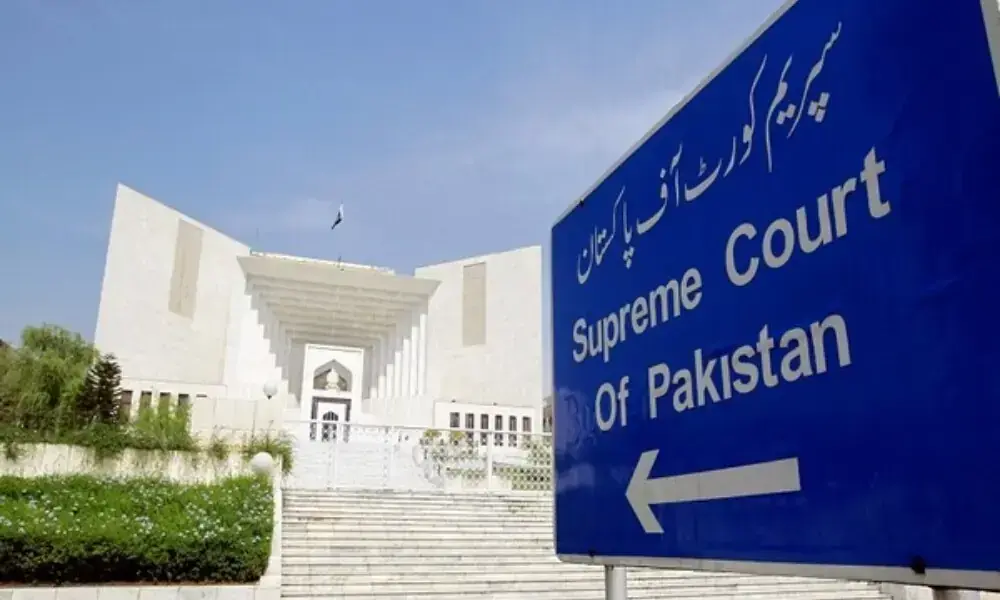

ISLAMABAD: The total number of pending cases in the Supreme Court has declined from 60,446 to 56,169 by October 2025, said a statement released by the apex court’s Public Relations Officer on Friday.
According to the statement, the number of pending cases in the Supreme Court of Pakistan had been steadily increasing, rising from 25,686 cases in 2015 to a record high of over 60,446 in early 2024.
This consistent build up placed growing pressure on the justice system and affected the timely resolution of cases, impacting public confidence in the delivery of justice. Recognising the seriousness of this challenge, the Chief Justice of Pakistan, upon assuming office in October 2024, made the reduction of case pendency and the transformation of the Court into a people-centric, technology-driven institution one of his foremost priorities.
A comprehensive review was undertaken to identify the underlying causes behind the persistent rise in pendency. The study revealed three core challenges: gaps in case management and coordination, outdated manual processes, and limited use of technology in monitoring and managing cases.
Guided by these findings, the Chief Justice launched the Judicial Reform Action Plan — a structured initiative aimed at improving institutional efficiency, modernising systems, and enhancing transparency, accessibility, and responsiveness to the needs of citizens.
Under this reform agenda, several transformative measures were introduced. The Court implemented digital filing, online case tracking, and electronic certified copies, enabling faster access to information and reducing unnecessary delays.
Coordination among registries and benches was strengthened, while data-driven management tools were adopted to enhance decision-making and ensure optimal utilization of judicial resources. These steps have brought greater efficiency and accessibility to court procedures, reflecting a clear shift toward a citizen-focused and technology-enabled model of justice.
The impact of these reforms has been both visible and encouraging. For the first time in almost ten years, the upward trend in case pendency has been reversed. The total number of pending cases, which had reached 60,446 in early 2024, has now declined to 56,169 by October 2025.
This turnaround marks a significant milestone in strengthening public trust and ensuring that justice in Pakistan is delivered with greater efficiency, transparency, and fairness. The Supreme Court of Pakistan remains committed to consolidating these gains by deepening its reform agenda and advancing its vision of a people-centric, technology-driven justice system that serves every citizen with accessibility, integrity, and speed.
Copyright Business Recorder, 2025




















Comments
Comments are closed for this article.