



The incumbent regime can be faulted for many failings. Questionable electoral mandate; rollback of democratic order; abject failure in privatisation; stalled energy market reforms; even, muzzling of freedom of expression. But if there is one failure that will most certainly write the obituary of this regime, it is the absolute mishandling of Pakistan’s rural economy. And rest assured, it shall sooner or later catch up with them.
For a government that promised “structural transformation”, its economic policy has instead become a manual for political survival. The rural economy, long the quiet shock absorber of Pakistan’s macro crises, has been reduced to a theatre of improvisation where ad hoc decisions masquerade as reform. In no sector is this more visible than in wheat.
Let us recap. For two consecutive seasons, the incumbents robbed the farm economy in the name of the Fund’s programme conditions. For two consecutive seasons, wheat prices were deliberately crashed by policy interventions right at the onset of harvest to ensure that consumer level prices remained artificially suppressed to recover political capital.
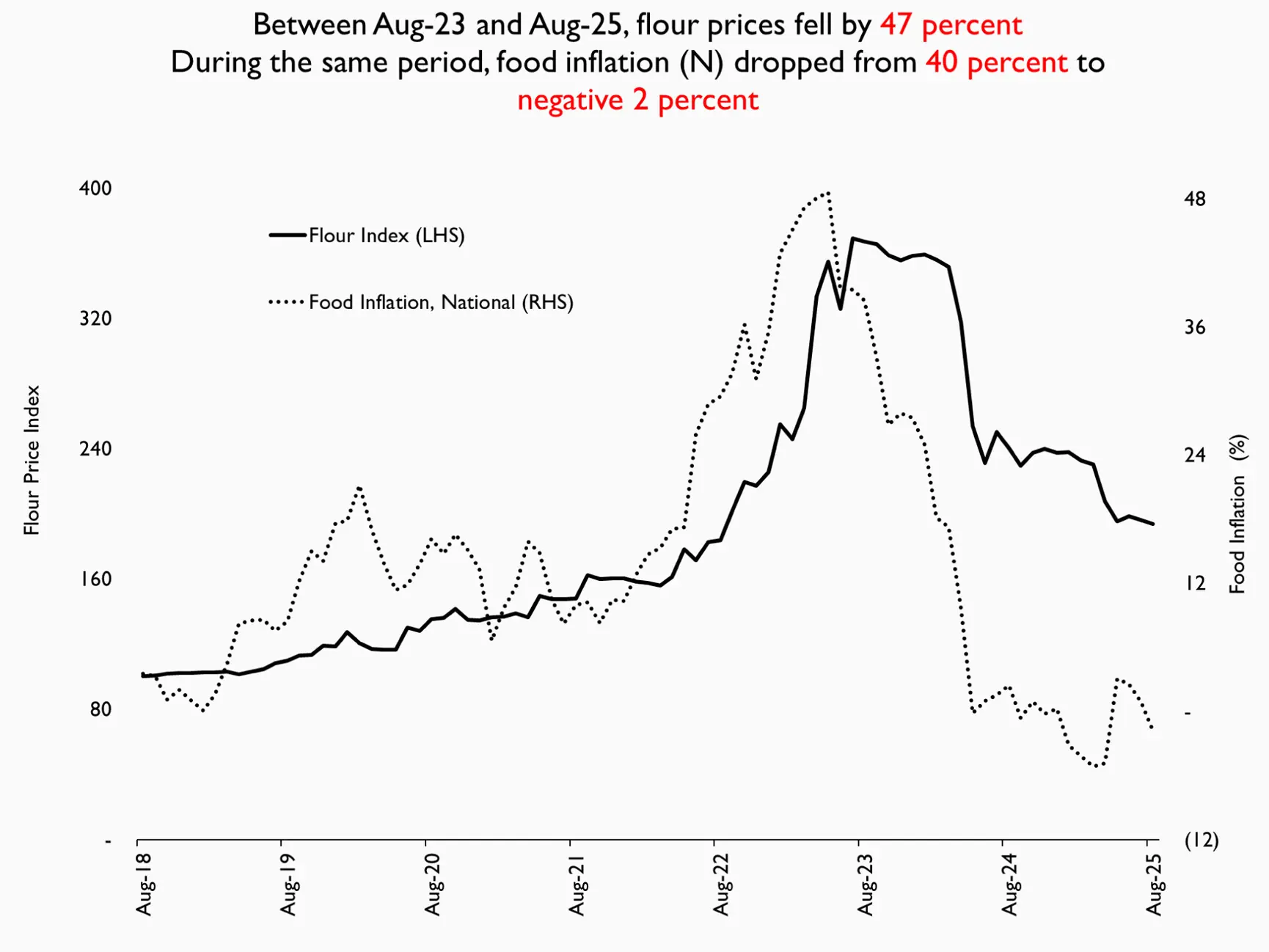
Never mind how those steps wiped out farm incomes, shook the foundations of the rural economy, and left growers to fend for themselves.
At one level, it was managerial wizardry, and one for which the PML-N’s skills are unmatched. After years of the public sector struggling to meet its procurement targets, either due to fiscal constraints or production shortfalls that under PTI rule had caused price panics, the incumbents’ decision to not only exit procurement but also flood the market first with private imports, and later by releasing strategic stocks at the cusp of harvest, ensured that consumer prices crashed for more than eighteen months without the treasury having to bat an eyelid.
In fact, the incumbents artfully diagnosed the intricate relationship between the wheat market and CPI, achieving price stability rarely seen before.
And now that the tables have turned, and two seasons of price shocks have created real risks of growers refusing to plant wheat beyond their own grain needs, the incumbents are once again ready to dish out taxpayer money. A familiar cycle is in motion. An indicative price has been announced, along with a procurement target that the government believes will restore farmer confidence and keep wheat production on track. The idea, in their mind, is to safeguard the hard won price stability achieved over the past eighteen months, come rain or sunshine.
It is here that analysis must learn to distinguish between what we wish should happen and what is the likely course of events to follow. For deregulation to stay on track, it is vital that this latest masquerade fails and fails miserably. Rural incomes have already suffered to their maximum.
For the arc of reform to continue, consumer prices must now bear their share of pain. That will only happen if production falls in the upcoming season, triggering a price surge at harvest time that allows farmers to recover a fair return on investment and forces the government to lift its ban on private wheat imports to finance the gap.
But of course. A regime wedded to exchange rate stability, controlled imports, and price suppression as the central tool of inflation management will never allow that to happen. The question then becomes whether the price signal will succeed or fail. Arguably, enough fiscal space has now been created for the federation to wade back into the procurement market.
Lower interest rates mean financing it will not be impossible. And if the federal and two key provincial governments are indeed on the same page, the political will may well be mustered during harvest to ensure procurement success.
What, then, is the rub?
Whether farmer trust has been broken so comprehensively that they no longer take government promises at face value. They may stay in the game but plant only enough to meet their own grain needs, not to produce a marketable surplus. That is what remains to be seen.
What we do know is that when it comes to competing Rabi crops, growers across the plains do not have real alternatives to wheat, at least not on the sheer scale at which it is cultivated. If nudged tactfully, with enough planting season support, whether in the form of subsidised credit or cheap inputs, provincial governments can still engineer a limited recovery in output.
Even if a bumper crop does not materialise, the Food Department, especially in Punjab, has a stellar track record of browbeating growers into surrendering their produce at state dictated prices, regardless of which party is in power. At the very least, such actions will ensure there is no harvest period panic, which is usually the single greatest leading signal of lasting volatility for the rest of the year.
Later, even if the private sector and secondary market are not exactly awash with grain, the can will have been kicked far enough down the road, into autumn 2026, for the state to plan imports if needed, and for those imports to influence the exchange rate in a way that remains manageable for those in charge.
So, remember. The objective was never reform, not to begin with. It was price and therefore inflation management all along. And now phase two begins.
In all likelihood, the reactionary forces will win. Those whose hearts still bleed for failed reform may quietly hope to see the masquerade fail, so that the grand ruse finally unravels and the house of cards comes tumbling down. It still might.
But if there is one thing Pakistan’s power elite have mastered, it is timing their exit just before the collapse. If not by autumn 2026, then by 2027, this will come apart. But by then, the wreckage will belong to another government.






















Comments
Comments are closed for this article.