


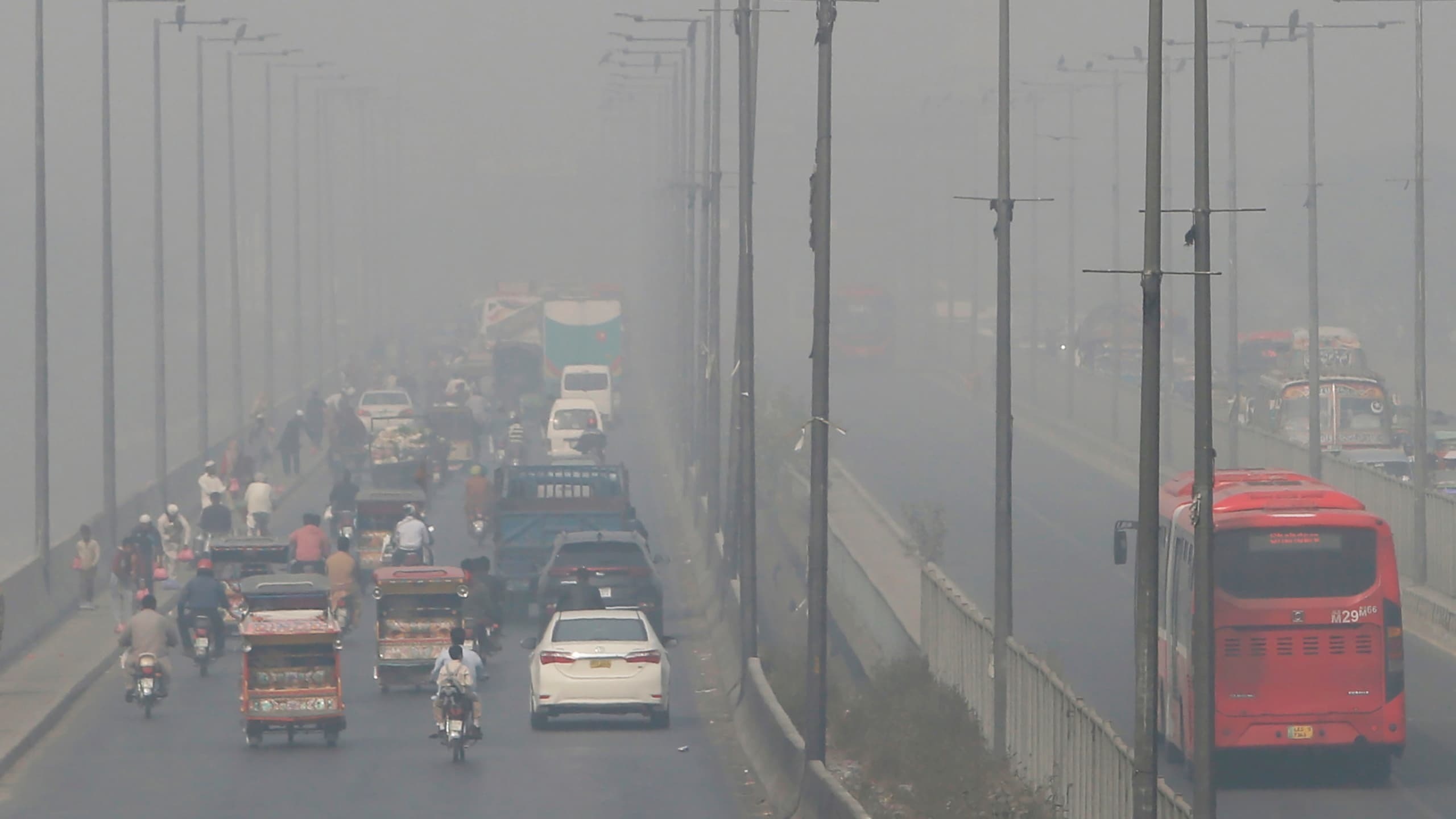

LAHORE: As Pakistan’s cities continue to grapple with severe air pollution, posing significant health risks to millions, WWF-Pakistan has emphasized that vehicular emissions and low-quality fuel are the primary contributors to this crisis and must be prioritized in any anti-smog campaign.
While temporary measures like smog guns provide short-term local relief, long-term, systemic actions are essential to address the root causes and achieve sustainable improvements in air quality.
Over the last week, Lahore and Karachi have continued to rank among the world’s most polluted cities. On 21 October, the Air Quality Index (AQI) recorded 234 in Lahore and 182 in Karachi, both falling into the “very unhealthy” and “unhealthy” categories, respectively. These levels far exceed the World Health Organization’s recommended limits, underscoring the urgent need for comprehensive action.
Vehicular emissions remain the single largest contributor to urban air pollution. Pakistan continues to rely heavily on low-grade Euro-II fuel, far below the Euro V standards adopted globally. Combined with poorly maintained buses, trucks, tractors, and trolleys, these vehicles release dangerous particulate matter, threatening public health in cities and surrounding areas. WWF calls for full nationwide adoption of Euro V-compliant fuels and rigorous vehicle fitness, including agriculture machinery enforcement to significantly reduce emissions.
Other sources that contribute to poor air quality include small industries and furnaces that frequently burn substandard fuel or solid waste and the open burning of garden waste, which remains widespread despite a ban imposed by the government. Also, seasonal crop residue fires play a role as farmers prepare fields for wheat cultivation. Despite restrictions imposed by the government, several practices continue, highlighting the need for stricter enforcement of regulations. WWF advocates for comprehensive measures to address these sources of pollution.
Over the last year, the Punjab government has taken several positive steps — such as the regulation of brick kilns, provision of happy seeders to farmers, and the inspection of more than 59,000 vehicles under the Punjab Clean Air Program. The WWF warns that short-term interventions like smog guns are expensive water guzzlers and offer only temporary site-specific relief and must be used with caution. These resource-intensive measures cannot replace comprehensive, long-term solutions that address the systemic causes of pollution.
Hammad Naqi Khan, Director General, WWF-Pakistan stated, “We know what needs to be done. Cleaner fuel, stricter vehicle emissions standards, and strong enforcement are the solutions. Without decisive action on these fronts, temporary measures will continue to fall short, and millions of Pakistanis will remain exposed to hazardous air.”
Copyright Business Recorder, 2025
























Comments
Comments are closed for this article.