


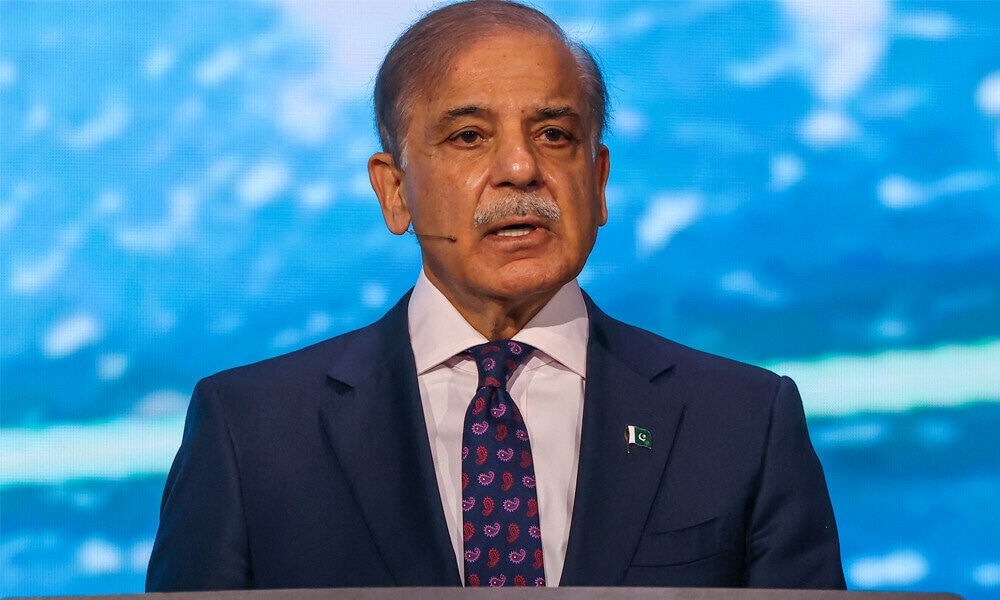

ISLAMABAD: Prime Minister Shehbaz Sharif on Tuesday launched a sweeping national plan aimed at integrating Pakistan into the global semiconductor industry, describing it as a key step towards building a knowledge-based digital economy.
The programme named INSPIRE (Initiative to Nurture Semiconductor Professionals for Industry, Research & Education) will train over 7,000 professionals in chip design, verification, and research within five years, in partnership with nine public universities and through six integrated circuit labs.
Led by the Ministry of IT and executed by the Pakistan Software Export Board (PSEB), it forms part of a broader push for technological self-reliance and high-skilled employment.
“This marks the beginning of a new economic frontier,” said the prime minister at the launch ceremony. “Pakistan must prepare its youth for the industries of the future.” The government has allocated Rs4.5 billion under the Public Sector Development Programme (PSDP) for the project’s initial phase – an amount the prime minister called “a drop in the ocean,” but assured that funding would not be a constraint.
Semiconductors are essential components in modern technologies – from smartphones and electric vehicles to defence systems – and the global market is projected to exceed $1 trillion by 2030.
Officials acknowledged the challenges ahead, including infrastructure limitations, regulatory bottlenecks, and the need to better align higher education with industry demands. INSPIRE forms the first phase of a National Semiconductor Development Roadmap, which envisions Pakistan eventually entering chip assembly, testing, and fabrication.
The launch of the INSPIRE programme signals Pakistan’s formal entry into the global semiconductor value chain – a highly competitive and capital-intensive sector currently dominated by the US, China, Taiwan, and South Korea.
Speaking at the launch ceremony, Prime Minister Shehbaz Sharif said Pakistan must move away from traditional sectors and invest in knowledge-based industries to stay economically viable in a rapidly digitising world.
“Our vision is to build a technology-driven economy where innovation and talent shape our future,” he said, highlighting the global importance of semiconductors across sectors such as consumer electronics, defence, and renewable energy.
An initial allocation of Rs4.5 billion under the Public Sector Development Programme (PSDP) will support training in chip design and verification, the establishment of six integrated circuit (IC) labs, and capacity building at nine universities. While modest compared to global semiconductor investments, officials said the funding marks a necessary starting point.
“This is a foundational step,” said Dr. Naveed Sherwani, chairman of the National Semiconductor Task Force. “It’s about building an ecosystem that connects academia, research, and industry – one that can gradually evolve into advanced manufacturing.” Dr Sherwani, a semiconductor expert with decades of experience in the US, stressed that long-term success would require sustained policy support, international partnerships, and private sector engagement.
The programme aligns with broader efforts to digitise the economy, including the establishment of the Pakistan Digital Authority, ongoing Federal Board of Revenue (FBR) digitisation, and policies promoting fintech and e-governance.
Federal IT Minister Shaza Fatima Khawaja said the initiative aims to create opportunities for youth and women in high-tech sectors. “INSPIRE reflects the prime minister’s vision of an inclusive digital economy – one where our human capital drives global innovation,” she added.
Abu Bakar, CEO of the Pakistan Software Export Board, called the programme a cornerstone for building indigenous tech capacity.
“We’re laying the groundwork for a future where Pakistan is not just a consumer, but a contributor to global innovation,” he added.
Officials noted that Pakistan’s entry into the semiconductor race comes amid global moves to localise chip production, driven by geopolitical tensions, pandemic-era supply chain disruptions, and the strategic value of advanced technologies. Countries like India, Vietnam, and Saudi Arabia have launched multi-billion-dollar plans to attract chipmakers and develop domestic talent. In comparison, they added, Pakistan faces significant challenges – including power and infrastructure limitations, weak R&D capacity, and an education system still misaligned with high-tech industry demands.
Experts say INSPIRE’s success hinges on execution, stressing that training alone won’t suffice without integration into functional R&D and globally competitive industrial ecosystems.
Copyright Business Recorder, 2025
























Comments
Comments are closed for this article.