


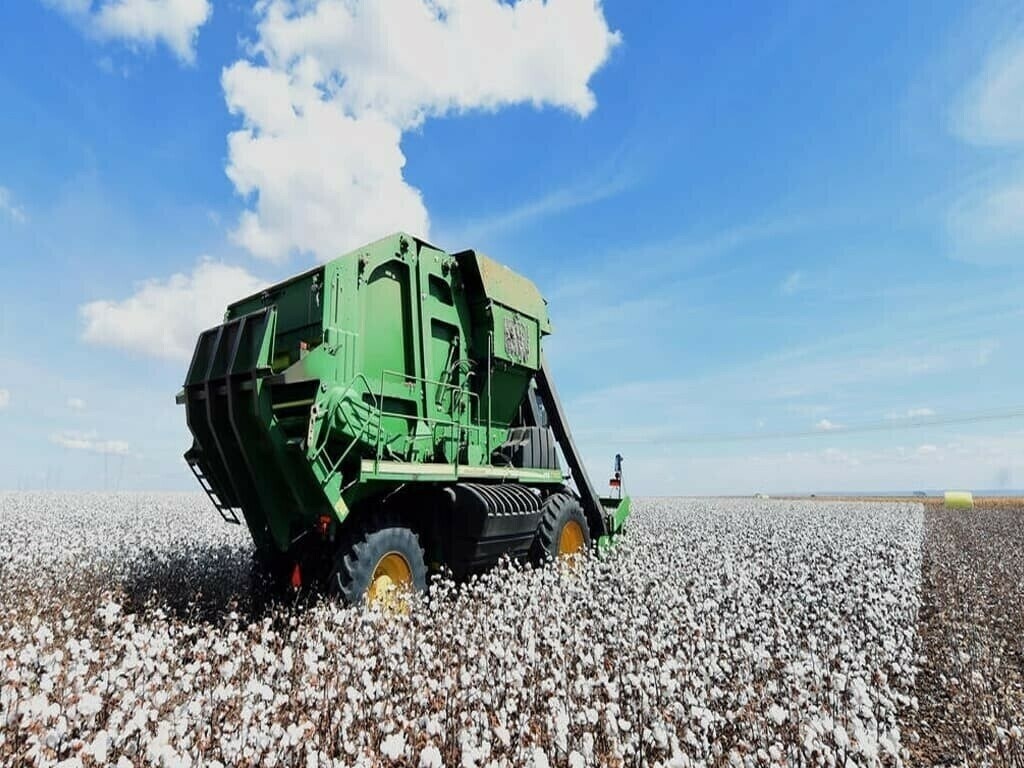

HYDERABAD: Leading agricultural scientists have raised serious concerns over the steep decline in cotton cultivation across Pakistan, particularly in Sindh, warning that a combination of climate change, shrinking water resources, and unsustainable farming practices has slashed national cotton yields by nearly 50% over the past 15 years.
Speaking at the “Cotton Mela 2025”, organized by the Centre of Agriculture and Biosciences International (CABI) at the Business Incubation Centre of Sindh Agriculture University (SAU), Tandojam, experts called for urgent and coordinated research, innovation, and policy reforms to protect and revive Pakistan’s most vital cash crop.
Prof. Engr. Dr. Altaf Ali Siyal, Vice Chancellor of Sindh Agriculture University, said the country’s cotton output has been on a continuous decline due to multiple interlinked challenges, including climate change, dwindling irrigation supplies, middlemen exploitation, unfair pricing mechanisms, rising input costs, and declining export quality. “Traditional cotton belts such as Multan, Ghotki, and Sanghar are now shifting to sugarcane and rice, a deeply alarming trend that threatens the agricultural balance and economic sustainability of Pakistan,” Dr. Siyal warned.
Dr. Siyal emphasized that the revival of cotton production hinges on developing climate-resilient, pest-tolerant, and water-efficient cotton varieties, backed by institutional collaboration and applied research.
Dr. Heibatullah Asad, Project Manager at CABI, revealed that the country’s cotton output has fallen by more than half since 2010, calling it a “national agricultural emergency.” He cautioned that cotton alone accounts for 65% of Pakistan’s pesticide and chemical use, significantly aggravating environmental degradation and public health concerns.
“CABI has trained over 30,000 farmers in natural and sustainable pest management practices to reduce chemical dependency and ensure long-term crop resilience,” he added.
Dr. Ashfaq Ahmed Nahiyoon, Coordinator of the Food and Agriculture Organization (FAO) Sindh Office, stressed the need to restructure Pakistan’s cotton supply chain, from seed to market and export, to restore the crop’s competitiveness. “Farmers must be placed at the heart of the cotton value chain. Their empowerment, training, and representation in policy processes are essential for sustainable recovery,” he asserted.
He further mentioned that FAO is implementing several projects across Sindh to enhance farmer capacity building, rural women’s economic participation, and food security resilience amid climate pressures.
Juma Khan Bajkani from the Pakistan Agricultural Research Council (PARC) shared recent figures showing that Pakistan recorded its lowest cotton yield in 2024–25, with Sanghar and Ghotki districts among the hardest hit. He urged immediate technical assistance, research interventions, and policy attention to restore productivity in the country’s cotton belt.
The event also featured a cotton-themed agricultural and cultural exhibition, showcasing innovations and products from Sindh Agriculture University, CABI, public institutions, and private sector partners.
Copyright Business Recorder, 2025




















Comments
Comments are closed for this article.