


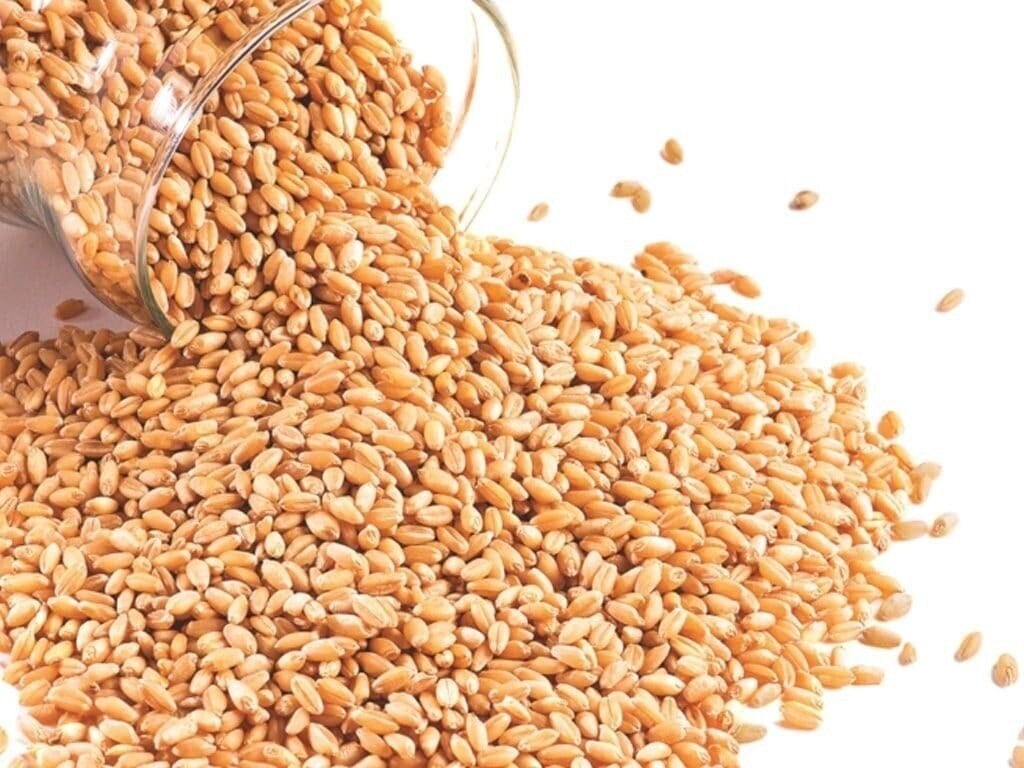

LAHORE: The Pakistan Kissan Rabita Committee (PKRC) has welcomed the government’s decision to fix the minimum support price (MSP) for wheat at Rs 3,500 per 40 kg, calling it a result of sustained peasant struggle and collective pressure from farmers across the country.
PKRC General Secretary Farooq Tariq said that “this decision proves one thing clearly: when farmers are united and organized, governments are forced to listen.” However, he emphasized that PKRC’s longstanding demand remains that the support price should be set at Rs 4,000 per 40 kg, which reflects the actual cost of production and ensures a fair return for farmers.
Farooq Tariq noted that last year, under IMF-imposed austerity and market-driven policies, the government adopted anti-farmer decisions that caused severe financial losses to small and medium-scale producers. Despite the rising cost of inputs — fertilizers, seeds, diesel, and labour — farmers were forced to sell their produce below cost. As a result, wheat cultivation declined by nearly 9 percent this year, posing a direct threat to the country’s food security.
“The fixation of a minimum support price is itself proof of the failure of IMF’s neoliberal agricultural framework,” said Tariq. “When agriculture is treated as a profit-making business rather than a source of livelihood and food, the poorest — our small farmers — pay the highest price through debt, poverty, and dispossession.”
PKRC further demanded that the Sindh government immediately set the support price for paddy (rice) at Rs 4,000 per 40 kg, to protect millions of farmers in Sindh and southern Punjab who are facing exploitation from traders and mill owners.
While calling this announcement a temporary victory, Farooq Tariq said it should be viewed as “the first step toward comprehensive agrarian reforms. This is a political defeat for the government’s earlier policy,” he stated.
“They realized that if farmers continued to reduce wheat cultivation, Pakistan would face a major food crisis. It’s a victory of resistance — a message that peasants will not be silenced.”
PKRC also welcomed the government’s announcement that there would be no restrictions on the inter-provincial movement of wheat, noting that such a step would benefit small producers and ensure fairer market access. “The rollback of these restrictions,” PKRC said, “marks a reversal of failed and politically motivated policies from the past.”
The organization urged the government to formulate a new, pro-people agricultural policy in consultation with farmers’ movements — one rooted in food sovereignty, climate justice, and equitable land distribution, not corporate farming and export-oriented production.
Copyright Business Recorder, 2025




















Comments
Comments are closed for this article.