


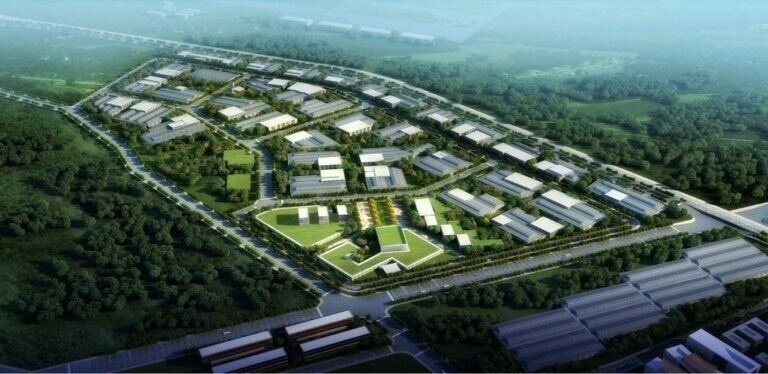

Even as Finance Minister Muhammad Aurangzeb assures that the IMF “cannot impose terms against Pakistan’s national interest” and envisions an “East Asia moment” of export-led expansion, the engines of that very growth remain idle. Industrial zones — the backbone of any export surge - are frozen under fiscal restraint shaped by IMF conditionalities.
A vision stalled
Pakistan’s industrial zones — once envisioned as engines of export-led growth and investment — now stand at a standstill. What began as a framework for industrial revival has become a casualty of fiscal austerity and external conditionalities.
Over the decades, Pakistan built an institutional foundation of industrial zones to attract investment, boost exports, create jobs, and integrate into regional and global value chains - while ensuring continuity of incentives and protection from arbitrary policy reversals.
Today, this vision has stalled at the intersection of fiscal orthodoxy and developmental necessity. Industrial zones are more than fenced parcels of land; they are instruments of structural transformation - linking foreign capital to domestic production and employment. Yet fiscal constraints have replaced strategic foresight.
While political leaders continue to promise new industrial partnerships abroad, the reality at home is stark: the creation of new zones has been effectively frozen under IMF directives, and the fiscal incentives that once attracted investors are now uncertain and contested.
IMF’s fiscal grip
The IMF’s latest programme binds Pakistan to strict revenue targets and a gradual withdrawal of “tax expenditures.” In practice, this means curtailing tax holidays, exemptions, and rebates - the very tools that make industrial zones competitive. To contain fiscal deficits, the government has been discouraged from approving new industrial zones.
The contradiction is clear. The SEZ Act, 2012 explicitly guarantees investors protection from adverse policy changes, with Section 35 forbidding retrospective alterations. By freezing new zones and revisiting incentives, Pakistan risks violating not only investor expectations but also its own law.
This raises a fundamental question: can a temporary financing arrangement override a parliamentary statute? Should a stabilization program dictate the direction of national industrial policy?
Legal and sovereignty dimensions
The SEZ Act represents the will of Parliament - a sovereign commitment to predictability and investor protection. IMF conditionalities, by contrast, are administrative benchmarks negotiated by the executive branch. When compliance with lender-imposed targets begins to suspend the operation of national law, the line between fiscal discipline and sovereignty erosion grows dangerously thin.
Treating staff-level agreements as binding ceilings sends a troubling message: that statutory guarantees can be overridden by temporary deals. This undermines confidence, deters investment, and weakens Pakistan’s institutional credibility in global markets.
Political contradictions
The political narrative only deepens the confusion. The Prime Minister’s invitation to Turkey for an exclusive industrial zone, and Punjab’s pledge to Saudi investors for a Saudi-specific zone made headlines. Yet both stand at odds with IMF restrictions and with established institutional procedures.
Such announcements, made for diplomatic optics, bypass ground realities. Political promises abroad clash with administrative paralysis at home. The result is policy incoherence — investors are confused, federal and provincial agencies misaligned, and governance credibility weakened.
Policy contradictions deepen
Finance Minister Muhammad Aurangzeb’s recent statements - asserting that IMF reforms fully align with Pakistan’s national interest and predicting an “East Asia moment” — project confidence abroad but reveal a policy paradox at home.
Export-led growth cannot materialize when the institutional levers that enable it, such as industrial zones, are immobilized. Tariff rationalization and talk of competitiveness mean little when new zones are frozen and existing ones face uncertainty. The tools of export-driven transformation - production linkages, fiscal incentives, and investor security - are being dismantled in the name of reform.
This contradiction between rhetoric and reality risks eroding both credibility and coherence in Pakistan’s growth narrative.
Economic consequences
The economic fallout is immediate. Each stalled zone means delayed investment, lost jobs, and unrealized exports. Pakistan’s external sector desperately needs expansion through production, not contraction through austerity.
By prioritizing short-term revenue targets over industrial capacity, Pakistan risks shrinking the very base needed for sustainable growth. Fiscal survivalism - extracting more revenue from a stagnant economy - cannot substitute for genuine revival. Investor sentiment, already shaken by inconsistency, continues to erode.
The way forward
Pakistan must reclaim policy clarity and confidence. This does not mean defying fiscal realities; it means aligning them with a coherent development vision.
-
Engage the IMF from a position of policy clarity - not passive compliance.
-
Negotiate programme flexibility to allow industrial zone development within fiscal discipline, as committed under national laws.
-
Reaffirm legal commitments- any deviation from the SEZ or EPZ frameworks must go through Parliament, not executive discretion.
-
Align political pledges with institutional processes.
-
Pursue a coherent, law-based, and sovereign industrial policy to restore investor trust.
Conclusion
Industrial zones symbolize Pakistan’s hope for revival but now mirror its governance contradictions. The framework built over decades faces its greatest test as IMF oversight and legal disregard threaten to derail it. When legal mandates are compromised and political rhetoric diverges from reality, investor confidence collapses.
Beyond this collision lies a larger truth: loans cannot build a nation - industries can. Borrowing may keep Pakistan solvent, but only production and exports can make it sovereign. The IMF programme may stabilize accounts, but it cannot generate growth. That requires factories, value addition, and investor confidence.
The Finance Minister’s optimism about a coming “East Asia moment” will remain rhetorical unless Pakistan unfreezes the very mechanisms that create exports. Without functioning industrial zones, tariff reforms and growth slogans are castles built on fiscal sand.
If Pakistan truly wishes to honour its policy commitments and re-emerge as a credible destination for global partnerships, it must rethink and cross this fiscal wall. Fiscal prudence is essential, but it should serve development - not suffocate it.
Sustainable reform lies not in halting growth but in governing it wisely. If Pakistan is to industrialize, it must reclaim the policy space that belongs - by law and by right - to its own Parliament and people.
Copyright Business Recorder, 2025
The writer is a former Add. Secretary-Executive Director General Board of Investment, Prime Minister’s Office, with extensive experience in investment policy, public governance, and corporate law. Email: [email protected]

























Comments
Comments are closed for this article.