


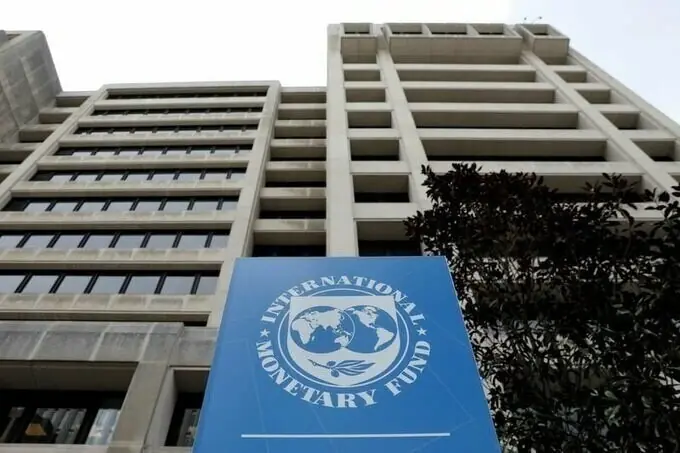

DUBAI: Growth has accelerated in Middle Eastern and North African countries this year despite global uncertainty and conflicts in the region, according to an IMF report published on Tuesday.
“Despite all the shocks we saw to trade with the tariff measures, geopolitical tension, the conflicts, the volatility in oil price, we see that growth has been performing better than last year,” Jihad Azour, IMF director for the Middle East and Central Asia, said in an interview with AFP.
“And it’s not only in a group of countries, but I would say spread around the region,” he added.
The institution presented its latest regional report in Dubai on Tuesday, forecasting growth of 3.3 percent this year in the MENA region and 3.7 percent in 2026 – 0.7 and 0.3 percentage points higher, respectively, than its previous projections in May.
IMF urges countries to keep trade as engine of growth
The region’s GDP grew by 2.1 percent in 2024.
Gulf countries have particularly benefited from increased oil production, which offset falling prices, while others saw gains from rebounds in tourism, industry or agriculture, Azour explained.
Despite the war in Gaza, “the region was able to withstand the big geopolitical shock of the last two years”, including neighbouring countries such as Jordan and Egypt, Azour said.
The current ceasefire in the Palestinian territory is “an important and welcome development”, but it is still too early to know whether it will affect the region’s economic outlook.
“The impact on the region hinges on how this stability will materialise into improvement in the overall risk profile for the region and also what we see of potential reconstruction or post-conflict in Syria, Lebanon and in Gaza, and also later in the West Bank,” he explained.
The immediate priority is to assess the damage in Gaza and the reconstruction needs, with support from the United Nations and the World Bank, Azour added. Financing needs will also be “immense” in other conflict-affected countries such as war-wracked Yemen and Sudan due to declining international aid, he added.




















Comments
Comments are closed for this article.