


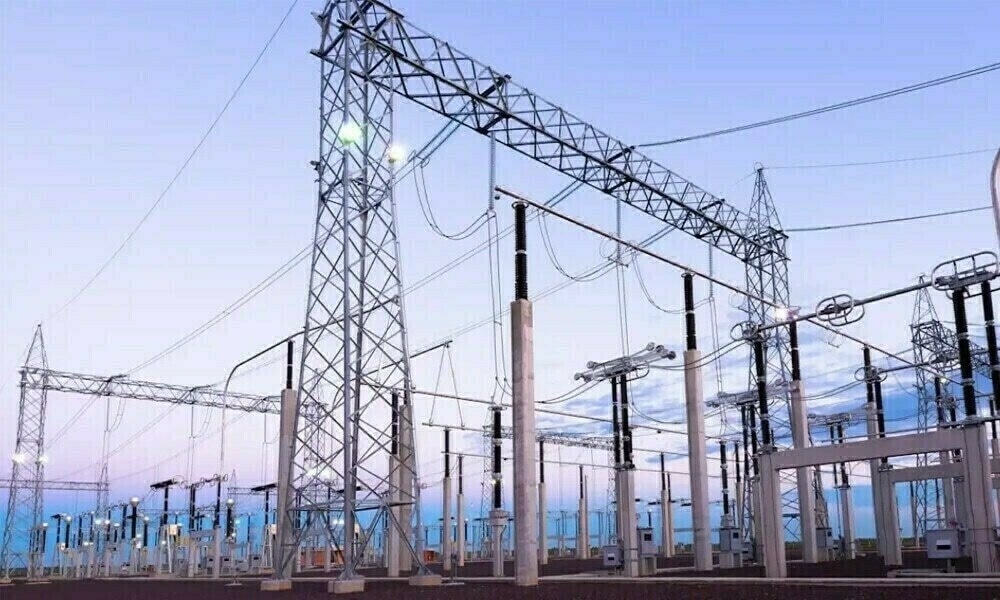

ISLAMABAD: The Federation of Pakistan Chambers of Commerce and Industry (FPCCI) has urged the government to introduce a long-term, incremental electricity consumption package for industry to address high power tariffs that are eroding competitiveness.
In a letter to the Minister for Power, Sardar Awais Ahmad Khan Leghari, the FPCCI expressed concern that the government’s earlier commitment to reduce industrial electricity tariffs to regional levels—between 6 to 8 US cents per unit—has not been fulfilled. Pakistan’s current tariff structure, the letter noted, leaves its industries unable to compete with regional peers in Bangladesh, India, and Vietnam.
The FPCCI acknowledged recent efforts by the Power Division to improve governance, dispatch efficiency, and fiscal control in the power sector. However, it emphasized that the next critical step is to restore industrial competitiveness through affordable power tariffs that support production growth and job creation.
Incremental electricity package: APTMA submits recommendation to Leghari
Despite surplus generation capacity, Pakistan’s industrial power demand continues to decline. The daytime marginal cost of generation is only Rs. 5–7 per unit, but industries are unable to benefit due to prohibitively high end-user tariffs, which make the national grid commercially unattractive.
The FPCCI cited the Bijli Sahulat Package launched last winter as a well-intentioned initiative, but one that ultimately failed to deliver meaningful results. Only a limited number of industries achieved savings—averaging around Rs. 2 per unit—while the package was publicly portrayed as offering a relief rate of Rs. 26.07 per unit. This misperception created confusion among local and international buyers.
According to FPCCI, industries cannot be expected to increase electricity consumption solely for marginal savings—especially when electricity constitutes just 12–25% of total production costs. The price signal must be strong enough to justify increased consumption in the face of ongoing financial and operational constraints.
The FPCCI has proposed an effective incremental tariff of Rs. 16 per unit, arguing that this would provide savings of up to Rs. 5 per unit, sufficient to drive higher output and expand operations. This measure, the group added, would also reduce pressure from capacity charges by utilizing idle generation capacity and would help shift industrial load back to the national grid, curbing unregulated captive and solar power expansion.
The FPCCI also stressed the need for this incremental tariff to be applied uniformly across all regions, including K-Electric consumers in Karachi. The industrial zones of Korangi, SITE, Landhi, and North Karachi, which represent some of Pakistan’s most productive and export-driven areas, must not be excluded from national incentives, the group argued.
Additionally, net-metering consumers should also be eligible to participate. The challenge, the FPCCI noted, is not in accepting their exported energy but in ensuring consistent grid draw during production hours. Allowing incremental power purchases at Rs. 16 per unit could restore grid balance and boost system utilization.
While emphasizing the importance of an immediate relief package, the FPCCI underscored that the core issue — high base industrial tariffs — must remain the government’s central focus.
The FPCCI concluded its communication by posing three critical policy questions: (i) How long can Pakistan’s industries remain competitive with tariffs exceeding 12 cents per unit, while regional rivals pay nearly half? (ii) What is the concrete roadmap to achieve the long-promised benchmark of 9 cents per unit for base industrial tariffs? and (iii) How will the Ministry ensure that reforms move beyond short-term relief schemes to deliver lasting structural competitiveness through tariff rationalization?
Copyright Business Recorder, 2025




















Comments
Comments are closed for this article.