


Pakistan’s climate fight undermined by bureaucratic gridlock: PM’s aide
- PM's advisor calls for safeguarding shared water future
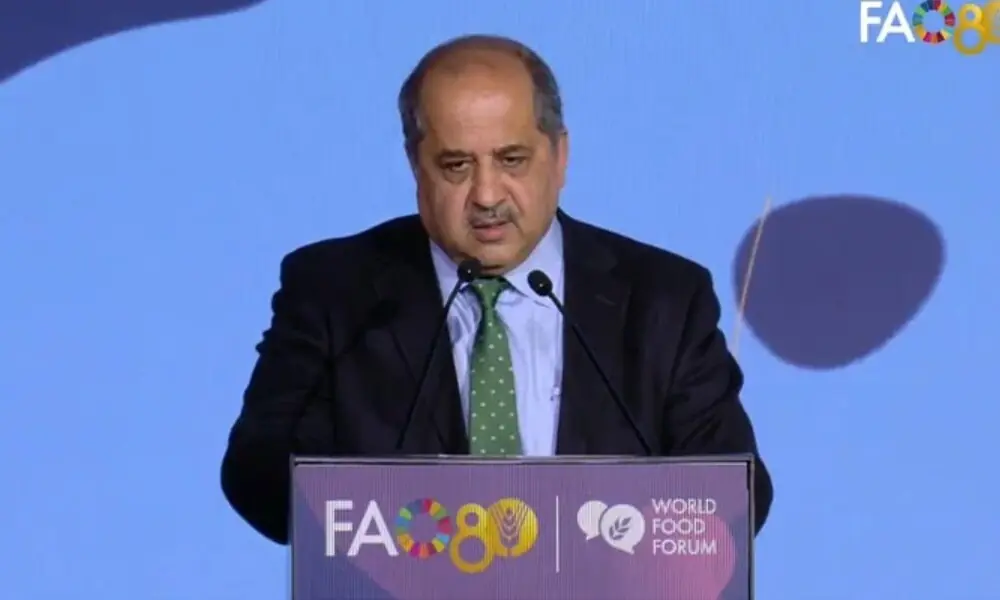

Advisor to Prime Minister Dr Syed Tauqir Shah has stated that Pakistan remains on the global frontline of climate and water crises, yet struggles to access even a small portion of the vital funds it needs due to paralysing bureaucratic delays and slow disbursement.
While addressing the Food and Agriculture Organisation (FAO)’s Rome Water Dialogue in Rome, Italy, he presented Pakistan’s national statement before an esteemed gathering that included heads of government, ministers from hundreds of countries, and thousands of civil society activists and development professionals, the Press Information Department (PID) said in a press release on Sunday.
Dr Shah said water crises was no longer an abstract policy discussion, rather it was an existential challenge, for many countries in the Global South”.
Further elaborating, the PM’s advisor said, “Pakistan is the fifth, most climate-vulnerable country in the world. Our water security — and by extension, our national food security — is under threat from the twin forces of extreme climate events and chronic resource stress. Today, Pakistan has crossed the critical threshold and is now officially a water-scarce nation”.
‘Over half of Karachi’s population deprived of clean drinking water’
Highlighting the Water crises of Pakistan Dr Shah remarked the crisis manifested in two ways: first, in devastating abundance, as seen during the 2022 floods, which impacted over 33 million people, destroyed four million acres of agricultural land, and left 10 million people without safe drinking water. Recent, 2025 floods, have been as catastrophic. Second, he said, it manifested in crippling scarcity, where the nation’s total water storage capacity was limited to only about 30 days of supply.
He said: “ Our need is clear and urgent: we require massive, timely investments in climate-resilient water infrastructure. This must be a mix of traditional, high-storage solutions alongside Nature-based Solutions (NbS)—restoring floodplains, developing resilient irrigation techniques, and implementing watershed management.”
While forcefully calling out the Global Climate Finance Institutions, Dr Shah said, “According to our NDCs, Pakistan requires an estimated $7-$14 billion annually for adaptation efforts alone by 2030. Yet, we are met with a global finance architecture that has turned the required investment into a paradox.”
While building case for reform of Global Climate Finance Institutions, he opined that the current global climate fund mechanism was characterised by critical failings that directly hampered the country’s ability to invest and innovate in water resilience.
He said despite the staggering national need, Pakistan had been unable to fully utilise available global climate funds. Because International criteria often demanded highly specific, technically complex, and “bankable” project proposals, demanding a level of institutional capacity that took years to build, he added.
Pakistan’s scorching summer: a nation in the front line of climate breakdown
The PM’s aide further highlighted that even once approved, funds were subject to slow disbursement rates and multi-year legal processes.
While criticising the climate finance modalities, Dr Shah said: “We find that the maximum available climate finance takes the form of debt and concessional loans, with only a small fraction available as grants. He lamented that debt is being loaded onto vulnerable economies that are already struggling with macro-economic stability.
He stated that Global Climate Finance was held back by bureaucracy, not by lack of funds.
While further elaborating his point and demanding reform of climate finance institutions, he said, “At GCF — Average approval time is 24 months or more from concept to board approval. Average time to first disbursement is 9-18 months after approval.“
To further drive his argument, Dr Shah cited GCF’s Independent Evaluation Unit (IEU) report, saying the report stated that the fund’s internal processes were complex, fragmented, and marked by bottlenecks. He said major climate funds were criticised by development experts for sluggish processing, excessive bureaucracy, and disbursement delays.
Making a clarion call for reform and action, he said, “We call upon our global partners to shift the paradigm from an architecture of complexity and debt to one of speed and trust. We need a financial innovation component which focuses on leveraging blended finance, green bonds, insurance mechanisms, and incubation programmes to de-risk private investment and increase access to finance for smallholder farmers”.
While flagging the 2030 global development agenda, Dr Shah said the Sustainable Development Goals — especially SDG 6 (clean water) and SDG 2 (zero hunger) — would remain beyond reach unless the world confronted the challenge head-on.
Dr Shah, while flagging the critical importance of water, said “Water is not just about rivers or canals — it is about people, dignity, and life itself”.
He strongly called for safeguarding the shared water future and offered Pakistan’s cooperation to regional and global partners.


























Comments
Comments are closed for this article.