


CJP addresses symposium on interfaith harmony, fundamental rights
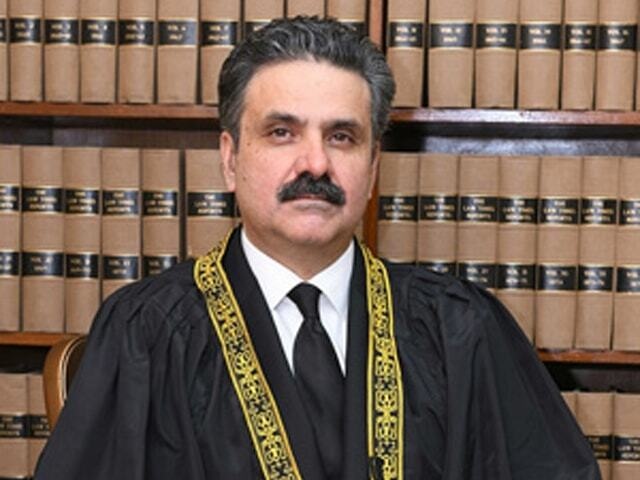

ISLAMABAD: Chief Justice of Pakistan Yahya Afridi observed that interfaith harmony is deeply embedded in the teachings of Islam, long before it became a constitutional imperative.
The CJP was addressing the National Symposium on “Interfaith Harmony and Fundamental Rights — A Constitutional Imperative,” organized by the Federal Judicial Academy and the Law & Justice Commission of Pakistan under the auspices of the Supreme Court of Pakistan. He reiterated that the protection of fundamental rights is the highest expression of justice.
The event brought together distinguished jurists, scholars, diplomats, and policymakers to reaffirm Pakistan’s constitutional and moral commitment to justice, equality, and coexistence.
Dr Mohammad Al-Issa, Secretary General of the Muslim World League, delivered the keynote address. He emphasized that the principles of justice, compassion, and human fraternity are shared across all faiths and serve as a bridge for interfaith understanding and peaceful coexistence.
Federal Minister for Law and Justice Azam Nazeer Tarar, Chairperson of the National Commission for Human Rights Rabiya Javeri Agha, and Senator Farooq Hamid Naek also addressed the symposium.
The federal minister underscored that respect for minorities and protection of their rights lie at the heart of Pakistan’s Constitution and remain a fundamental responsibility of the State.
He highlighted key constitutional guarantees ensuring freedom of religion, equality before the law, and protection from discrimination, and reaffirmed the government’s commitment to strengthening access to justice for all citizens.
He noted Pakistan’s recent policy and legislative initiatives, including the Interfaith Harmony Policy, the National Action Plan, and the establishment of Minority Protection Cells and Human Rights Awareness Programmes to promote inclusivity and safeguard minority rights.
Azam emphasized the need for procedural safeguards, fair investigations, and judicial sensitivity in blasphemy-related cases, along with education reforms that promote tolerance and civic responsibility. Calling for collective action, the Minister urged the judiciary, religious scholars, media, and civil society to work together in promoting narratives of compassion and interfaith understanding.
In his concluding reflections, ex-CJP Tassaduq Hussain Jillani emphasized that the judiciary has a sacred constitutional duty to protect equality, pluralism, and the rule of law.
The symposium concluded with the adoption of “Declaration on Interfaith Harmony and Fundamental Rights,” reaffirming Pakistan’s resolve to promote unity, tolerance, and justice as the foundation of its constitutional democracy.
The event was attended by Hon’ble Judges of the Supreme Court and High Courts, members of the district judiciary, representatives of the diplomatic corps, international development partners, eminent jurists, members of the Bar, civil society, and the media.
The proceedings of the symposium were live-streamed to the courts and bars across Pakistan, encouraging everyone to benefit from the valuable reflections shared in the symposium.
Copyright Business Recorder, 2025


























Comments
Comments are closed for this article.