


US, China to roll out tit-for-tat port fees, threatening more turmoil at sea
- The China-imposed extra port fees would be collected at the first port of entry on a single voyage or for the first five voyages within a year
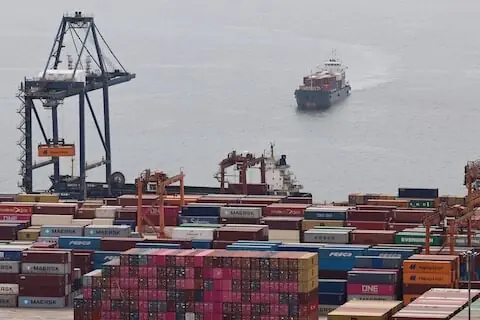

BEIJING/LOS ANGELES: The United States and China on Tuesday will begin charging additional port fees on ocean shipping firms that move everything from holiday toys to crude oil, making the high seas a key front in the trade war between the world’s two largest economies.
China said it had started to collect the special charges on U.S.-owned, operated, built, or flagged vessels but clarified that Chinese-built ships would be exempted from the levies.
In details published on Tuesday by state broadcaster CCTV, China spelled out specific provisions on exemptions, which also include empty ships entering Chinese shipyards for repair.
The China-imposed extra port fees would be collected at the first port of entry on a single voyage or for the first five voyages within a year, following an annual billing cycle beginning on April 17.
Early this year, U.S. President Donald Trump’s administration announced plans to levy the fees on China-linked ships to loosen that country’s grip on the global maritime industry and bolster U.S. shipbuilding.
An investigation during former President Joe Biden’s administration concluded China uses unfair policies and practices to dominate the global maritime, logistics and shipbuilding sectors, clearing the way for those penalties.
The U.S. is scheduled to also begin collecting fees on October 14. Analysts expect China-owned container carrier COSCO to be most affected, shouldering nearly half of that segment’s expected $3.2 billion cost from those fees in 2026.
China hit back last week, saying it would impose its own port fees on U.S.-linked vessels from the same day. Jefferies analyst Omar Nokta noted that 13% of crude tankers and 11% of container ships in the global fleet would be affected.
“This tit-for-tat symmetry locks both economies into a spiral of maritime taxation that risks distorting global freight flows,” Athens-based Xclusiv Shipbrokers Inc said in a research note.
A Shanghai-based consultant who advises global companies on trade with China said the new fees may not be very disruptive to the industry and any rising costs probably would be captured in higher prices.
“What are we going to do? Stop shipping? Trade is already pretty disrupted with the U.S., but companies are finding a way,” the consultant said, asking to remain anonymous as he was not authorised to speak with the media.
In a reprisal against China curbing exports of critical minerals, Trump on Friday threatened to slap additional 100% tariffs on goods from China and put new export controls on “any and all critical software” by November 1.
Administration officials hours later warned that countries voting in favor of a plan by the United Nations’ International Maritime Organization to reduce planet-warming greenhouse gas emissions from ocean shipping this week could face sanctions, port bans, or punitive vessel charges. China has publicly supported the IMO plan.
“The weaponisation of both trade and environmental policy signals that shipping has moved from being a neutral conduit of global commerce to a direct instrument of statecraft,” Xclusiv said.
Shares in Shanghai-listed COSCO rose more than 2% in early trading on Tuesday. The company said its board had approved a plan to buy back up to 1.5 billion yuan ($210.3 million) worth of its shares within the next three months to maintain corporate value and safeguard shareholder interest.
The shipping firm did not immediately respond to Reuters’ queries about the potential impact of the port fees.


























Comments
Comments are closed for this article.