


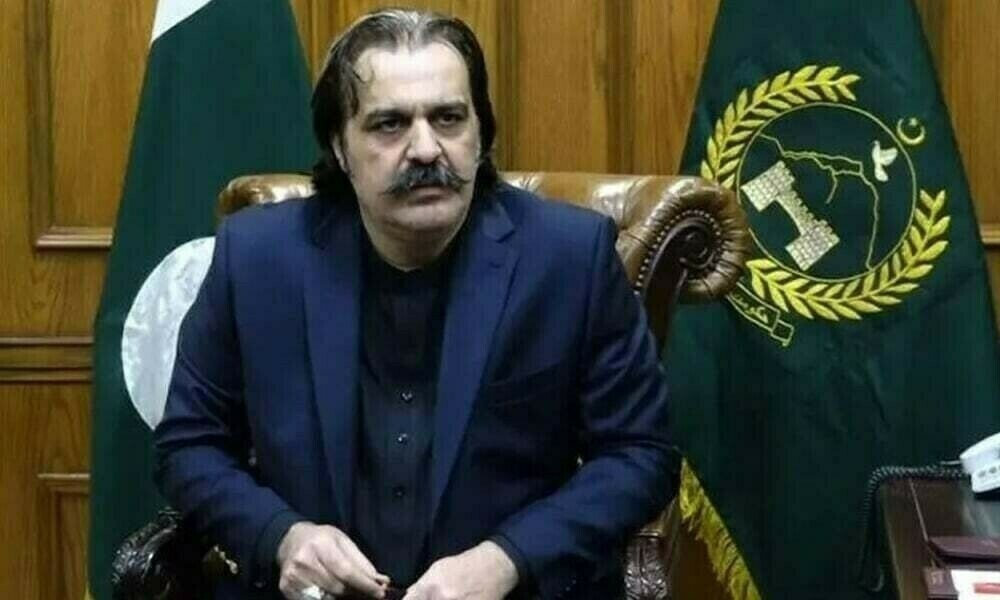
EDITORIAL: The change of guard in Khyber Pakhtunkhwa reveals more about the state of the Pakistan Tehreek-e-Insaf than about the province it governs. The removal of Chief Minister Ali Amin Gandapur and the appointment of Sohail Afridi, a loyalist known for his hardline views, underscores a pattern that has become all too familiar: control over competence, and confrontation over cooperation. From Adiala Jail, Imran Khan continues to run the party with a firm hand, even as it drifts further from the realities facing the country.
Gandapur’s exit follows months of internal feuding. The all too visible tension with Aleema Khan and Bushra Bibi, and resentment among party ranks over his “soft” posture toward the establishment, made his position untenable. His replacement, Afridi, is not a political heavyweight.
That appears to be precisely the point. Imran Khan’s preference for loyalists over administrators ensures that the party’s provincial machinery remains tightly in his grip. Yet this approach may deliver obedience at the cost of governance. KP, already grappling with resurgent terrorism and a fragile fiscal position, can ill afford leadership that prioritises political combat over policy delivery.
Afridi’s nomination is not merely a personnel change; it signals the direction the PTI intends to take. His record of fiery speeches against military operations and his opposition to counterterror initiatives contradict the national security consensus painstakingly built after years of sacrifice. If the party treats provincial government as an extension of its national agitation strategy, KP risks becoming an arena for confrontation rather than reconstruction. The province’s public finances, infrastructure needs, and security vulnerabilities demand steady administration, not performative politics.
Imran Khan’s simultaneous directive for PTI legislators to resign from parliamentary committees completes the picture. This politics of perpetual disruption may energise its base, but it weakens democratic institutions and distances the party from governance itself. Pakistan’s fragile political equilibrium cannot withstand another cycle of polarisation when the economy is only just recovering and security challenges are intensifying.
The top priority of any chief minister, especially in a province at the frontline of militancy and poverty, should be to improve the lives and livelihoods of its citizens. Jobs, education, public health, and security — these are the responsibilities that define leadership, not the daily theatre of defiance and dismissal. The politics of agitation cannot fill classrooms, rebuild homes destroyed by floods, or secure the borderlands from renewed threats.
If KP becomes a staging ground for political confrontation rather than a model of effective governance, the cost will not be confined to the party. It will spill into national security, economic confidence, and public trust in elected leadership.
Copyright Business Recorder, 2025
























Comments
Comments are closed for this article.