


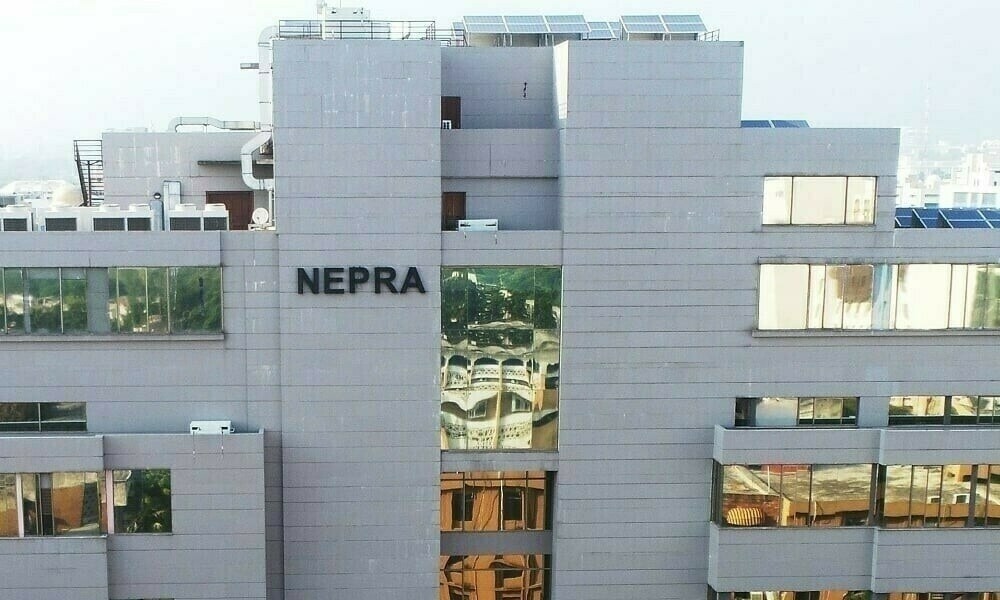

ISLAMABAD: The National Electric Power Regulatory Authority (Nepra) on Thursday questioned the Power Division on whether imposing load-shedding during the summer would be more beneficial for Karachi consumers than shutting down four power plants operated by Karachi Electric (KE).
This question was raised by NEPRA Member (Technical), Rafique Ahmad Shaikh, during a hearing on the Power Division’s reconsideration request, a review motion against the authority’s decision dated October 22, 2024, regarding KE’s generation plants.
The Power Division has requested NEPRA to approve the closure of KE’s expensive power plants, including Bin Qasim TPS-1, Korangi Town GTPS-II, Site GTPS-II, and Korangi Combined Cycle Power Plant (CCP).
During the hearing, concerns were raised that shutting down these four KE power plants could lead to a shortfall of up to 700 MW during peak hours in the summer months.
However, Power Division representative Naveed Qaiser argued that there would be no shortage of power, as the supply from the national grid to KE would be increased to 3,000 MW.
In response, KE’s Chief Financial Officer (CFO), Aamir Ghaziani, challenged this claim, stating that no grid station currently has the capacity to increase the supply from 2,200 MW to 3,000 MW.
Ghaziani also pointed out that Nepra, in its previous determination, had stated that any losses incurred by KE would be compensated.
Nepra expressed dissatisfaction with the grounds for the review of its October 22, 2024, decision, stating that the Power Division should have submitted a more convincing review petition.
The Power Division also requested Nepra to revise KE’s Return on Equity (RoE) from the current 14 percent USD-based rate. They proposed that the RoE should be de-linked from the USD and instead be granted based on a “per unit delivered” or “take-or-pay” basis.
Nepra experts, however, were of the opinion that KE’s plants would either need to be closed or operated on a “take-or-pay” basis, as no other viable option is available.
The Power Division further requested NEPRA to rationalize KE’s Operations & Maintenance (O&M) costs based on a five-year average and compare it with efficient plants to ensure operational efficiency.
The KE’s CFO countered this proposal, arguing that there was a transition in 2006, and it would not be feasible to go so far back. He also urged NEPRA to reject the Power Division’s review petition, stating that the required fee had not been paid.
Barrister Asghar Khan, legal counsel for KE, challenged the review request, arguing that it could not be entertained after a lapse of 10 months. He asserted that the Power Division’s review petition was not legally maintainable.
In response, the Power Division’s legal counsel claimed that the fee for previous review requests had already been paid, and the fee for the latest request would be transferred to Nepra’s account shortly.
Rehan Jawed from the Korangi Association of Trade and Industry (KATI) raised concerns about the financial impact of capacity charges per unit.
He noted that current capacity charges stand at Rs 17.06 per unit and asked KE CFO Aamir Ghaziani to clarify KE’s capacity charges. Ghaziani responded that KE’s capacity charges were Rs 12 per unit, with Rs 5 per unit attributable to the national grid. Jawed suggested that if subsidies were an issue, they should be addressed collaboratively by both the Power Division and KE management.
Copyright Business Recorder, 2025
















Comments
Comments are closed for this article.