


Driving without licence: IHC bars ITP from registering criminal cases against citizens
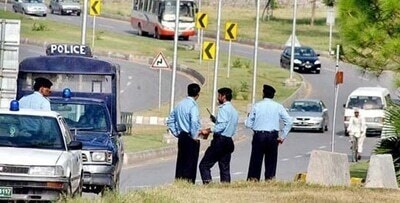

ISLAMABAD: The Islamabad High Court (IHC) on Thursday barred the Islamabad Traffic Police (ITP) from immediately registering criminal cases against citizens found driving without a licence, observing that penalties must remain within the bounds of law and proportionality.
A single-member bench, headed by Chief Justice Sardar Mohammad Sarfraz Dogar, issued the order while hearing a petition filed by a citizen Muhammad Abbi Hassan through Advocate Nazia Imran.
The petition challenged a directive issued by the Chief Traffic Officer (CTO) Hamza Humayoun, which had warned of vehicle seizures and arrests for driving without a valid licence after a certain deadline.
CTO Humayoun appeared before the court in person and assured that the ITP would “strictly act in accordance with the law” and would not resort to “arbitrary or disproportionate penalties” such as the unwarranted registration of FIRs or the immediate impoundment of vehicles.
He further told the court that the traffic police was committed to ensuring fairness, transparency, and strict adherence to constitutional and legal mandates in enforcing traffic regulations.
The court appreciated the CTO’s assurance. In his written order, Justice Dogar noted: “This Court appreciates the assurance extended and expects that the department will adhere to the principles of lawful governance, proportionality, and due process.”
“In this view of the matter,” he added, “the petition stands disposed of accordingly.”
During the hearing, the IHC chief justice underscored that while driving without a licence is a legal offence – particularly in cases involving accidents – it does not justify immediate criminal prosecution without due process.
The petitioner had argued that the CTO’s directive amounted to bypassing the constitutional process, as such enforcement measures lacked parliamentary legislation or Cabinet approval.
Responding to the court’s notice, CTO Humayoun clarified that no FIRs had yet been registered against any driver merely for lacking a licence.
He acknowledged the low levels of public awareness on traffic laws and licensing requirements, despite more than seven decades having passed since Pakistan’s inception.
The court also urged the authorities to modernise the licensing system. Justice Dogar suggested the introduction of a digital verification system – similar to the National Database and Registration Authority (NADRA) platform – to authenticate driving licences and other documents online.
The CTO responded that the department had already introduced various security features in the new digital licences and said efforts were under way to link the system with NADRA for real-time verification.
Justice Dogar warned that registering criminal cases against licence-less drivers would attach a criminal history to individuals, creating long-term consequences for relatively minor offences.
“Give a one-time warning and impose a fine,” the chief justice said, “but once someone is fined and it’s on record, then repeat offenders should face strict action.”
He emphasised that while mistakes can happen, enforcement agencies must not make errors in the application of law.
Copyright Business Recorder, 2025






















Comments
Comments are closed for this article.