


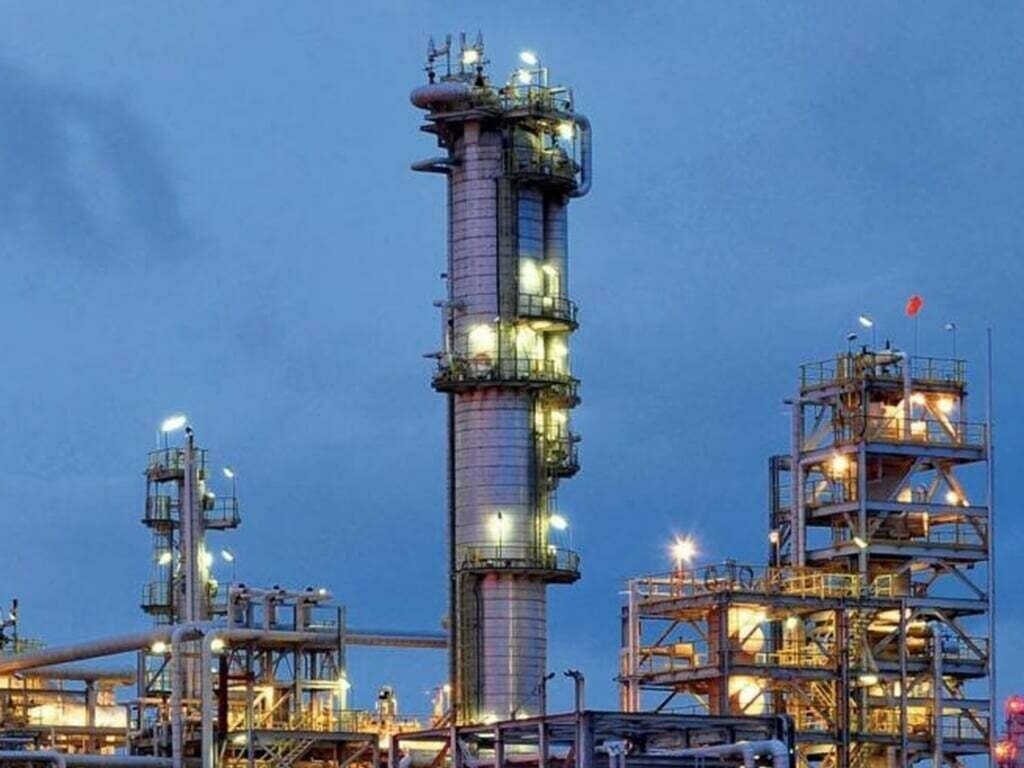

State-Owned Ent erprises (SOEs) were once a pride of the nation. During the decade of the seventies a Board of Industrial Management (BIM) was created to oversee these much-needed industrial entities. Professional experts were called in to lead the crusade.
Pakistan had to be self-reliant. Major focus was on basic industrialization, which was missed in the earlier decades. After gaining independence in August 1947, we started off well. Honesty, integrity and hope were the order of the day. Nation-building was the top agenda.
The discovery of Natural Gas (Sui Gas) in 1952 provided the country a big boost. At 12 TCF (Trillion Cubic Feet) it was one of the largest deposits of the world enough to meet our energy needs for a century. An effective development framework was developed for rapid growth (PIDC, PAEC, Wapda, PCSIR, PSI, Planning Commission, etc.) were all operational. The first Asian Tiger was getting ready to roar. In 1956, a constitution was also enacted. Our Bengali brothers accepted population parity by giving up their majority claim.
Republic of Pakistan was born with Iskander Mirza the last Governor General and first President. National elections under the constitution were scheduled to be held in later part of 1958. But then tragedy struck, individual interests and greed took control of the new land.
Nation-building was replaced with empire building. Concentration of wealth in a few hands started to surface. In the decade of the sixties 22 families were identified that controlled the financial resources of the land. Banks, insurance companies, big businesses and industries were all in their control.
The decade of the seventies started with the break-up of Jinnah’s Pakistan. Our brothers in East Pakistan ran out of patience and decided to go their way by pushing out the boots. A democratic government came into power in West Pakistan. After the passage of the consensual constitution in August 1973, the Islamic Republic of Pakistan (IRP) came into being. Hope was rekindled. Focus shifted back on nation building.
The control of the rich and powerful was challenged. Basic industrialization was carried out. PSM (Pakistan Steel Mill) was launched as the largest industrial entity in the country. There was a major focus on security. Projects were started in the Defence Production sector. There was a national resolve to build the Nuclear Device. Fertilizer Complexes were established. Syed Babar Ali, a leading businessman, was appointed Chairman of the Nation Fertilizer Corporation (NFC).
BIM was tasked to manage and monitor the SOEs. Job market flourished. In 1976 when I completed my engineering degree, I had several job offers.
Nationalisation of existing units did not work out well as expert leadership was not available. C. M. Latif’s BECO (Batala Engineering Company) was perhaps the biggest loss of this policy. Under his leadership BECO was emerging as the TATA of Pakistan. Banking and the insurance sector also suffered due to mismanagement.
With the fall of the elected government in 1977, bureaucracy started to take control. BIM was the first causality of the Zia dark ages. The functional SOEs now became wings of the ministries. Most professionals at the helm left as they sensed the impending disaster. Favouritism and nepotism became rampant. The once powerful board of directors turned into rubber stamps. The decline continued. Most profitable units started to incur losses. To reverse the tide, recently an SOE Act has been passed.
A monitoring unit has been set up in the Ministry of Finance (MoF). In China under the State Grid Corporation most SOEs are thriving. They are a major contributor to the Belt & Road Initiative of the government. On a global scale SOEs have considerable economic significance. In Sindh, the public-private partnership model has been very effective in the development of the Thar Coal reserve.
SECMC (Sindh Engro Coal Mining Company) is mining the much-needed energy resource to produce inexpensive power. The company is under the management of Engro Corporation while the Government of Sindh (GOS) holds 51 percent equity. It is a win situation for both.
It is all about professional management and leadership. Almost a decade back I had the chance of working in Bosnia where public-sector institutions were being privatized by the government. Most entities were well managed and profitable. On inquiry I was told that they were professionally managed with no bureaucratic interference. One visit to MCL (Metropolitan Corporation Lahore) which was once called LMC (Lahore Municipal Corporation) will reveal the decline of the city. Lahore thrived under elected Mayors but declined under appointed administrators.
With the signing of the recent security agreement with the Kingdom of Saudi Arabia an opportunity has been created for defence exports. DEPO (Defence Export Promotion Organization) was created over two decades ago to boost business in this sector. Major revamping of the organization will be needed to negotiate high value contracts. I participated in the launch of the Al-Khalid tank at HIT (Heavy Industries Taxila). It was a good product which can be marketed to generate revenue.
PAC (Pakistan Aeronautical Complex) Kamra is producing JF-Thunder fighter jets being used by PAF the pride of the nation. I remember Dr Mahatir Muhammad of Malaysia visited PAC and showed interest in procurement of aircrafts being built there. The monitoring cell of MoF cannot do it alone, much more needs to be done. An entity like State Grid Corporation of China or BIM of yesterday years is required to revive the SOEs.
These precious assets of the nation can generate the much-needed revenue while operating under professional management. In the year 2022, a company by the name of SITECH started its operation away from the inertia of the secretariats in Islamabad. It is involved in the following industries under public-sector control, steel, oil refinery, machine tools, large-scale manufacturing, chemicals and mining. Under professional leadership the company is doing well. Other SOEs can also come under its umbrella for a massive turn around. Indigenisation and self-reliance are the way forward.
Copyright Business Recorder, 2025
The writer is an ex-Chairman Pakistan Science Foundation; email: [email protected]






Comments
Comments are closed for this article.