


EDITORIAL: The so-called peace plan for Gaza has all the familiar hallmarks of a settlement devised by Israel’s closest friends, so no surprises there. It is tilted so heavily towards Tel Aviv that it leaves the Palestinian side stripped of agency in decisions that will determine their future.
That Hamas is given only days to surrender arms and remove itself from politics while Israel is merely asked to make a vague commitment to “withdraw” illustrate the imbalance. Netanyahu has poured cold water on that bit already, assuring his domestic audience that the IDF will remain in Gaza. So, when the plan’s authors cannot prevent one party from rejecting its central premise even before it is put in action, it is clear where power lies.
The most glaring flaw is the absence of Palestinians in shaping their own destiny. The transitional structures outlined in the plan are not Palestinian-led, nor are they accountable to those who have endured the bombing. Instead, control is to be exercised by outsiders under a “Board of Peace”, with Donald Trump and Tony Blair featuring prominently.
The symbolism is almost as insulting as the substance. To many across the Middle East, Blair’s reappearance as an overseer of Gaza is not a step towards reconciliation but a reminder of the wars that devastated the region. A peace arrangement that resembles recolonisation cannot hope to inspire confidence.
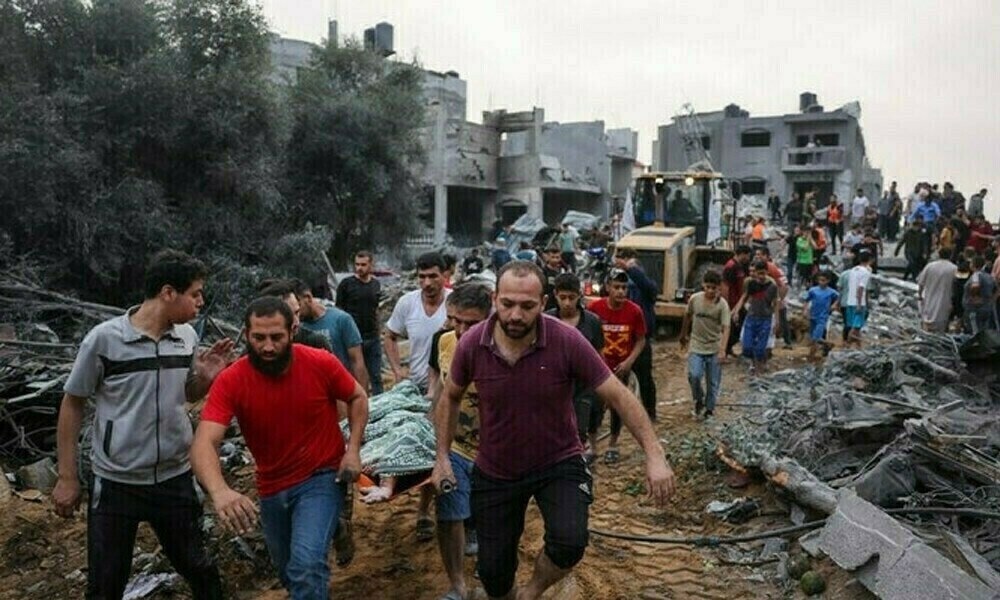
Supporters of the plan point to immediate relief. Bombardment will stop, aid will resume, and there may be some breathing space for civilians who have lived through two years of near-constant assault. These are not small gains. For Gaza’s families, even a temporary halt to air strikes and a flow of food and medicine can mean survival. But it is equally clear that such respite is fragile. There are no guarantees that Israel will not resume its campaign under some new pretext, no credible assurances that illegal settlements will halt, and no enforcement mechanism to prevent another round of devastation once international attention wanes.
The structure of the plan carries deeper risks. By demanding that Hamas disarm and dissolve, without offering Palestinians a credible path to representation, the proposal effectively removes one side of the equation while leaving the other intact. This imbalance is not a formula for peace but a recipe for further radicalisation. Resistance movements emerge when people are denied sovereignty and dignity. Stripping Palestinians of both while inviting them to accept a technocratic caretaker government supervised by foreign figures sets the stage for instability rather than settlement.
There is also the question of precedent. If a genocide can be followed not by accountability but by an imposed arrangement that rewards the aggressor with security guarantees and the victim with conditions for aid, then the message to the world is corrosive. International law is diminished, and the Genocide Convention risks becoming a document invoked selectively, ignored when inconvenient to the interests of powerful states.
Pakistan’s endorsement of the plan has been framed carefully, stressing conditions such as no displacement of Palestinians and full Israeli withdrawal. Public reaction, however, has already been overwhelmingly sceptical. Without a wider debate and transparency, there is the danger that Pakistan’s support will be seen as complicity in a process that offers temporary calm but no justice.
The Middle East deserves more than a ceasefire dressed up as a settlement. It deserves a political horizon rooted in international law, recognition of Palestinian statehood, and accountability for crimes already committed. Until then, even the most elaborate 20-point plan will remain what this one appears to be: a reprieve for Israel, a leash for the Palestinians, and a “peace” that does not last.
Copyright Business Recorder, 2025























Comments
Comments are closed for this article.