


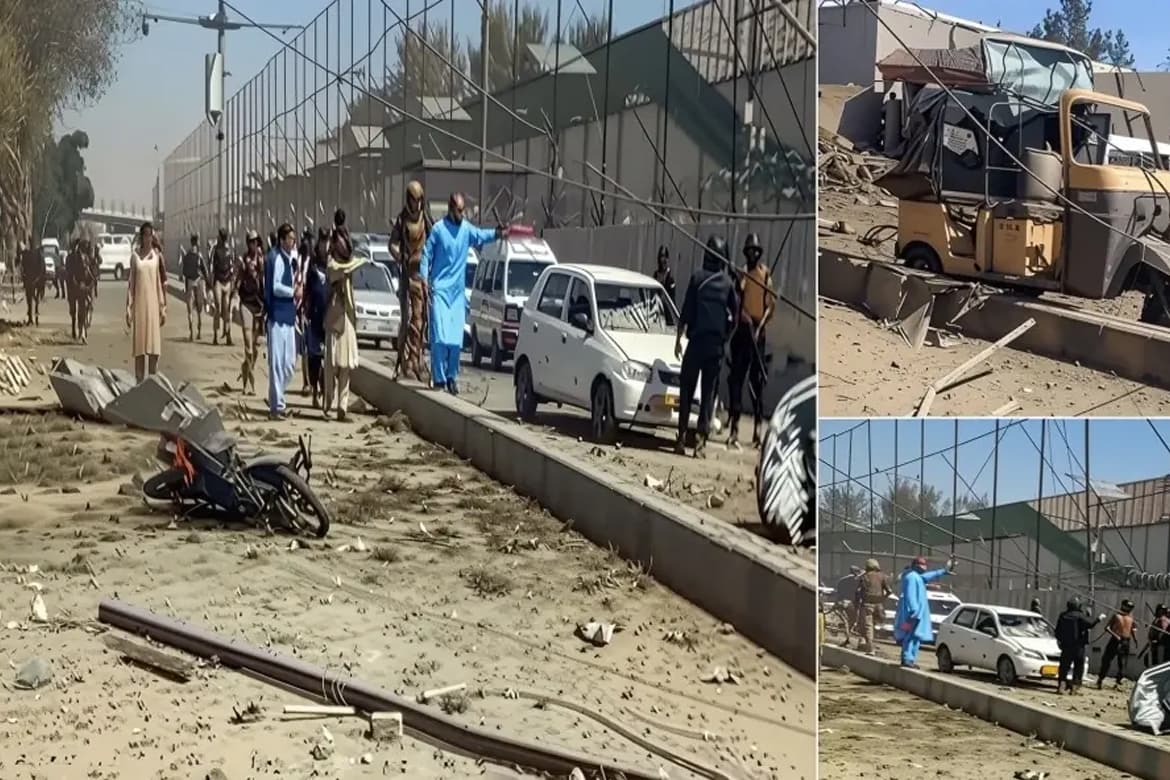
EDITORIAL: Once again, grim news has emerged from Baluchistan. At least ten people, including four security personnel, were martyred on Tuesday, and more than 30 others sustained injuries in a suicide car bombing near the Frontier Corps (FC) headquarters in Quetta. The blast was reportedly followed by an attempted breach of the heavily guarded facility by four assailants disguised in FC uniforms.
Alert security personnel foiled the infiltration attempt and neutralised the attackers. The incident is a chilling reminder that Baluchistan remains a battlefield – not just of violent conflict, but also of contested narratives, governance failures, and deep-seated grievances. According to initial reports, the suicide bomber targeted a key paramilitary installation, and amidst the ensuing chaos, a second group of militants tried to force their way in.
Although no group claimed responsibility for the assault, statements from top government leaders have done little to bring clarity. Instead, they reflect confusion. President Asif Ali Zardari was quick to condemn the attack, calling it the work of “Fitna-al-Khawarij,” a term now frequently used by state institutions to refer to the Tehreek-i-Taliban Pakistan (TTP), implying that the attack was carried out by misguided extremists operating on India’s agenda.
Meanwhile, Prime Minister Shehbaz Sharif, in a post via the federal government’s official X handle, lauded security forces for eliminating the “terrorists of Fitna-al-Hindustan” – a phrase used for India-backed Baloch insurgents. This contradictory attribution, to both the TTP and Baloch insurgent groups, raises more questions than answers any. In fact, it reveals the political compulsions at play rather than accurately identifying the security threat.
Instead of basing conclusions on verified intelligence, the country’s top leadership continues to rely on ritualistic blame games. This not only confuses the public and international observers, but also undermines the credibility of Pakistan’s counterterrorism narrative. Security matters demand consistency, responsibility, and coherence – not politically expedient statements.
Balochistan has long suffered under the weight of kinetic operations, enforced disappearances, systemic economic marginalisation, and – more recently – a surge in sectarian violence. The use of force has only deepened public resentment and increased alienation between the province and the federation. For things to change, the state must go beyond routine condemnations. Terrorism must be tackled with firmness – but also with wisdom.
The leadership in Islamabad needs to accept that no lasting peace can be achieved through force alone. Rhetorical pronouncements, such as Chief Minister Mir Sarfraz Bugti’s assertion that “we remain committed to making Baluchistan peaceful and secure,” ring hollow in the absence of genuine engagement with the political and economic grievances of the Baloch people. The path forward lies in addressing the injustices that insurgents exploit. It is about time the state listened to the true representatives of the Baloch people – those willing and able to help resolve the situation, not exacerbate it.
Copyright Business Recorder, 2025




















Comments
Comments are closed for this article.