


Trust between banks and their customers has long been fragile in Pakistan. From fee deductions that appear without warning to complaint processes that seem endless, many ordinary people feel the financial system works against them rather than for them. Yet there are signs of change.
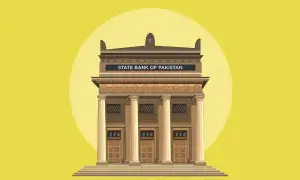
The State Bank of Pakistan (SBP) has steadily developed a framework for the Fair Treatment of Customers, and in September 2025, it went a step further by releasing the draft Business Conduct and Fair Treatment of Consumers Regulatory Framework (BC&FRF) for public consultation. This draft, open until the end of the month, sets out proposals to strengthen business conduct and consumer protection, and deserves the attention not only of bankers and policymakers but also of the public whose interests it is designed to safeguard.
The foundations are already in place. SBP’s Consumer Protection Department has established rules that oblige financial institutions to disclose information, treat customers fairly, and provide proper channels for grievances.
Under existing guidelines, banks are required to respond to a customer complaint within ten working days or issue an interim reply if more time is needed. If a customer remains unsatisfied or receives no response for 45 days, the matter can be taken to the Banking Mohtasib, a free and independent forum.
The Ombudsman’s office is not symbolic: in the first half of 2025 alone, it disposed of more than sixteen thousand complaints and provided over Rs882 million in relief to customers. These are hard numbers that show consumer protection can be made to work in practice.
The new draft framework builds on this base. It proposes enhanced disclosure requirements, clearer obligations on fair conduct, and improved accountability measures across banks and other regulated entities. It borrows from international models such as the UK’s “Treating Customers Fairly” initiative, but adapts them to local needs. The idea is simple: fairness is not just a moral principle but an economic necessity.
When customers are confident that banks deal with them transparently, they are more likely to use formal financial services, helping to expand financial inclusion in a country where a majority of adults still remain outside the system.
For consumers, the key is to activate these rights. When signing up for a loan, a credit card, or even a simple savings account, demand clear documentation of terms and charges, keep records of correspondence, and insist on clarity where disclosures are vague. If a complaint arises, follow the bank’s official process and escalate to the Mohtasib if necessary. The process is designed to be accessible and does not require legal expertise—what it needs is persistence and awareness.
For banks, the challenge is to embed fair treatment into daily practice. It is not enough to have policies written in manuals; staff must be trained, complaint procedures must be visible in branches and online, and responses must be timely and meaningful. For the regulator, the next step will be to ensure enforcement, through monitoring, reporting, and penalties where institutions fall short. Publishing complaint statistics by bank would also help build public confidence.
Pakistan has an opportunity at this moment to transform the relationship between financial institutions and their customers. The draft BC&FRF is a positive step, but its promise will only be realized if consumers, banks, and regulators all engage seriously.
The consultation window closes on 30 September 2025. It is time for stakeholders to speak up, for institutions to prepare for higher standards, and for consumers to recognize that fairness in finance is not a privilege but a right. Empowering everyday customers with knowledge and recourse is the surest way to build trust in the financial sector, and with trust comes both stability and growth.
The writer is a senior banking professional and consultant committed to strengthening consumer protection and promoting fair treatment in Pakistan’s financial sector.
Copyright Business Recorder, 2025


















Comments
Comments are closed for this article.