


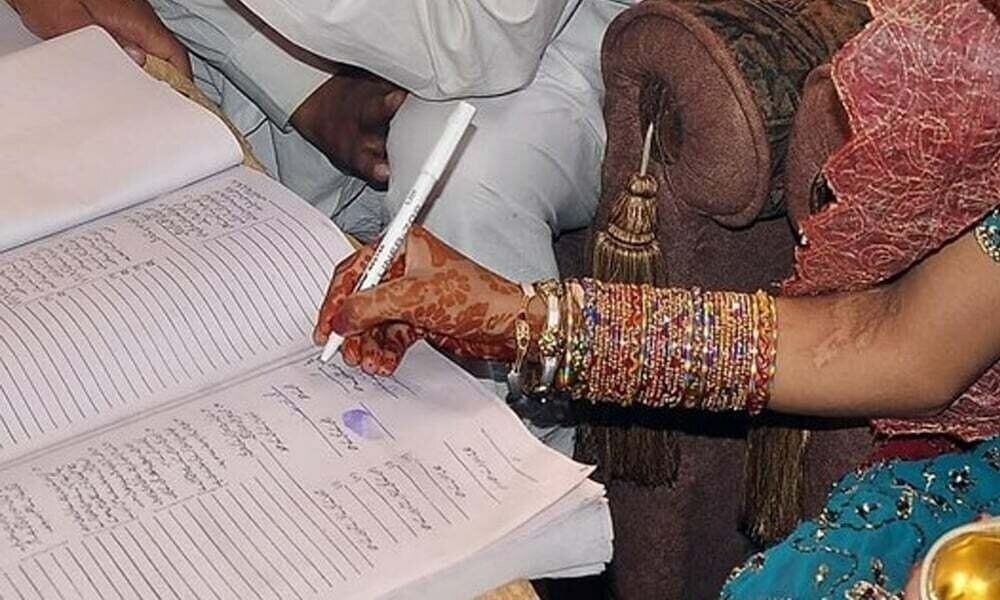
EDITORIAL: A recent high-level event held in Islamabad, organised by the Strengthening Participatory Organisation (SPO) with support from Save the Children, cast a spotlight on “Ending Child, Early, and Forced Marriage (CEFM)”, one of this country’s most pressing and persistent challenges.
Attended by parliamentarians, government officials, and civil society leaders, the event served both as a dialogue and a much-needed wake-up call. Startling findings from a fresh survey, shared by the organisers, revealed that nearly 60 percent of girls in Sindh and Baluchistan are married before the age of 18. This deeply troubling statistic highlights a practice that continues to rob millions of young girls of their education, health, safety, and dignity.
Often justified under the guise of cultural tradition or economic hardship, child marriage remains a serious violation of children’s fundamental rights.
The consequences are profound as young brides face increased risks of maternal mortality, domestic abuse, and chronic poverty. They are routinely denied the chance to complete their education or pursue meaningful livelihoods. These are not isolated cases of discontent or distress; they represent systemic failures with far-reaching implications for national development and social progress. It is important to note that Sindh is currently the only province in Pakistan with a dedicated legal framework addressing child marriage.
Under the Sindh Child Marriage Restraint Act, 2013, marrying off anyone under 18 is a punishable offence, not only for the parents or guardians, but also for those solemnising the marriage. Penalties may include imprisonment, fines, or both. However, despite this legal safeguard, enforcement remains a serious challenge.
The disconnect between legislation and its implementation underscores a greater reality: laws alone cannot dismantle harmful practices without strengthened social norms, accountability systems, and community-level empowerment.
Speaking at the event, Country Director of Save the Children rightly emphasised that tackling child marriage requires far more than policy declarations. Describing SPO’s initiative as “a vital step in addressing one of Pakistan’s most pressing social challenges,” the official highlighted the need for consistency, commitment, and collective action — involving policymakers, law enforcement, educators, civil society, and local communities alike.
The findings from Sindh and Baluchistan must also be seen in the context of a broader national crisis. While these two provinces show the highest prevalence, child marriage exists in varying degrees across the country. Addressing it requires a coordinated, nationwide response, one that empowers girls to overcome deeply rooted social barriers and enables them to exercise agency over their lives.
After all, ending child marriage is not only a legal imperative but a moral one. It is about protecting dignity, expanding opportunity, and ensuring that every girl in Pakistan has the freedom to choose her own future.
Copyright Business Recorder, 2025




















Comments
Comments are closed for this article.