


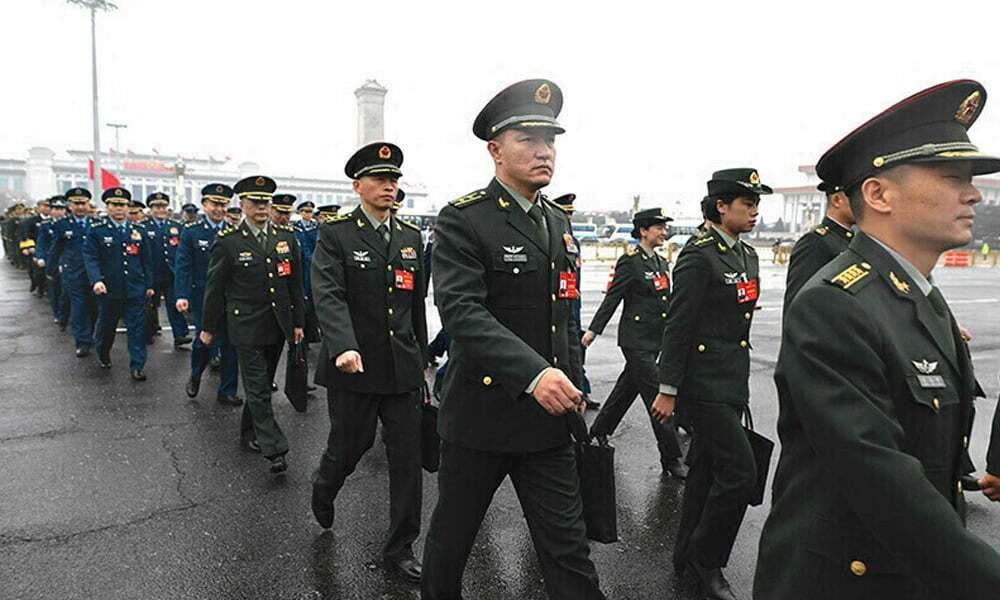

This is apropos a letter to the Editor from this writer carried by the newspaper yesterday. For decades, the Pentagon believed US technological superiority was untouchable. But Beijing’s show of force shattered that illusion.
Analysts in Washington, Brussels, and Tokyo were forced to confront an undeniable reality: China can now match or exceed US capabilities in precision strike, strategic range, and integrated defense. The balance of power has shifted irreversibly, forcing even America’s closest allies to reconsider where true leadership lies.
Yet China’s dominance is not based on weapons alone; it rests on a deeper foundation of economic strength. Trump’s tariffs, designed to cripple Beijing’s industrial power, instead exposed America’s own vulnerabilities.
China today controls over 90 percent of global rare-earth magnet production and nearly 85 percent of semiconductor-grade mineral processing — the very materials required for smartphones, electric vehicles, AI chips, advanced computing, fighter jets, precision missiles, and hypersonic weapons.
When Beijing announced export restrictions on seven critical rare-earth elements in early 2025, requiring special licenses for buyers, the shockwaves reverberated across the United States. Tesla halted electric vehicle production. Apple suspended multiple iPhone lines.
Lockheed Martin delayed its F-35 fighter jet deliveries. Silicon Valley startups braced for mass layoffs. Defence contractors scrambled to secure emergency stockpiles of materials essential to sustain their production pipelines. For the first time, the United States found itself dependent on Beijing’s will to maintain the heartbeat of its technological infrastructure.
Copyright Business Recorder, 2025
The writer is a former Press Secretary to the President, An ex-Press Minister at Embassy of Pakistan to France, a former MD, SRBC Macomb, Detroit, Michigan
























Comments
Comments are closed for this article.