


At UN, Pakistan pushes for diplomatic solution to Iran nuclear issue as sanctions loom
- France calls snapback mechanism necessary to preserve international peace, security
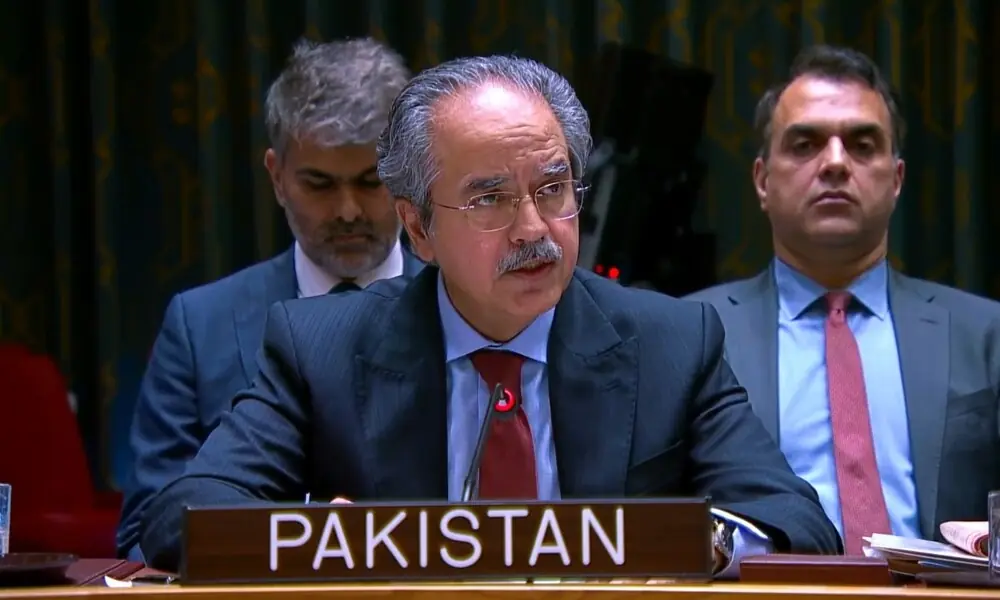

Pakistan, which voted for a UN Security Council (UNSC) resolution aimed at preventing the reimposition of economic sanctions on Iran, has strongly advocated diplomacy over coercion in a bid to find a solution to Tehran’s nuclear programme dispute.
The resolution, tabled by the 15-member Council president — South Korea — however failed, and sanctions are expected to “snap back” into effect on September 27.
Four Countries — Pakistan, Russia, China and Algeria — had backed the resolution, failing to secure the nine required for adoption. Nine members voted against sanctions relief, while two countries abstained.
“Diplomacy and intimidation do not go together,” Ambassador Asim Iftikhar Ahmad, permanent representative of Pakistan to the UN, said after the vote which he warned risked instability in the region.
“As an immediate neighbour and friend of Iran, we do not favour any action which risks destabilising a region that is already mired in multiple crises. This region cannot afford further tensions,” he said.
“We believe that even at this stage, diplomacy should be given a chance.”
‘What a dark moment’: Pakistan regrets US veto of UNSC Gaza ceasefire resolution
Last month, France, Germany and the United Kingdom moved to trigger the “snapback mechanism,” which automatically reimposes all UN sanctions that were in effect before the nuclear deal.
Those penalties included a conventional arms embargo, restrictions on ballistic missile development, asset freezes, travel bans and a ban on producing nuclear-related technology. Iran is already reeling from a 12-day war with Israel and a decades-long financial crisis.
Iran’s Foreign Ministry, in a statement on Friday, emphasised its commitment to safeguarding its interests and rights, including through diplomacy, and said it reserves the right to respond appropriately to any unlawful action.
In his remarks, the Pakistani envoy stressed the need to continue diplomatic engagement with Iran to address any outstanding issues in a “cooperative manner, in accordance with the rights, obligations and responsibilities of the parties.
“We must prioritise this approach and never give up on a peaceful negotiated settlement,” he added.
At the start of Friday’s Security Council meeting, Russia raised a point of order, rejecting the European claim to trigger the snapback mechanism.
Russian Ambassador Vassily Nebenzia said that there were no legal, political or procedural reasons to allow the “snapback” mechanism or to vote on the draft resolution, and accused France, Germany and UK of acting outside both resolution 2231 and the JCPOA.
UNSC votes to reimpose deep sanctions on Iran
He said the three had failed to follow the dispute settlement mechanism and instead imposed unilateral sanctions against Iran, which he described as “illegal”.
“Attempts on the part of the European countries to present the situation as though they have the right to activate the punitive provisions of prior resolutions, while themselves failing to fulfil their own obligations…cannot hold water,” Ambassador Nebenzia said.
Permanent Representative of China to the United Nations Ambassador FU Cong said “major discrepancies” existed between Council members over the snapback and warned that a rushed vote could “exacerbate State confrontation”, complicating efforts to resolve the issue diplomatically.
UK Ambassador Barbara Woodward countered, stating that the E3 (the European participants of the JCPOA) decision to invoke snapback was “entirely legal, justified, wide and consistent with the requirements of resolution 2231.”
She cited the August 28 notification submitted by France, Germany and the UK: “All that is required to trigger snapback is…a notification by a JCPOA participant state of an issue that it believes constitutes significant non-performance of commitments under the JCPOA,” she said.
France spoke before the vote, citing Iran’s escalating nuclear programme and its reduced cooperation with the International Atomic Energy Agency (IAEA).
French Ambassador Jerome Bonnafont said Iran had accumulated enriched uranium stockpiles far higher than the limit set by the agreement and restricted IAEA access to key facilities.
He called the snapback mechanism necessary to preserve international peace and security, and the integrity of the global non-proliferation regime.




















Comments
Comments are closed for this article.