


Russian government explores way to make ends meet as budget deadline looms
- The draft budget is expected to be submitted to parliament on September 29
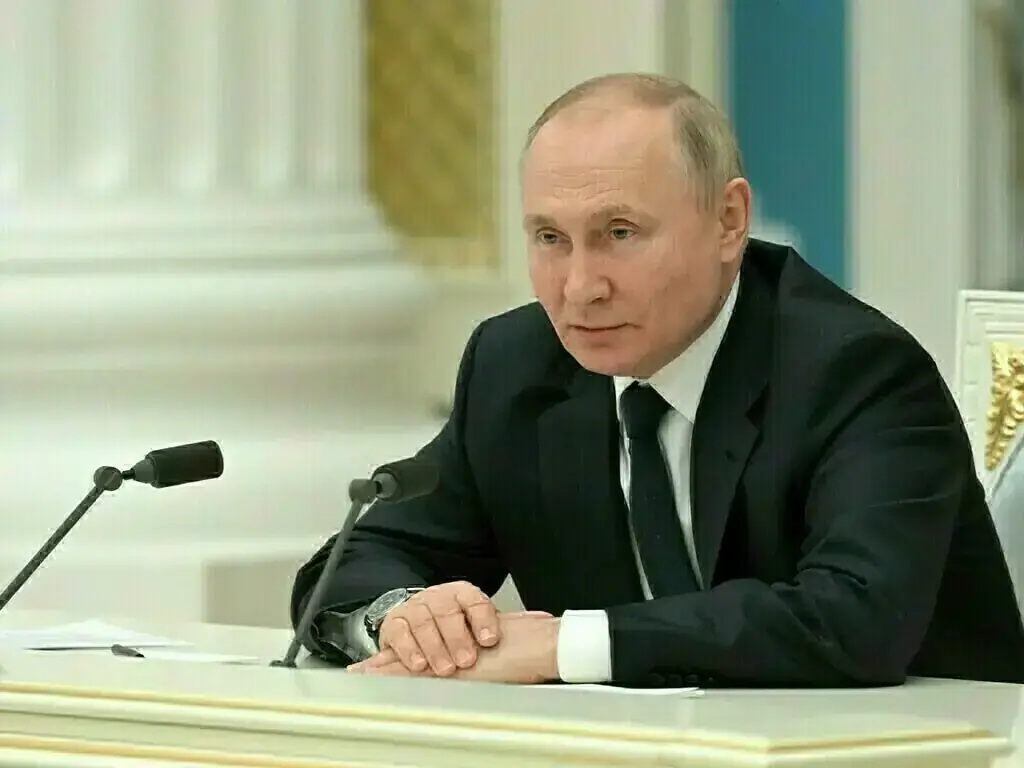

MOSCOW: The Russian government is considering raising the rate of value-added tax to keep the budget deficit in check and maintain reserves, four sources told Reuters, despite public assurances from President Vladimir Putin that there will be no tax rises.
The draft budget is expected to be submitted to parliament on September 29.
Its key components are agreed with Putin beforehand and are unlikely to be significantly altered during the formal parliamentary debate.
Russia, in the fourth year of its war in Ukraine, has raised personal income and corporate taxes this year, but the government still had to triple its federal budget deficit estimate to 1.7% of gross domestic product (GDP) in May.
It is now set to exceed that target, according to an unnamed official quoted by state media this month.
The 0.9% of GDP deficit for 2026 included in a budget law last year also looks likely to be exceeded.
Increase could halve the projected budget deficit
Four sources close to the government confirmed a report this week by The Bell, a media outlet based outside Russia, that the government is discussing lifting the value-added tax (VAT) rate to 22% from 20% to curb the deficit.
Putin, Modi hail friendly ties amid Trump pressure
The report did not specify a possible timeline for a decision but one of the sources told Reuters it was being considered for the 2026 budget as long as the budget rule which sets aside windfall oil revenues remains in place.
“How can the deficit be reduced while adhering to the budget rule? Only by raising taxes, because there’s hardly anything left to cut, either military spending or social spending,” one source said.
VAT accounted for 37% of federal budget revenues in 2024 and the possible increase could halve the projected 2026 deficit, according to Reuters calculations.
Russia’s economy has continued to grow despite tightening Western sanctions over the war in Ukraine. But GDP is expected to slow to around 1% from 4.3% last year and inflation remains above 8% in a country where much of the workforce and 40% of revenues now go to defence and security.
Government spending is the key driver of economic growth in Russia, and with Putin expressing displeasure at the economic slowdown and the need to continue financing the war of attrition in Ukraine, spending cuts are unlikely.
No final decision yet
Finance Minister Anton Siluanov has insisted that the budget rule, under which energy revenues collected above Russia’s target oil price, currently $60 per barrel, are directed to the fiscal reserve fund, will remain in place.
After Russia sent troops into Ukraine in 2022, Western nations prohibited insurers and maritime service providers from facilitating Russian oil exports unless they were below $60 a barrel. India boosted its Russian oil imports sharply but now faces pressure from U.S. President Donald Trump to halt them.
The Russian fund, which is separate to the country’s central bank reserves, currently has about 4 trillion roubles in liquid assets, which can also be used to cover the deficit.
This year the government plans to tap the fund for 447 billion roubles.

























Comments
Comments are closed for this article.