


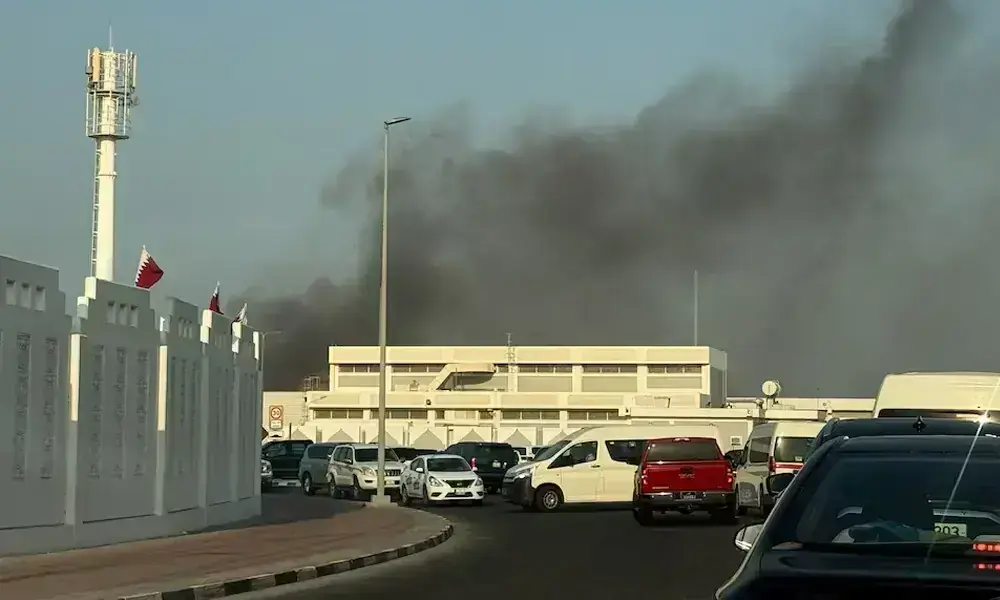
EDITORIAL: The Israeli strike on Doha has stripped away any pretence that there are limits to Tel Aviv’s actions so long as it enjoys Washington’s protection.
The attack on Qatari soil, which killed Hamas officials and a Qatari security officer, was not only a grave violation of sovereignty but also a direct insult to the host of the largest United States’ military base in the Middle East.
The world expected an outcry. What it got instead was a mealy-mouthed reminder from Washington for Israel to be “careful,” followed almost immediately by assurances that America still “understands” its ally’s position.
That is why the emergency Arab-Islamic summit in Doha had an edge missing from many previous gatherings. Leaders from across the Muslim world condemned Israel’s action, and several went further, warning that treaties and understandings with Tel Aviv cannot survive unchecked aggression.
Egypt’s president said such behaviour sabotages existing agreements. Jordan’s king called for deterrence. Malaysia demanded punitive steps, not more declarations. Qatar’s emir, host of the summit, openly asked how negotiations can continue when those meant to engage are targeted with air raids.
The real question now is whether this moment hardens into strategy. For years Arab capitals have tried to balance anger at Israel’s actions in Gaza and beyond with a cautious pragmatism that sought some form of stability through engagement.
Doha has hosted mediators, Riyadh has discussed normalisation, Cairo has clung to peace accords. The September strike has put all of them on notice that Israel has no qualms about extending its battlefield to their very capitals.
What makes the situation starker is that the United States itself admitted it was blindsided. Washington was not informed before the strike, even though the target city is central to its own regional military presence. That signals a remarkable contempt not just for Qatar but also for America. Yet rather than issue warnings, the Trump administration appeared to have absorbed the insult in silence.
Allies are bound to ask what kind of security umbrella this is, when the host of a vital US base can be attacked by another US ally without even a caution.
This is the fracture line now running through the region. States that once relied on American power to impose limits on Israel’s behaviour are beginning to see that there may be no limits at all. If Tel Aviv chooses to strike Hamas “wherever they are,” as Netanyahu declared, then no capital is off the table. That makes every mediator a potential target, every negotiation a charade that could end in an airstrike. If even the United States cannot restrain Israel when its own strategic assets are at risk, what hope can others hold out?
The implications go well beyond the latest phase of the Gaza war. Peace treaties that once seemed permanent can unravel under the pressure of repeated violations. Talks about normalisation, already deeply unpopular on the Arab street, now carry new political risks for leaders seen to be offering concessions.
And in every Arab capital the youth who watch Gaza’s devastation in real time through social media will view each new attack as evidence of collective humiliation, not shared security.
The strike in Doha has been condemned widely, but condemnation is not enough. It must be remembered as the moment when illusions about American guarantees began to crumble.
The Muslim world can no longer treat US backing as insurance against Israeli escalation. The defence of sovereignty, and the safeguarding of their own stability, must come from their own collective choices. Otherwise, Israel will continue to act as though no boundary applies, confident that Washington will look away.
Copyright Business Recorder, 2025




















Comments
Comments are closed for this article.