


Floods 2025 inflict $2bn losses to Pakistan, raise inflation, fiscal risks: report
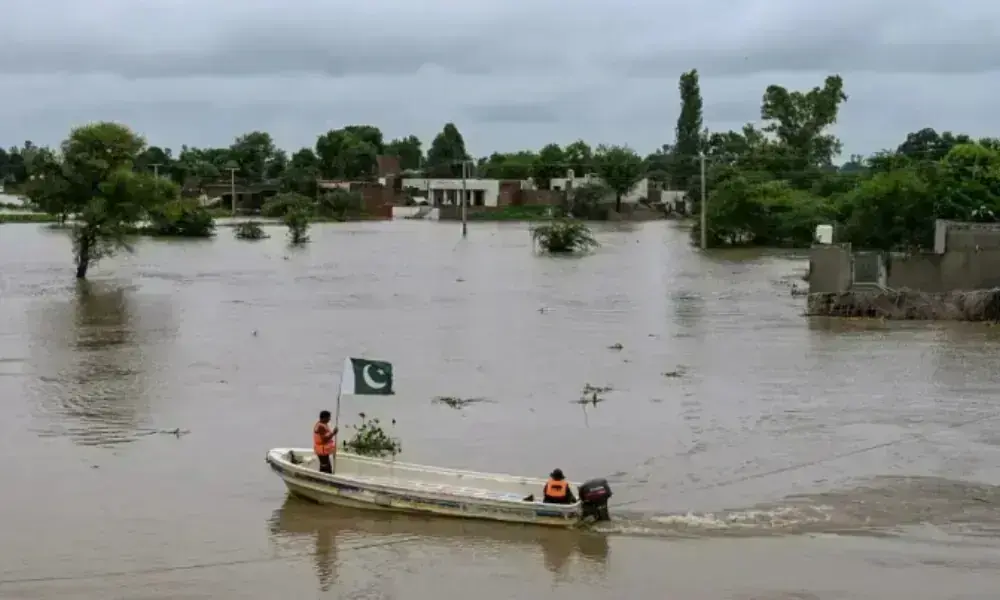

Pakistan’s fragile economy faces another setback as the devastating 2025 monsoon floods have caused damage estimated at $2 billion, with mounting risks of higher inflation, external account pressures, and fiscal stress.
According to a JS Research report by Head of Research Waqas Ghani, 2025 monsoon rains during June, July, and August have exceeded seasonal norms.
“However, while the situation remains concerning, we believe it is not of the same scale as 2022 as the Pak Met department suggests at least 33% less monsoon rainfall recorded this year compared to 2022.”
The research house warned that losses to cotton, rice, sugarcane, maize, and wheat could severely disrupt food supplies, pushing inflation beyond earlier forecasts.
Floods 2025: Pakistan faces $1.4bn economic loss, agriculture hit hardest
“Food inflation, which has eased in recent times, may climb again, mainly led by unstable supplies. Our calculations suggest a jump in CPI inflation to 7.5-8% from our FY26E base case projection of 6.5% under different levels of elevated food inflation figures,” read the report.
Cotton and rice exports are likely to decline, while increased imports of wheat and cotton could raise the current account deficit by $1.8 billion.
The government may also face additional fiscal stress if forced to ramp up relief and rehabilitation spending, even as it remains under strict IMF (International Monetary Fund) conditionalities.
“Any such unplanned expenditures could significantly stretch the budget at a time when Pakistan is operating under stringent IMF program conditionalities that allow little room for fiscal slippage.
“Mobilising targeted international support and seeking concessional financing may prove more sustainable than resorting to distortionary taxation on the formal sector,” read the report.
Sector-wise, “we expect fertilisers, tractors and OMCs sectors from the listed space that would be negatively impacted by the heavy rainfall and flooding,” read the report.
JS Global noted that despite the devastation, the Pakistan Stock Exchange (PSX) has continued its rally, with the benchmark KSE-100 Index climbing past 156,000 points.
“KSE-100 has largely shrugged off the 2025 floods, continuing its steady upward climb since June. This highlights the market’s growing resilience, with investors now focusing more on improving macro fundamentals than on climate-driven disruptions,” it said.
The report concluded that the central bank’s monetary policy committee (MPC) is likely to tread cautiously, with flood-driven inflation risks limiting the room for aggressive rate cuts in the near term.
“We expect the committee may opt for another pause in the Sep-2025 meeting, despite our base case allowing for a 50– 100bps cut by year-end,” it said.




















Comments
Comments are closed for this article.