


PM performs ground-breaking of T-Chowk Flyover project
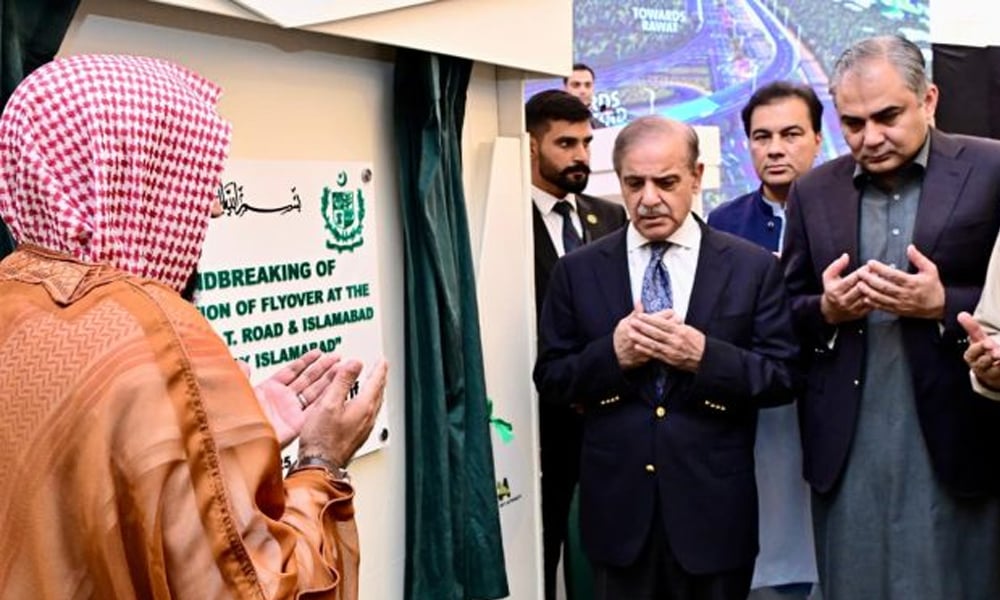

ISLAMABAD: Prime Minister Shehbaz Sharif on Friday inaugurated the construction of the long-awaited T-Chowk Flyover at Rawat, a key infrastructure project aimed at easing severe traffic congestion at the southern gateway to the capital.
The Rs 1.495 billion project, situated at the junction of the Islamabad Expressway and GT Road, is expected to significantly reduce traffic pressure on a corridor that serves as a main artery for commuters entering Islamabad from Rawalpindi, Punjab, and Azad Kashmir. According to official estimates, more than 100,000 vehicles traverse the T-Chowk junction daily.
At the groundbreaking ceremony, the prime minister described the project as a “milestone” for residents of the twin cities and surrounding areas. He stressed the need for timely completion and assured that no compromise would be made on construction quality.
“The government will ensure transparency and efficiency in the execution of development projects,” Sharif said, adding that infrastructure improvements were essential for easing public hardship and facilitating economic activity.
The project, designed by the National Engineering Services Pakistan (NESPAK), will include a 1.07-kilometre-long flyover with an 11.3-metre-wide dual carriageway. It will also feature street lighting, landscaping, and other urban design components.
Interior Minister Mohsin Naqvi, Railways Minister Hanif Abbasi, Capital Development Authority (CDA) Chairman Muhammad Ali Randhawa, and other senior officials were also present at the ceremony.
Speaking on the occasion, Naqvi said that the flyover would be completed within 150 days and said that all efforts were being made to ensure adherence to engineering standards and deadlines.
The T-Chowk junction has long been identified as a high-pressure traffic zone, particularly during peak commuting hours. The Islamabad Expressway, now signal-free from Zero Point to T-Chowk, is used by both heavy and light transport vehicles, and connects key urban centres in the region.
Naqvi said the CDA had resolved the right-of-way issue earlier this year, after which the National Highway Authority (NHA) issued a no objection certificate (NOC) on June 5.
Once completed, he added, the flyover is expected to benefit approximately 41,500 vehicles per day by improving travel time, reducing fuel consumption, and lowering vehicular emissions in the area.
In his address, the prime minister also outlined broader urban development initiatives in preparation for Pakistan’s hosting of the Shanghai Cooperation Organisation (SCO) summit in 2027.
He said that work had begun to beautify Constitution Avenue and that ornamental plants gifted by Tajikistan would soon be planted across the capital.
“In the coming weeks, the results of these efforts will be visible on the city’s main roads,” Sharif said, adding that Islamabad must be made to reflect the dignity and hospitality required of an international host city.
The prime minister also referred to plans for a new railcar service between Rawalpindi and Islamabad, aimed at improving urban mobility and reducing dependency on road transport.
He noted that the proposed project, being developed by the Ministry of Railways in coordination with the Interior Ministry, would complement the existing Metro Bus service and recently launched electric vehicle (EV) transport in the capital.
He directed the CDA and Islamabad district administration to accelerate development work, improve service delivery, and ensure environmental sustainability in all projects.
The event concluded with the unveiling of a commemorative plaque marking the start of the flyover’s construction.
Copyright Business Recorder, 2025




















Comments
Comments are closed for this article.