


An electrified Pakistan: test driving Nishat Group’s Omoda & Jaecoo EVs
- 'Slightly larger in size and sporting a boxy look, the Jaecoo J6 proved to be a statement on the road'


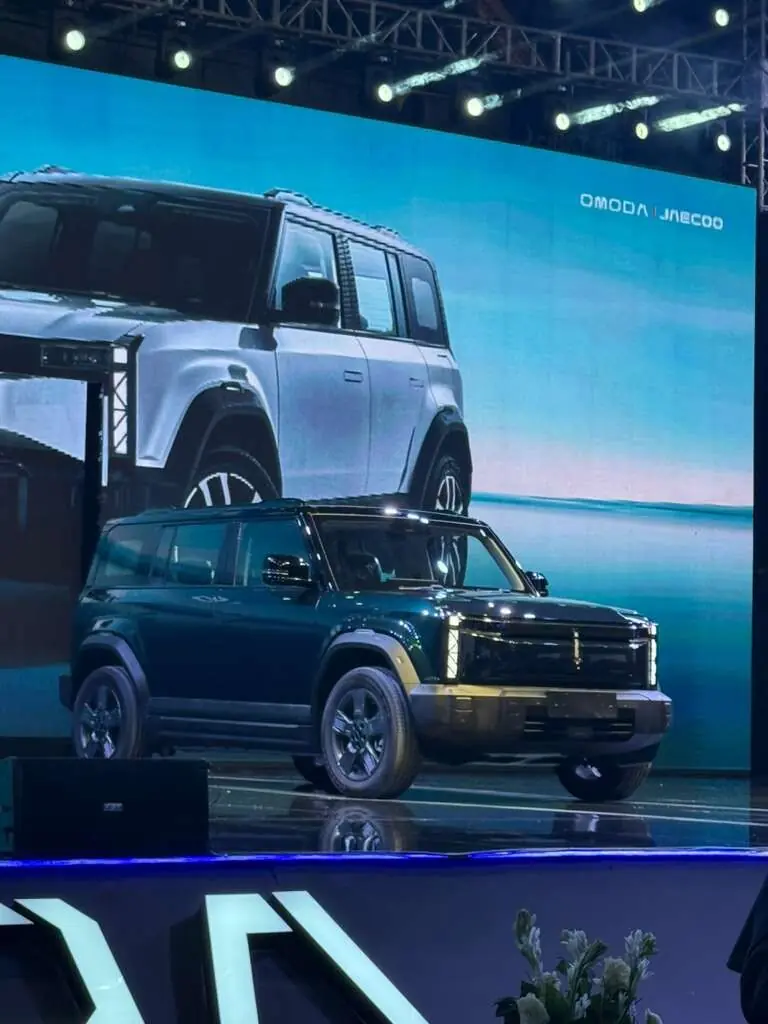
On August 1, 2025, at the Pakistan Expo Center, Nishat Group’s NexGen Autos unveiled its partnership with China’s Chery Omoda and Jaecoo. The launch was led by Nishat Group founder Mian Mohammad Mansha, alongside senior leadership from Chery Omoda and Jaecoo.
The Test Drive
I personally got to thoroughly test drive the Omoda E5 and the Jaecoo J6, for which I chose Lahore’s newly developed Gulberg Central Business District, with its newly minted smooth roads leading up a bridge and into the Defense area. As a native Angeleno, I naturally lean toward sporty urban drives, while reserving my preference for heavy AWD vehicles with firm steering for mountain terrain and winding roads.
Omoda E5
Driving the Omoda E5 felt comparable to a zippy premium Toyota Prius, nimble yet refined. It proved to be an ideal everyday urban car, with its “big small” proportions making it easy to maneuver through Lahore’s narrower streets while handling the city’s traffic with ease.
The Omoda E5’s ventilated seats were a welcome feature, especially on a hot summer day. While the center-console infotainment screen was smaller than expected for an EV, it remained adequate for everyday use and management.
What I appreciated most was the vehicle’s everyday practicality, a reassuring quality on busy roads where there are already plenty of other things to worry about.
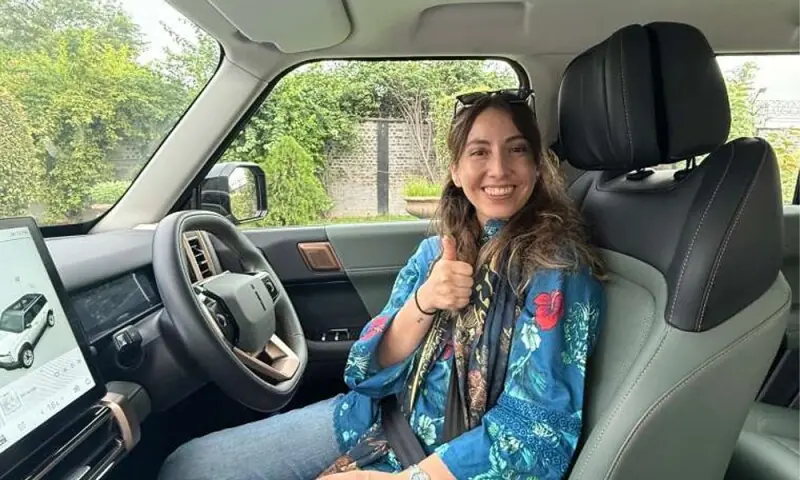
Where the Omoda could improve is in its responsiveness, I had hoped for a zippier drive. While I appreciated the size of the steering wheel, I found it difficult to adjust low enough for comfort as a shorter driver. The infotainment screen also felt undersized for a vehicle that otherwise gave off subtle Tesla-like vibes, though this wasn’t a deal breaker.
Jaecoo J6
Going in, I expected the Jaecoo J6 to handle more like a Jeep Wrangler or a Jeep Cherokee, significantly heavier than the Omoda and more rugged at the wheel. Instead, it surprised me with a lighter, more agile drive.
Slightly larger in size and sporting a boxy look, the Jaecoo J6 proved to be a statement on the road. Its sleek front lighting turned heads wherever it went. Knowing the vehicle was AWD, I leaned sharply into the turns to test its grip, and it definitely delivered. My favorite part was its panoramic sunroof and its lethal looking I-Type Digital Smart Light Set.
According to Ali Zaidi, GM Marketing for Omoda and Jaecoo Pakistan, a drive between Lahore and Islamabad is easily possible. With just a single 30 - 40 minute charging stop in Behra, a drive he has personally test-driven several times
While the vehicle was a clear showstopper on the streets of Lahore, I found some of the interior controls less straightforward. Call me old-fashioned, but I prefer physical dials and knobs for basics like volume or the glove compartment. In order to open the glove compartment I had to touch the touchscreen twice versus physically just being able to open it. I also felt the rearview mirror was undersized for a car of this size, though other drivers I spoke with didn’t share the concern.
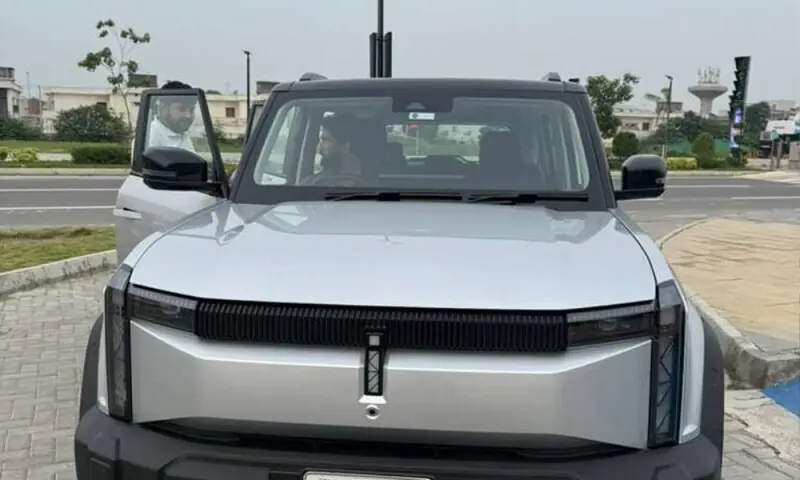
In sum, the Jaecoo J6 makes a bold statement on the road, while the Omoda E5 offers a practical, fuel-saving choice, an ideal drive for the hustle and bustle of everyday urban driving.
Among the key perks of both EV models are wireless smartphone charging, a smartphone-enabled keyless entry system, and a comprehensive smart safety suite. Perhaps most interesting during the test drive, however, was the remarkable cabin quietness, to the point that the sounds of wind and birds outside were more distinct than in a normal vehicle.
The Launch
The car launch itself was a lively occasion, featuring a spectacular expo show with ambient blue lighting guiding the entrance of the entire event. Mr. Qi Jie, President of Omoda and Jaecoo South Asia, highlighted the brands’ milestone of 500,000 units sold globally across key markets including Spain, Italy, Britain, Poland, and South Africa. Mr. Muhammad Afzal, Commercial Lead for NexGen Autos, then presented the model’s specifications and detailed its crash-test performance.
The Rollout
Naturally, potential car buyers are curious about the brand’s sustainability and after-sales support. To explore this, I spoke with Ali Zaidi, GM Marketing for Omoda and Jaecoo Pakistan. He explained that Nishat brings a proven track record in launching successful car brands and the financial strength to scale operations effectively. Special financing plans are already in place for early buyers, while businesses can also acquire vehicles for fleet purposes. Today, the average delivery time for a new car is as little as two weeks.
The Unique Selling Point: the tech.
Each car has its own dedicated app. The app allows owners to remotely start their car and cool the cabin in advance, keep headlights on while safely entering their home, and even activate a “pet mode,” which maintains moderate air conditioning while the vehicle remains securely locked.
As a tech person, obviously I asked about privacy. Company representatives emphasized that user data remains stored locally on the device, addressing common privacy concerns.
On the after-sales front, NexGen Autos has partnered with a network of local partners in Pakistan to develop a comprehensive system of dealerships and service centers.
On the question of battery safety, company representatives explained that the vehicles are equipped with additional protective features designed to safeguard the car in the rare event of a battery fire. The system uses CATL lithium iron technology, offering multiple safety layers.
The vehicle models are equipped with an advanced navigational safety system that monitors blind spots, assists with lane changes, and even tracks driver attention.
Omoda Jaecoo Pakistan will be bringing in more models, they will have the Jaeco J7, a hybrid vehicle. What sets a plug-in hybrid electric vehicle (PHEV) apart is its ability to recharge the battery through an external charger, dramatically improving efficiency. This dual system enables a combined driving range of up to 1,250 kilometers.
When I asked about how often these batteries have to be replaced, the current estimates are at every 8 years or when the car reaches 160,000 kilometers. Per global EV benchmarks, most manufacturers project battery lifespan of 8-10 years or 150,000-200,000 kilometers.
Pakistan’s shift toward electric vehicles is a wonderful step for both the economy and the fight against climate change, cutting emissions and making our cities a lot more breathable. However, until charging infrastructure expands beyond the roads connecting Islamabad and Lahore, EV use will remain concentrated in major urban centers. With more global and local brands launching EVs in Pakistan, the momentum is building, but scaling infrastructure will be the real unlocking leap for nationwide adoption.
So there you have it, if you’re interested in being a part of this next wave, definitely consider a test drive for starters.
The article does not necessarily reflect the opinion of Business Recorder or its owners.
The writer is Co-Founder & CEO, Paismo HR




















Comments
Comments are closed for this article.