


Badini point opening, Iran barter trade: Senate panel chides MoC bigwigs for inaction
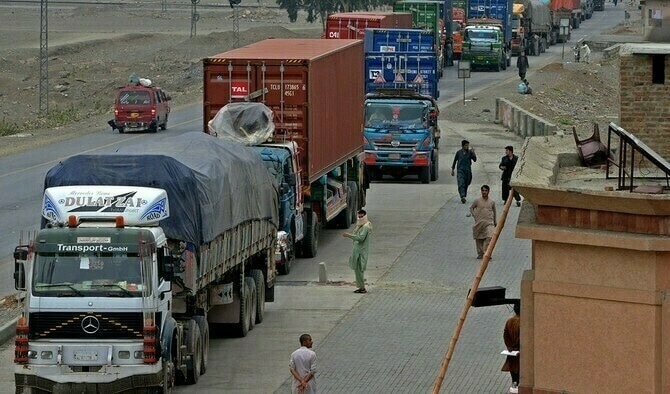

ISLAMABAD: The Senate Standing Committee on Commerce, in a session held Thursday, sharply criticized the Commerce Ministry’s top officials for their inaction and lack of preparedness regarding the opening of the Badini crossing point with Afghanistan and delays in issuing a revised notification for barter trade with Iran.
The Commerce Ministry team, led by Salman Mufti (holding additional charge as Secretary Commerce) and Nasir Hamid (Additional Secretary for Trade Diplomacy), failed to provide convincing answers to a barrage of questions raised by Committee Chairperson Senator Anusha Rahman and Senator Saleem Mandviwalla. Notably, PTI senators did not participate in the meeting.
Addressing the issue of the Badini border crossing, the Commerce Ministry informed the Committee that the Ministry of Interior is responsible for opening crossing points on international borders. Although an inter-ministerial meeting had been held with Afghan representatives, no resolution had been reached.
List of items being exchanged for tariff cut: Islamabad, Tehran agree on text of proposed FTA
In a previous meeting, the Commerce Ministry had assured the Committee that it would reopen the Badini crossing using containerized infrastructure, similar to past operations, despite lacking current infrastructure. However, the Ministry failed to report any progress in the latest session, drawing the Committee’s ire.
Officials argued that since border openings fall under the jurisdiction of the Interior Ministry, they had requested updates but received no substantial feedback.
During the meeting, Senator Mandviwalla called Secretary Interior Muhammad Khurram Agha on speakerphone. Surprisingly, Secretary Agha denied that opening border crossings was the Interior Ministry’s responsibility. When presented with the Commerce Ministry’s claims, he said he would “look into the matter.”
This further frustrated the Committee, which questioned why the Commerce Ministry had committed to reopening the border if it wasn’t within its authority.
A Joint Secretary from the Commerce Ministry informed the Committee that approximately Rs576 million had been released for the construction of a 40-kilometer road. The Ministry also questioned the competence of the Balochistan Development Authority (BDA), which is overseeing the project.
The President of the Quetta Chamber of Commerce and Industry, who shared photos of the Afghan side of the border, informed the Committee that a Pakistani delegation had met with a representative of the Governor of Kabul to request cooperation in opening the Badini crossing. The Afghan side reportedly responded that any such move would require an official request from the Government of Pakistan.
Following the unsatisfactory responses, the Committee decided to summon the Chief Secretary of Balochistan, the Project Director of the Badini initiative, and officials from the Ministry of Interior at the next meeting scheduled for September 18, 2025.
The committee also criticized the Commerce Ministry over the recently revised SRO 642(1)/2023, which governs barter trade with Iran. Lawmakers described the revised regulations as containing “illogical and unreasonable” conditions, hindering rather than facilitating trade.
Chairperson Senator Anusha Rahman pointed out that some proposed amendments to the SRO violated the Standing Committee’s previous instructions and a Federal Cabinet decision that only the Commerce Minister has the authority to amend the notification.
Despite this, the Ministry had sought input from the Ministry of Law, the Ministry of Foreign Affairs (MoFA), and the Federal Board of Revenue (FBR), which recommended several amendments — a move that further angered the Committee.
A visibly frustrated Senator Rahman declared, “The Commerce Ministry is in ruins,” and demanded disciplinary action against the officials responsible for what she termed a “grave blunder.”
Senator Mandviwalla echoed this sentiment, remarking, “It seems we are still operating under the system of 1967. The entire system is in ruins.”
The Committee also criticized MoFA and FBR, stating they had no role in matters of barter trade and should not have been involved in revising the SRO.
The Committee further directed the Commerce Ministry to clarify the list of “others” within the restricted items under the barter trade agreement.
Commerce Secretary (In-Charge) informed the Committee that the Prime Minister had returned the summary regarding amendments to the SRO, stating that there was no need to seek opinions from other ministries, as the authority to amend rests solely with the Commerce Minister.
Chairperson Rahman instructed the Ministry to redraft the SRO in line with the Committee’s discussions, without waiting for formal meeting minutes.
Additionally, the Standing Committee directed the Director General of Trade Organizations (DGTO) to grant chamber licenses to seven districts in Karachi, resolving a longstanding issue.
Later on talking to media, Commerce Ministry official stated that in August, Pakistan’s imports from India stood at $32 million. On a yearly basis, imports from India increased by 37% in August 2025. In August 2024, the volume of imports from India was $23.3 million. During the current government’s 1.5-year tenure, imports from India have increased 7 times on a yearly basis. Yearly imports from India increased in March, August, and September 2024. Increases were also recorded in October 2024, February, and March 2025 on a year-on-year basis.
In May of this year, a complete ban was imposed on all types of trade with India.
This decision was made after India unilaterally suspended the Indus Waters Treaty. Pakistan also banned the import of Indian products via third countries. Previously, Pakistan suspended trade with India in August 2019. Later, Pakistan relaxed trade restrictions with India. Pakistan allowed trade of life-saving medicines with India.
Copyright Business Recorder, 2025

























Comments
Comments are closed for this article.