



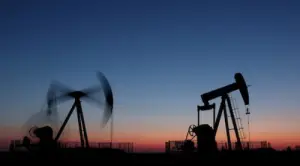
LONDON: World oil supply will rise more rapidly than expected this year as OPEC+ members increase output further and supply from outside the group grows, the International Energy Agency said on Thursday, and implied that a surplus could grow in 2026.
Supply will rise by 2.7 million barrels per day (bpd) in 2025, up from 2.5 million bpd previously forecast, the IEA, which advises industrialised countries, said in a monthly report, and by a further 2.1 million bpd next year.
OPEC+ is adding more crude to the market after the Organization of the Petroleum Exporting Countries, Russia and other allies decided to unwind its second layer of output cuts more rapidly than earlier scheduled.
The extra supply has raised concern of a surplus and weighed on oil prices this year.
Supply is rising far faster than demand in the IEA’s view, even though it upwardly revised its forecast for growth in world demand this year to 740,000 bpd, up 60,000 bpd from the previous forecast, citing resilient deliveries in advanced economies.
“Oil markets are being pulled in different directions by a range of forces, with the potential for supply losses stemming from new sanctions on Russia and Iran coming against a backdrop of higher OPEC+ supply and the prospect of increasingly bloated oil balances,” the IEA said in the report.
IEA demand forecasts are at the lower end of the industry range, as the agency expects a faster transition to renewable energy sources than some other forecasters. OPEC, which sees demand rising by more than the IEA, updates its forecasts later on Thursday.
Oil prices were steady after the IEA published its report at 0800 GMT, with Brent crude trading just below $68 a barrel.
Untenable Surplus Looms
The IEA has been saying the world market looks oversupplied and Thursday’s report said global inventories will rise by an “untenable” 2.5 million bpd on average in the second half of 2025 as supply far outstrips demand.
Next year, the report implied that supply may exceed demand by about 3.3 million bpd, with supply growth from OPEC+ and producers outside the group such as the U.S., Canada, Brazil and Guyana, and a limited expansion in demand.
Last month’s report implied a 2026 surplus of almost 3 million bpd. Still, the IEA said, the surplus may not materialize.
Energy efficiency rate accelerates amid high prices: IEA
“There are a number of potential twists and turns ahead – including geopolitical tensions, trade policies and additional sanctions on Russia and Iran – that could yet alter market balances,” it said.
China continues to stockpile crude, the IEA said, which is helping to keep Brent crude prices for immediate delivery higher than those for later contracts, a structure known as backwardation which indicates a tight market.
















Comments
Comments are closed for this article.