


Floods, torrential rains: Pakistan’s economic recovery could face setback
- Heavy floods may also weaken the repayment capacity of agricultural borrowers, as per Mid-Year Performance Review
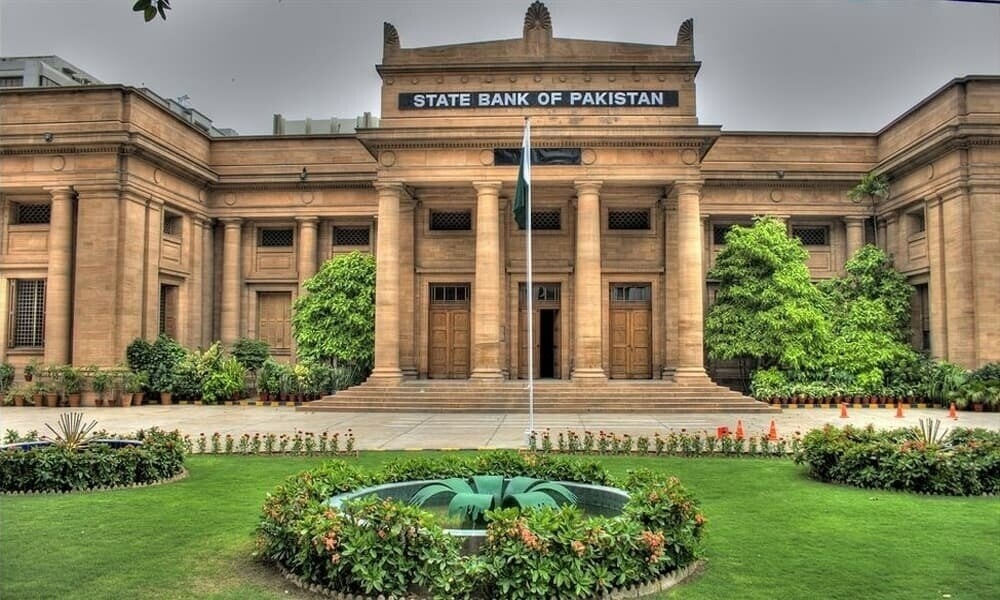

KARACHI: The State Bank of Pakistan (SBP) on Wednesday warned that recent torrential rains and flooding could pose some challenges to the economic recovery.
According to Mid-Year Performance Review (The Review) of the Banking Sector for 2025, issued by the SBP, the subdued inflation, relatively stable exchange rate, prudent fiscal policy, and country’s improved credit rating are likely to support economic recovery. However, the recent spell of torrential rains and flooding may pose fresh challenges to this economic outlook, the Review said.
“The recent heavy floods may also weaken the repayment capacity of agricultural borrowers; however, the banking sector’s soundness is likely to remain immune due to relatively contained share of agri advances in overall loan portfolio and adequate capital cushions available with the banks,” the SBP said.
Pakistan’s economy now positioned on more stable footing: SBP governor
The Review covers the performance and soundness of banking sector for the period from January to June 2025 (H1CY25), besides presenting a outlook of the banking industry. It also briefly discusses the performance of financial markets as well as the results of the Systemic Risk Survey (SRS), which represents the views of independent experts about key current and potential future risks to financial stability.
Overall, for banking Sector Outlook for second half of CY25, SBP believed that banking sector’s performance is likely to remain steady in the second half of CY25.Amid easing financial conditions, economic recovery and a seasonal demand, banks’ advances are expected to rise in H2CY25.
Particularly, with relatively lower tariffs rate of 19 percent compared to regional competitors, textiles exports to USA may see some uptick translating into higher credit demand. While continued fiscal consolidation, realization of planned official inflows, and increase in non-tax revenue can taper government’s needs for bank credit, however, recent flooding could exert pressures on fiscal account.
According to review, the cumulative reduction in policy rate is likely to depress banks’ interest earnings. However, with an expected rise in lending amid easy monetary and improving economic conditions, the volume effect on earning may overweigh the rate impact.
In addition, the credit risk of the banks is expected to remain contained owing to anticipated improvement in re-payment capacity of the borrowers amid easing financial conditions, improved business confidence and further traction in economic activity.
Accordingly, the earning as well as solvency position of the banking sector is likely to remain steady. Encouragingly, results of the latest macro stress tests suggest that the banking sector, in general, and the large systemically important banks, in particular, are expected to show resilience and withstand assumed severe macroeconomic shocks over the projected period of two years.
The Review highlights that banks managed to grow their asset base by 11 percent in H1CY25. Investments in government securities primarily supported the asset growth, reflecting government’s needs from the banking sector. Advances observed contraction across both public and private sectors. Nonetheless, fixed investment advances to SMEs continued to grow. On funding side, deposits grew at an impressive pace of 17.7 percent, leading to a decline in banks’ reliance on borrowings.
The Review notes that the credit risk of banking sector remained contained. Non-performing loans of the sector declined during the period under review, however, due to contraction in advances, the gross NPLs to loans ratio marginally deteriorated to 7.4 percent in June 2025.
Nonetheless, as the banks hold higher stock of provisions for loan losses, the net NPLs to net Loans ratio clocked at negative 0.5 percent, reflecting muted risks on net basis. The earnings of the sector remained steady, backed by rising volumes of earning assets.
Accordingly, the Return on Asset (ROA) and Return on Equity (ROE) remained steady at 1.3 percent (1.3 percent in December-2024) and 21.3 percent (21.5 percent in December-2024), respectively. The solvency position of the banking sector also remained strong as the Capital Adequacy Ratio (CAR) improved to 21.4 percent (20.6 percent in December-2024) and was well above the minimum regulatory requirement.
The latest stress test results reveal that CAR of the banking sector is expected to remain comfortably above the minimum regulatory requirement of 11.5 percent under both baseline as well as hypothetically severe stressed macro-financial scenarios over the two-year forecast horizon. Results also indicate strong resilience of banks to withstand hypothetical shocks to credit and market risk factors.
The Review shows that financial markets exhibited a relatively higher volatility in H1CY25 as compared to H2CY24, mainly stemming from equity market owing to short-lived impact of trade tariffs uncertainty and geopolitical tensions.
The independent respondents in the latest wave of the Systemic Risk Survey highlight geopolitical risk as the topmost risk, however, they expressed confidence in the stability of the financial system and the ability of the regulator to manage any unforeseen shocks.
Copyright Business Recorder, 2025




















Comments
Comments are closed for this article.