


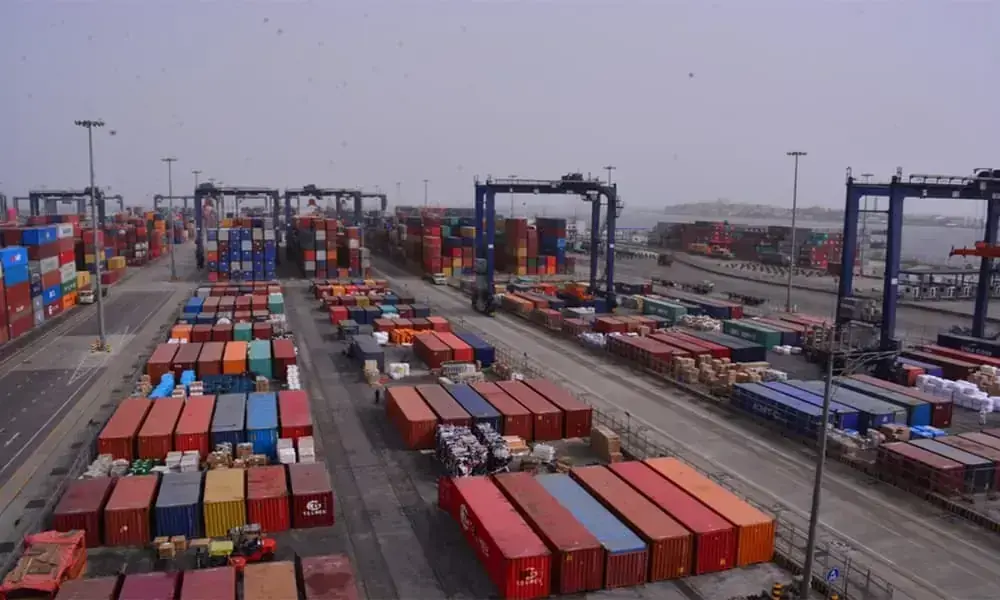

The Policy Research Advocacy Council (PRAC) has expressed concern that Pakistan’s new National Tariff Policy 2025–2030 could destabilise the external sector and lead to premature deindustrialisation in the country.
Pakistan’s trade deficit has widened by 29%, hitting $6 billion during July and August 2025, while exports declined by 12.5% in August alone, PRAC noted.
In a statement, the research council said that the policy is based on an ideology of free trade that is no longer compatible with the changing economic realities of the world.
“Today, global trade is being driven by strategy, where developed countries use tariffs, subsidies and safeguards to protect and strengthen their industries,” read the statement.
PRAC raises concern over ‘insufficient’ policy rate cut
However, under the new tariff policy, Pakistan will reduce the average tariff rate from 10.4% to below 6% by 2030, while the tariff slab will be reduced from five to four. The maximum tariff rate will be reduced from 20% to 15%.
On the other hand, countries like India and Bangladesh continue to maintain additional duties, but authorities in Pakistan have decided to eliminate them in five years, which may make our local market vulnerable, PRAC said.
“Free trade can be successful only when the country has a strong industrial infrastructure and favourable conditions at the global level,” said Muhammad Yunus Dagha, Chairman of PRAC.
“Pakistan has a large market of 250 million people, which is attractive to investors and trading partners, but for this, we will have to enter into reciprocal concessional agreements (FTA/PTA). If we unilaterally eliminate tariffs, we will lose our effective position, and other countries will have no reason to provide their market access.“
The council highlighted that despite large-scale tariff reductions in the past, exports did not increase, but the trade deficit jumped.
Tariffs reduced from 46.6% to 14.3% between 1996 and 2005, but exports remained stagnant and the trade deficit increased from $3.1 billion to $12.1 billion, while in 2021–22, this deficit reached $48.3 billion.
In the last 30 years, Pakistan’s exports have grown only 3.7X, while India’s exports have grown 14.3X and Bangladesh’s 12.6X. During the same period, Pakistan’s imports have exceeded $80 billion, but the pace of industrial development has lagged far behind other countries in the region.
The council urged the government to review the tariff policy. PRAC warned that if timely measures are not taken, the new policy could undermine recent economic stability, further weaken industries, and limit long-term growth.

























Comments
Comments are closed for this article.