


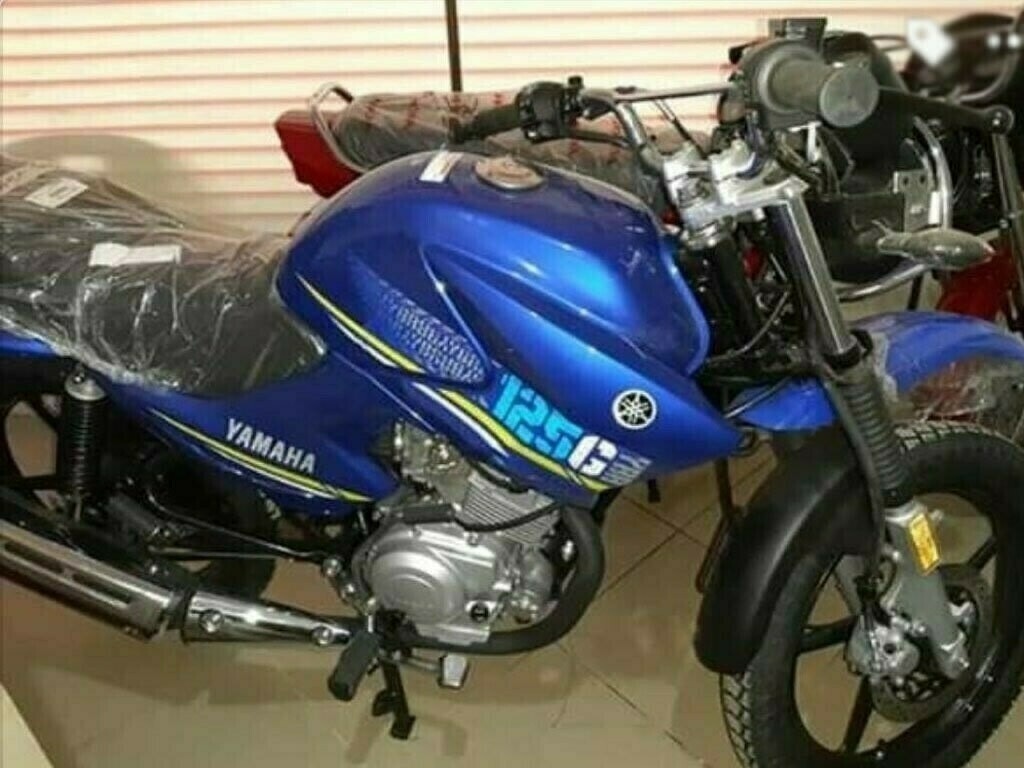

KARACHI: Yamaha Motor Pakistan (Private) Ltd (YMPK) has announced the closure of its manufacturing operations after 12 years, marking the end of its “second innings” in the Pakistani motorcycle market.
The Japanese manufacturer, which had re-established its independent presence in Pakistan in 2013, cited a change in business policy as the reason for discontinuing motorcycle production.
The closure brings to an end a relationship between Yamaha and Pakistani motorcycle enthusiasts that spans nearly five decades.
Pakistan’s auto industry being pushed to the wall?
Yamaha first entered the Pakistani market in 1975 through a joint venture with the Dawood Group, establishing Dawood Yamaha Limited. This partnership introduced iconic motorcycles that became cultural symbols in Pakistan, including the YB100, which served as reliable transportation for middle-class families, and the RX115, which captured performance enthusiasts with its 115cc two-stroke engine.
This joint venture operated successfully for over three decades before ending in 2008. Following the dissolution of this partnership, Yamaha independently returned to Pakistan in 2013, establishing a manufacturing facility at Bin Qasim, Karachi, and launching its comeback with the YBR series in 2015-16.
However, market data revealed that Yamaha’s second attempt in Pakistan faced significant challenges in the highly competitive and price-sensitive motorcycle market. The company started with 16,109 units sold in 2015-16, capturing just 1.5 percent market share.
While sales peaked in 2018-19 with 23,600 units and 1.51 percent market share, a steady decline followed. By 2024-25, Yamaha’s sales had plummeted to just 5,709 units, representing merely 0.41 percent of the market—a 72 percent decline from its peak.
This decline occurred despite Pakistan’s motorcycle market experiencing substantial growth, reaching 1.3 million units in 2024-25, an increase of 18.4 percent. Honda dominated the market with 1.27 million units sold, capturing nearly 91 percent market share, while Suzuki held 1.87 percent with 26,076 units.
Even more striking was the success of newer market entrants that arrived around the same time as Yamaha’s return or later. Road Prince, entering in 2014-15, sold 22,046 units in 2024-25—over four times Yamaha’s performance. United Auto achieved 146,018 units, representing sales 25 times higher than Yamaha’s.
Industry experts attributed Yamaha’s struggles to several factors. The company positioned itself as a premium brand but remained heavily dependent on variations of the YBR series throughout its second innings, failing to offer the diversity that competitors provided. Additionally, Yamaha struggled to build an extensive dealer network comparable to Honda and Suzuki.
The timing of Yamaha’s return proved particularly challenging, coinciding with the aggressive entry of Chinese manufacturers offering modern designs and adequate quality at significantly lower prices.
These brands succeeded by understanding Pakistani consumer preferences for contemporary styling, reliable performance, and competitive pricing. Scale economics also worked against Yamaha, as low sales volumes resulted in high per-unit costs, making it impossible to compete on price while maintaining profitability, industry experts said.
Despite announcing the end of manufacturing operations, Yamaha Motor Pakistan has ensured continuing customer support. The company said that it will supply spare parts through authorised dealers and remain fully committed to providing warranty services according to existing warranty schemes.
While commercially unsuccessful, industry experts said that Yamaha’s second innings in Pakistan had broader impacts beyond sales figures.
The company raised quality expectations among consumers and competitors, trained Pakistani workers in advanced manufacturing techniques, and forced other manufacturers to improve their offerings to remain competitive in an increasingly dynamic motorcycle market.
Copyright Business Recorder, 2025







Comments
Comments are closed for this article.